Street Food in Morocco: What's Safe and What to Skip
Morocco's street food is one of its best experiences, and eating it well is mostly about where the locals are. The safe bets, the things to skip, and the water rule.
Street food is one of the great pleasures of a Morocco trip, and eating it well comes down to a few reliable rules rather than avoiding it out of caution. The best food is often the cheapest, cooked in front of you at a busy stall, and the traveller who eats only in hotels misses a large part of the country. The trick is reading which stalls to trust, and one firm habit about water.
The one rule that covers most of it
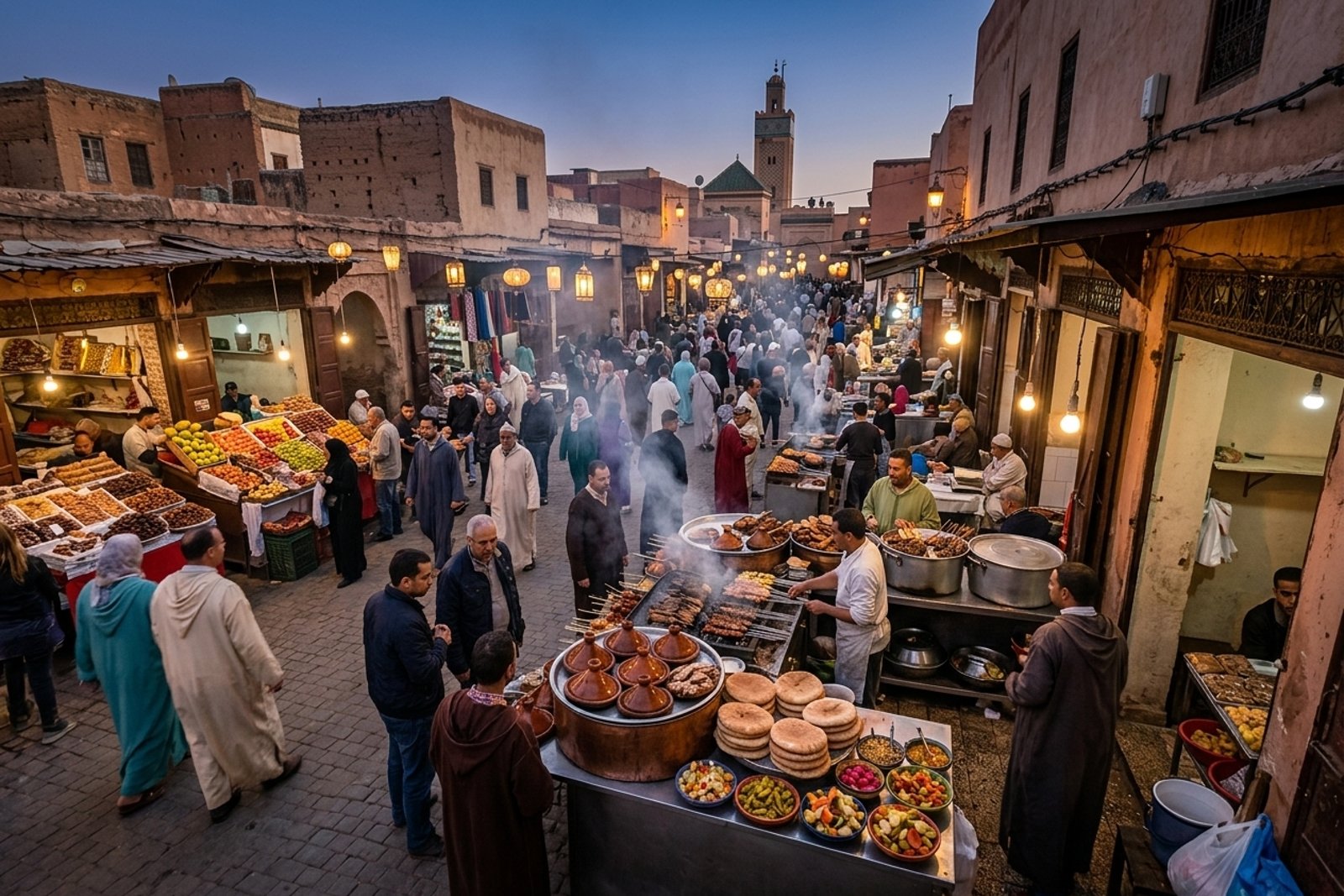
Eat where the locals are eating, at stalls with a steady crowd and high turnover, because busy means fresh and fresh means safe. A stall working through its ingredients quickly is cooking to order rather than letting food sit, which is the single biggest factor in eating street food without trouble. An empty stall with food standing under a lamp is the one to walk past, however convenient.
Watch it cooked
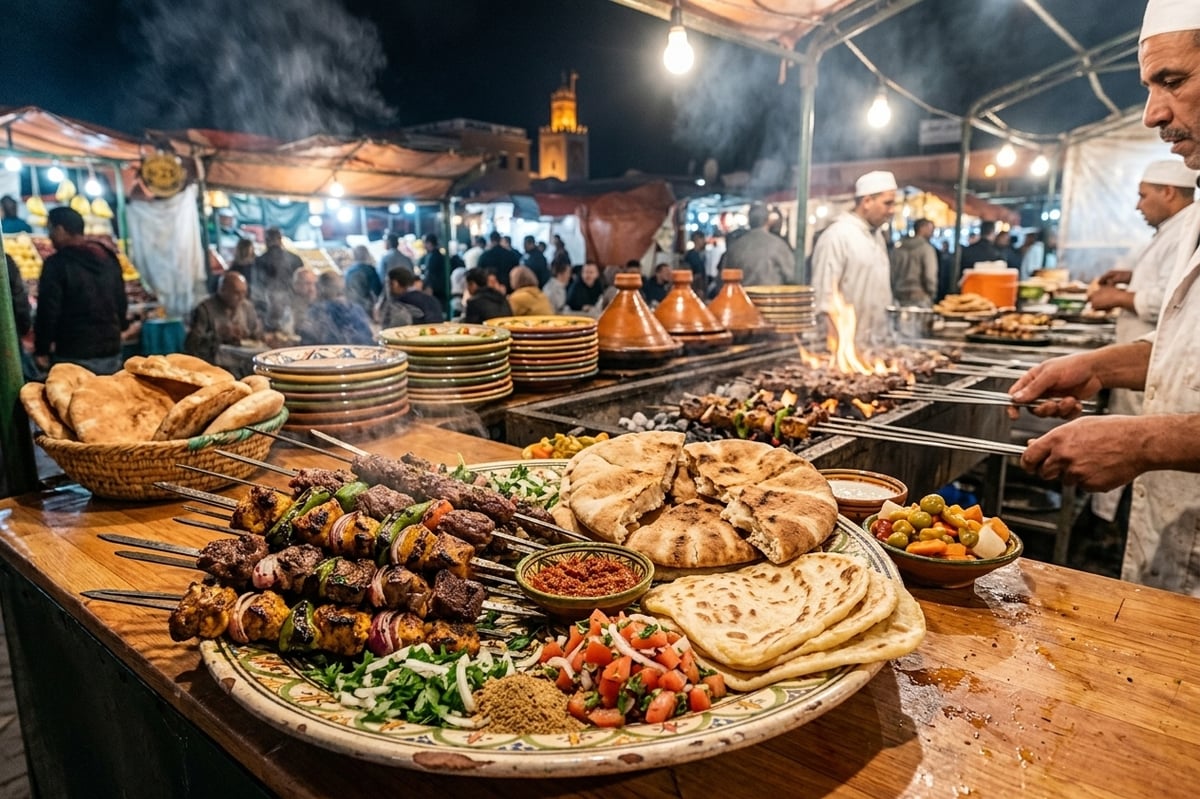
Prefer food cooked or grilled to order in front of you, hot and fresh off the heat, over anything pre-prepared and held warm. Heat is the reliable safeguard, and seeing your food hit the grill removes most of the guesswork. This applies from the Jemaa el-Fnaa food stalls to a roadside grill on a desert drive.
The water rule
Tap water in Moroccan cities is officially chlorinated but commonly causes stomach upset for visitors, so stick to bottled or filtered water throughout, and avoid ice from sources you cannot vouch for. Use bottled water even for brushing teeth if your stomach is sensitive. This one habit prevents the most common traveller illness far more reliably than avoiding any particular food does.
Jemaa el-Fnaa after dark
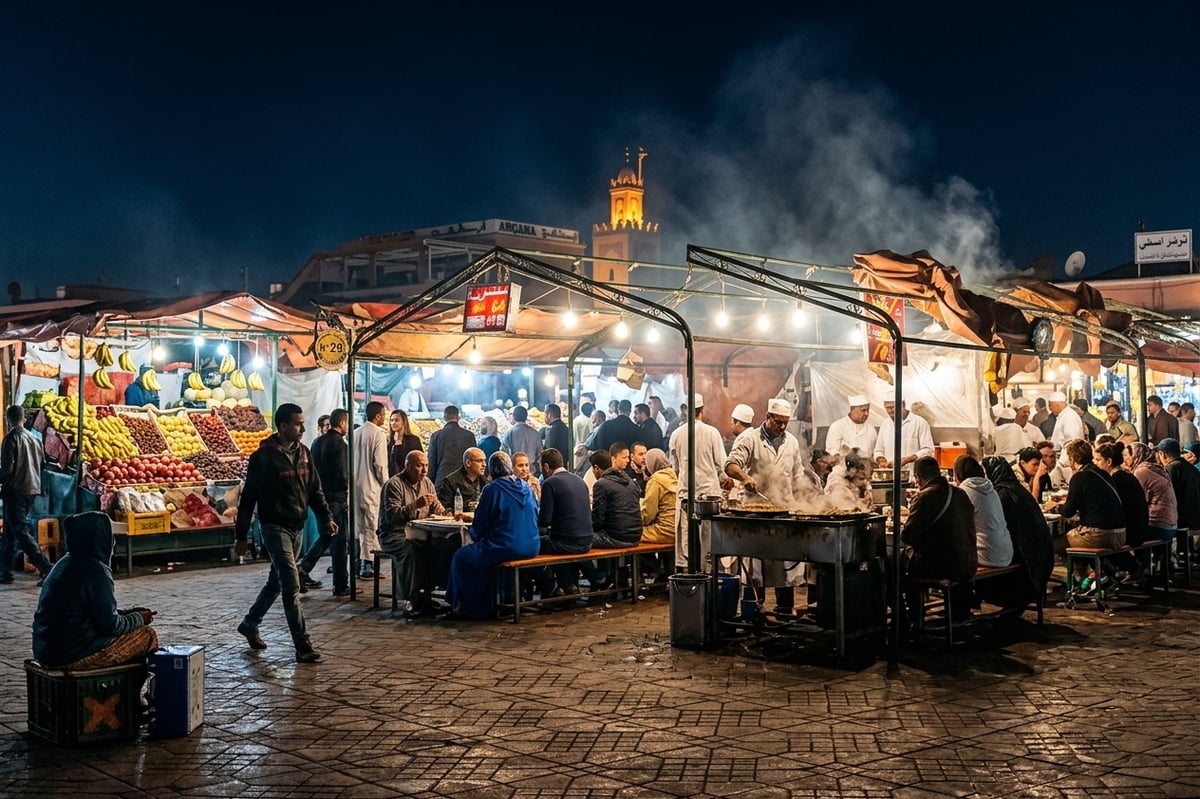
The great set piece of Moroccan street food is Marrakech's Jemaa el-Fnaa at dusk, when dozens of numbered food stalls assemble in the square and fill with smoke and crowds. It is touristy and wonderful at once, and the same rules apply: pick a stall busy with locals as well as visitors, watch the food cooked, and agree what you are ordering. Some stalls pad the bill with unordered extras, so confirm prices as plates arrive.
The unordered-extras habit
At the busiest tourist stalls, small dishes of bread, olives or salad may land on your table unbidden and appear on the bill. This is not sinister and it is easily managed: if you do not want them, wave them away as they arrive rather than letting them accumulate. A quick check of the bill against what you actually ordered settles the rest.
Safe bets to seek out
Some street foods are both delicious and low-risk by their nature: freshly grilled brochettes and kefta, bowls of harira soup ladled hot from a pot, msemen and other griddle breads cooked to order, freshly fried sfenj doughnuts, and fruit you peel yourself. Freshly squeezed orange juice from a busy stall is a classic, though ask for it without ice if you are being careful. These reward the adventurous eater and rarely cause trouble.
What to be cautious with
A few things warrant more care: pre-cut fruit and salads washed in tap water, anything lukewarm that should be hot, raw or lightly cooked shellfish away from the coast, and dishes that have clearly been sitting out. The famous snail soup and the sheep's-head stalls of Jemaa el-Fnaa are authentic experiences, not dangers in themselves, but they are best approached at busy, high-turnover stands.
Ease into it
If your stomach is cautious, give it a day or two to adjust before diving into the most adventurous stalls, and carry basic remedies just in case. A mild upset is common and usually brief; it is rarely the food poisoning travellers fear, and it should not stop you eating the country properly. Most people find their footing quickly.
Eating well in Morocco is less about avoiding street food than about reading a stall the way you learn to read a price or a guide — the same attentiveness, pointed at the grill. Our guide to Moroccan dishes covers what to order, and the safety guide puts food in the wider picture.
Morocco street food: FAQ
Is street food in Morocco safe?
Largely yes, if you eat where locals eat, at busy stalls with high turnover, and choose food cooked hot to order in front of you.
Can I drink the tap water?
Stick to bottled or filtered water. City tap water is chlorinated but commonly upsets visitors' stomachs. Avoid unknown ice.
What are the safest things to eat?
Freshly grilled brochettes and kefta, hot harira soup, griddle breads cooked to order, sfenj, and fruit you peel yourself.
What should I be careful with?
Pre-cut fruit and salads, anything lukewarm, raw shellfish away from the coast, and food that has been sitting out.
Will I get sick?
A mild upset is common and brief, usually from water rather than food. Ease in over a day or two and carry basic remedies.