Is Morocco Safe for American Tourists? An Honest Guide
Morocco is generally safe for tourists, including solo travelers. Here's an honest look at the real risks — petty scams, not danger — and how to handle them.
"Is Morocco safe?" is the question first-time visitors ask more than any other, and the honest answer is: yes, for the vast majority of travelers, Morocco is safe — including for solo travelers and solo women who take normal precautions. Millions of Americans and other tourists visit every year without any serious problem. But "safe" doesn't mean "hassle-free," and knowing the difference is what keeps a first trip relaxed instead of tense.
The honest risk picture
Violent crime against tourists in Morocco is rare. What you'll actually encounter is petty crime and persistent hustling: pickpocketing in crowded medinas and markets, aggressive touts, overcharging, and the occasional scam. Traffic is a genuine hazard too — roads can be chaotic, and crossing streets in a busy city takes attention. None of this is unusual for a popular travel destination, and none of it should scare you off. It's the background noise of travel here, not a reason to stay home.
For context, the U.S. State Department has placed Morocco at Level 2, "Exercise Increased Caution," primarily citing terrorism — the same level as many popular European countries. Advisory levels change, so check the current one before you travel, but Level 2 is a routine caution, not a warning to avoid the country.
The scams you'll actually meet
Most "safety" issues in Morocco are really scams aimed at your wallet, and they follow predictable scripts. Once you know them, they lose their power:
The "helpful" stranger
Someone tells you the street ahead is closed, or that the tannery or square you're heading to is shut, and offers to guide you a better way — then demands payment or leads you to a shop where they get a commission. A polite but firm "no thank you" ("la shukran") and walking on handles it.
Faux guides
Unofficial guides latch on in the maze-like medinas of Fez and Marrakech, then expect payment. If you want a guide, arrange one through your riad or a reputable tour operator instead.
The broken taxi meter
A driver claims the meter is broken to charge a flat, inflated fare. Insist on the meter, or agree the price before you get in.
Photo demands and henna
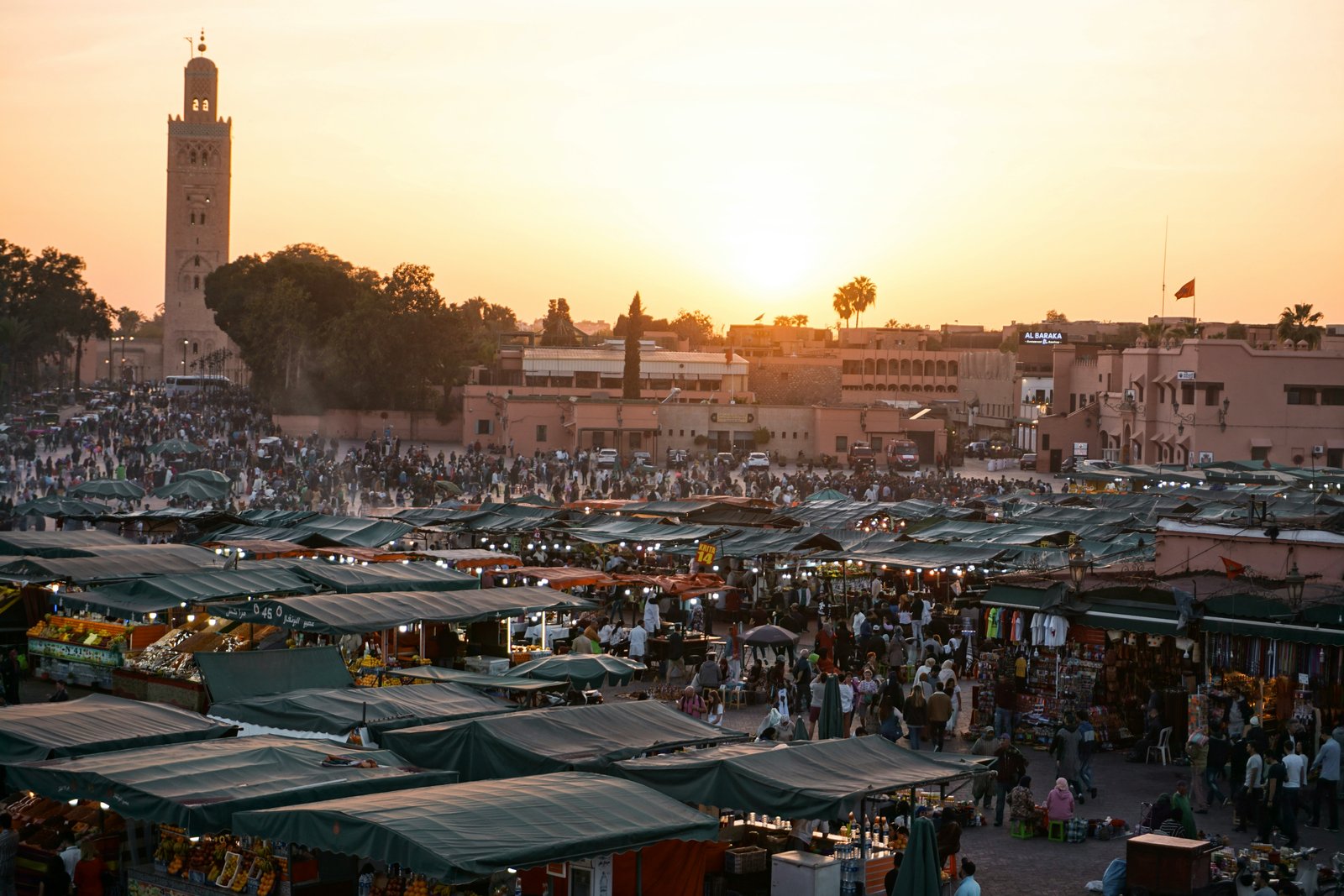
Performers in Jemaa el-Fnaa and henna artists may engage you and then demand money. Agree a price before any photo, and keep your hands to yourself around henna sellers.
Simple habits that keep you safe
The habits that keep travelers safe in Morocco are the ones you would use in any large city, tuned slightly for the medina: keep valuables out of sight in crowds, use ATMs inside bank branches, stick to bottled water, and dress modestly. The realistic risks are petty theft and distraction scams rather than violence, so the list below is about attention, not fear:
Keep valuables secure and out of sight in crowds — a money belt or a zipped inner pocket beats a back pocket. Use ATMs inside banks and shield your PIN. Stick to bottled water to avoid an upset stomach. Dress modestly, which draws less attention and shows respect. Learn a couple of Arabic or French phrases; a confident "la shukran" ends most unwanted approaches. And trust your instincts — if a situation feels off, step into a shop or cafe and reset.
Staying healthy
The most common thing to actually go wrong on a Morocco trip isn't crime — it's an upset stomach. Stick to bottled or filtered water, including for brushing your teeth if you're sensitive, and be a little cautious with ice and raw salads from unknown kitchens early in your trip. Busy food stalls with high turnover are generally a safer bet than a quiet one where food sits. No vaccines are required to enter from the U.S., though a travel clinic may suggest routine shots plus Hepatitis A and typhoid for food-and-water exposure — worth a conversation before you go. Pack any prescription meds in their original containers, and bring a small kit for the predictable traveler's stomach.
Getting lost in the medina
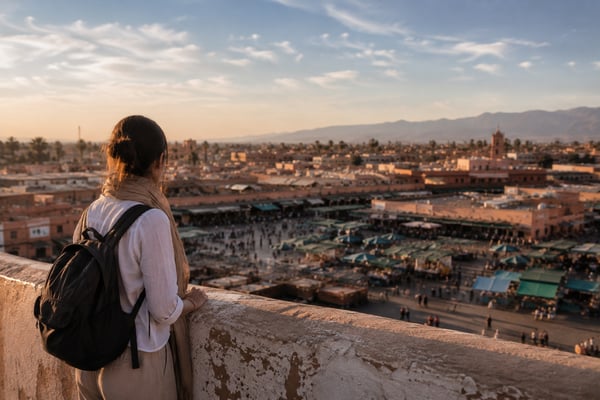
Every first-timer gets turned around in the medinas of Fez and Marrakech — the lanes twist, dead-end, and aren't signed in any way that helps. This is normal and rarely unsafe, just disorienting. Download an offline map before you go, note a couple of major landmarks or gates near your riad, and don't panic if your phone's blue dot spins uselessly between tall walls. If you're truly stuck, a shopkeeper will usually point you the right way; a child may offer to lead you out for a small tip. It's part of the experience, not a danger.
Is Morocco safe for solo female travelers?
Yes, with awareness. Solo women travel in Morocco all the time and have wonderful trips, but street harassment — comments, unwanted attention — is more common than in the U.S. and can wear on you. Dressing modestly, walking with purpose, sticking to daytime for medina wandering, and staying in well-reviewed riads all help. Many solo travelers also find that a guided desert tour or a day with a local guide makes the busier cities more comfortable. Our guide on solo female travel in Morocco goes deeper.
Emergency numbers to save
Before you go, save these in your phone. From a mobile, 112 is the universal emergency number. For police in cities, dial 19; in rural areas, the Gendarmerie is 177. For an ambulance, call 15. Major cities also have dedicated tourist police who often speak some English and French.
The bottom line
Morocco is a safe, welcoming country that happens to come with a layer of hustle in its tourist hotspots. Go in expecting warm hospitality punctuated by the occasional tout, keep your wits about you the way you would anywhere, and you'll almost certainly come home with nothing worse than a few funny stories about the guy who swore the souk was closed. For the specific scam playbook, see common Morocco scams and how to avoid them. The scams that are really about money rather than safety are covered in the complete Morocco trip guide.
Morocco safety FAQ
Is Morocco safe for American tourists?
Yes. Violent crime against tourists is rare; the real issues are petty theft and scams, which are easy to avoid with normal precautions.
Is Morocco safe for solo female travelers?
Generally yes, though street harassment is more common than in the U.S. Dressing modestly, staying in reputable riads, and daytime medina walks all help.
What are the main dangers in Morocco?
Petty theft in crowds, scams and aggressive touts in tourist areas, and chaotic traffic. Serious crime against visitors is uncommon.
What's the emergency number in Morocco?
From a mobile, 112 is universal. Police is 19 in cities and 177 (Gendarmerie) in rural areas; ambulance is 15.