Haggling in Moroccan souks is expected and can be fun. A first-timer's guide to bargaining with confidence — the etiquette, tactics, and how to avoid overpaying.
In Morocco's souks, the price on almost nothing is fixed — haggling is the expected way of doing business, and for first-timers it can feel intimidating at first and genuinely fun once you get the hang of it. Here's how to bargain with confidence, get a fair price, and enjoy the ritual rather than dreading it.
Why haggling exists
Bargaining is a centuries-old part of Moroccan market culture, a social exchange as much as a transaction. Vendors expect it and price their first offer high, assuming you'll negotiate down. Paying the first asking price isn't "polite" — it just means you overpaid, and it can even feel odd to the seller. So approach it as a normal, expected conversation, not a confrontation.
The basic method
Start low, but not insulting
A common rule of thumb is to counter the first price with something like a third to a half of it, then meet somewhere in the middle. The exact fraction varies, so gauge the vendor's reaction rather than sticking rigidly to a number.
Know your price
Decide what the item is worth to you before you start, and what you're willing to pay. If you reach it, buy; if not, be ready to walk.
Be willing to walk away
This is your best tool. Politely walking often produces a better final price called after you — and if it doesn't, there's usually a similar item at the next stall. Never start haggling for something you don't actually intend to buy, though; agreeing a price and then walking is bad form.
Etiquette that keeps it pleasant
Haggling in Morocco is meant to be good-natured. Keep it friendly and smiling — humor and warmth go much further than aggression. Accept the mint tea if it's offered; it's hospitality and doesn't obligate you to buy. Don't be rude or lowball to the point of insult. And once you agree a price and shake on it, honor it — backing out after a deal is settled is genuinely frowned upon. The whole thing works best as a warm, slightly theatrical exchange between two people enjoying the game.
Tips to avoid overpaying
A few practical moves help you get fair prices: browse several stalls first to learn the going rate before buying; visit a fixed-price artisan cooperative (like the Ensemble Artisanal) to benchmark quality and prices with no pressure; don't show too much enthusiasm for the item you really want, as visible desire weakens your position; shop with small bills so you can pay the agreed amount exactly; and be extra deliberate with big-ticket items like rugs, where the stakes — and the theater — are highest. Our shopping guide covers what things roughly cost.
What things are worth
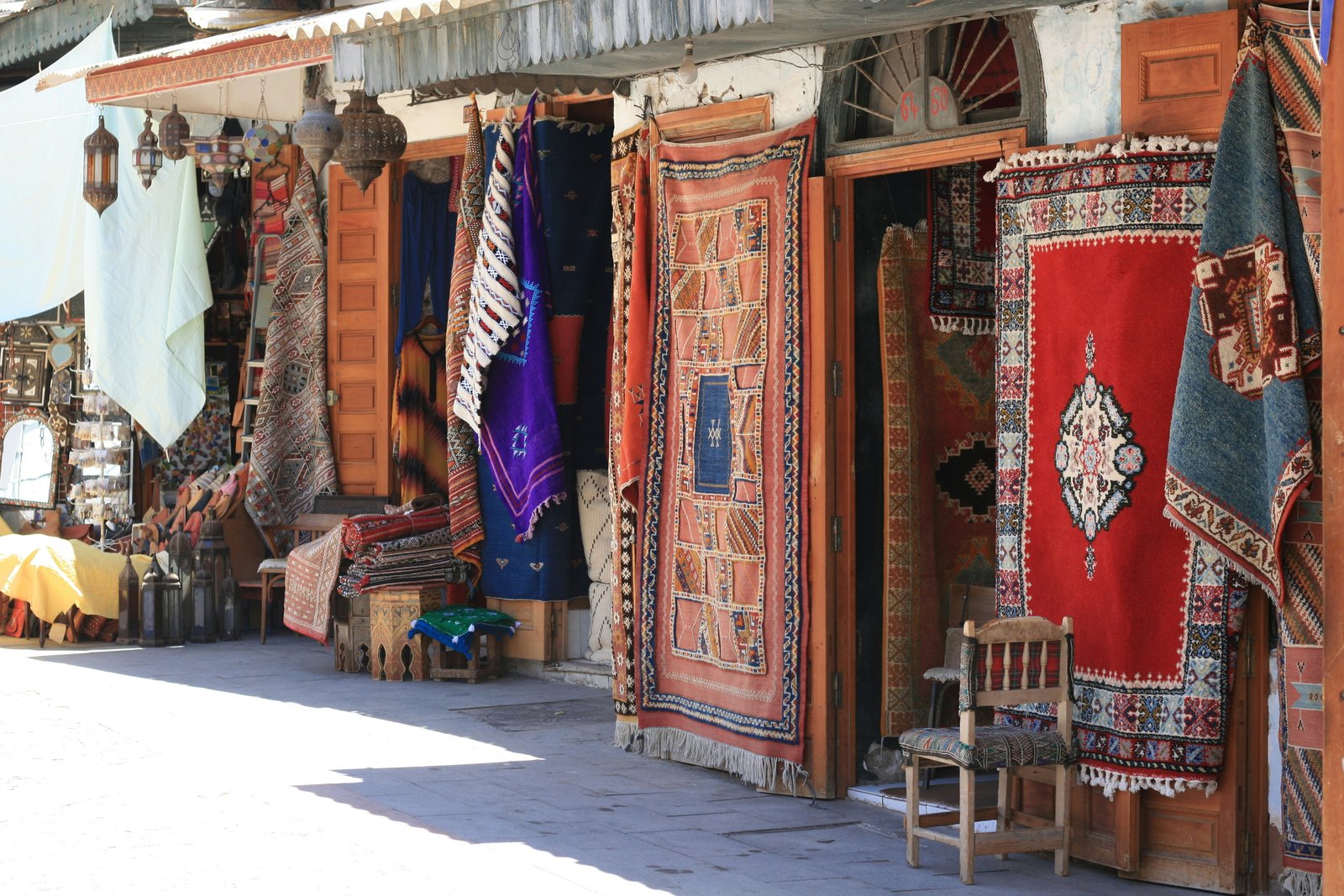
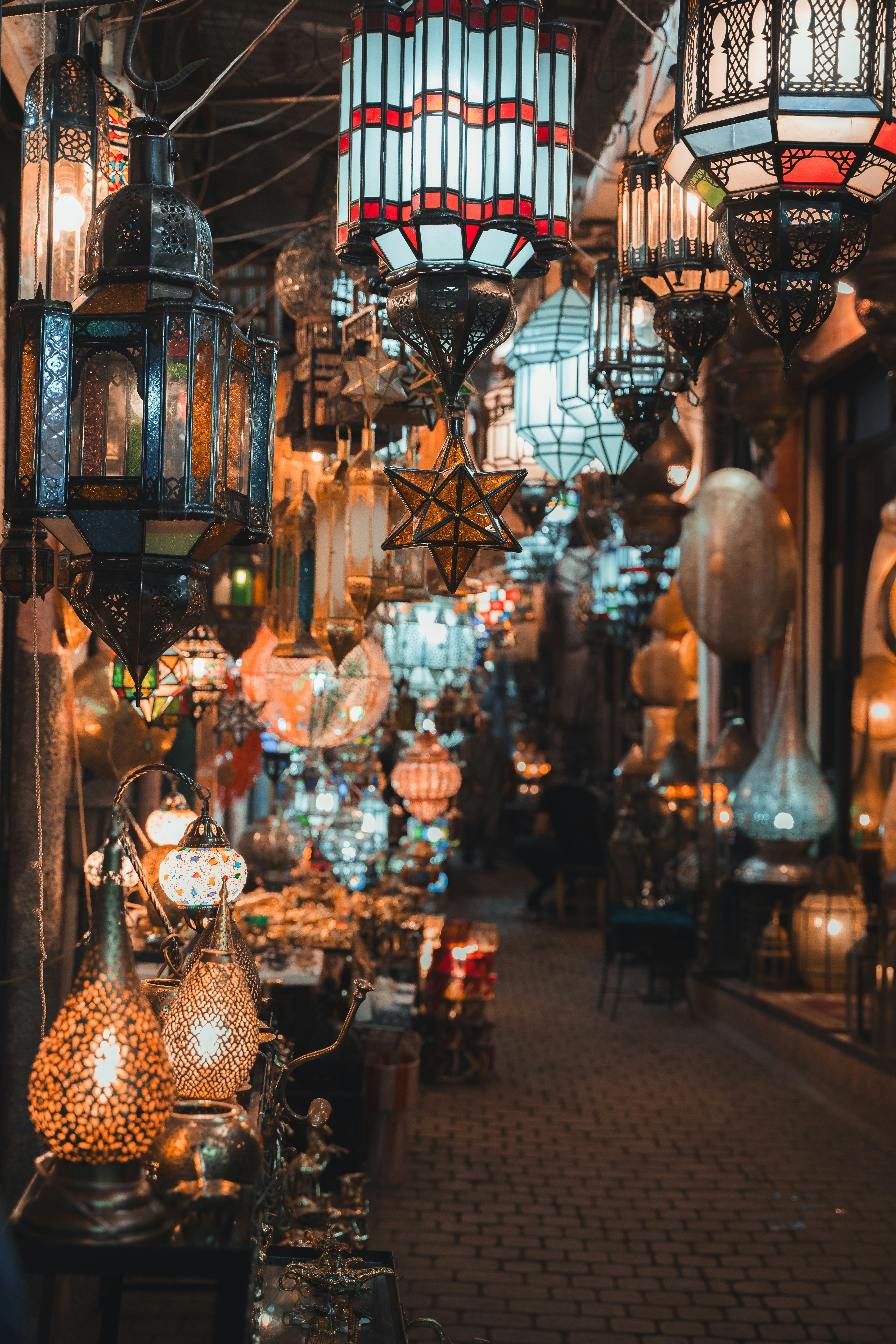
Knowing rough values keeps you grounded. Small items — babouche slippers, a spice mix, a simple scarf — are inexpensive, and the haggle is quick and low-stakes; overpaying a little here isn't worth stress. The bigger negotiations are for rugs, leather goods, and lanterns, where prices range enormously with quality and where a first offer might be several times the fair price. For rugs especially, take your time, understand what you're looking at (hand-knotted versus machine-made, wool versus synthetic), and don't feel rushed by tea and attention. If you're unsure, the fixed-price cooperatives give you a quality-and-price baseline before you commit in the souk. Our shopping guide details what to expect to pay for the main crafts.
A sample exchange
To make it concrete, here's roughly how a friendly haggle goes. You admire a leather bag; the vendor names a high opening price. You smile, say it's beautiful but well above what you had in mind, and counter with something around a third of it. The vendor acts wounded, comes down a little, and pours you a mint tea. You nudge up slightly; they come down again. After a few warm rounds of back-and-forth you land somewhere in the middle that suits you both, shake hands, and pay in the small bills you've kept ready. The whole thing takes a few minutes and, done with good humor, is genuinely enjoyable — you walk away with a bag and a story, and the vendor with a fair sale. That's the ritual working as intended.
When not to haggle
Not everything is negotiable. Restaurants, cafes, supermarkets, and modern shops have fixed prices, as do metered petit-taxi fares (though agree grand-taxi and unmetered fares in advance). Haggling is for the souks, markets, and independent craft shops — and even there, it's about finding a price you're both happy with, not "winning." Keep that spirit and you'll come away with lovely things, fair prices, and some of the more memorable interactions of your trip. For the wider picture of touts and scams, see our safety guide.
Keeping perspective
One last, freeing thought: don't agonize over every dirham. It's easy to get so caught up in "winning" that you spend twenty minutes haggling over the equivalent of a dollar or two, or feel cheated afterward over a tiny sum. Remember that a fair price is one you're happy to pay, and that a few extra dirham means far more to a local vendor than to you. Haggle in good faith, aim for reasonable rather than rock-bottom, and once you've agreed, let it go and enjoy your purchase. The goal isn't to beat anyone — it's to take part in a centuries-old ritual, come away with something you love at a price that feels fair, and share a laugh with the person you bought it from.
Haggling is the visible half of a broader habit: prices here are opening positions in more places than the souk. the complete Morocco trip guide works through where that applies, where it doesn't, and how to tell the difference before you are standing there.
Haggling FAQ
Is haggling expected in Morocco?
Yes, in the souks and markets it's the norm. First prices are set high expecting negotiation, so bargaining is normal and even welcomed.
How much should I offer when haggling?
A common approach is countering at roughly a third to a half of the first price, then settling in the middle. Decide your own fair price in advance.
What if I can't agree on a price?
Politely walk away — you'll often get a better price called after you, and if not, a similar item is usually nearby. Just don't haggle for things you won't buy.
Where shouldn't I haggle?
Restaurants, cafes, supermarkets, modern shops, and metered taxis have fixed prices. Haggling is for souks, markets, and independent craft shops.