Cooking Classes in Morocco: Worth It and How to Choose
A Moroccan cooking class is one of the best-value experiences a first-timer can book. What a good one includes, the market visit, and how to pick the right one.
A cooking class is one of the highest-value experiences a first-timer can book in Morocco: a few hours that teach you the dishes, demystify the spices, and send you home able to recreate a tagine, usually for a very reasonable price. The good ones combine a market visit, hands-on cooking and a shared meal, and choosing well is mostly about matching the format to what you want. Here is how they work and what to look for.
What a good class includes
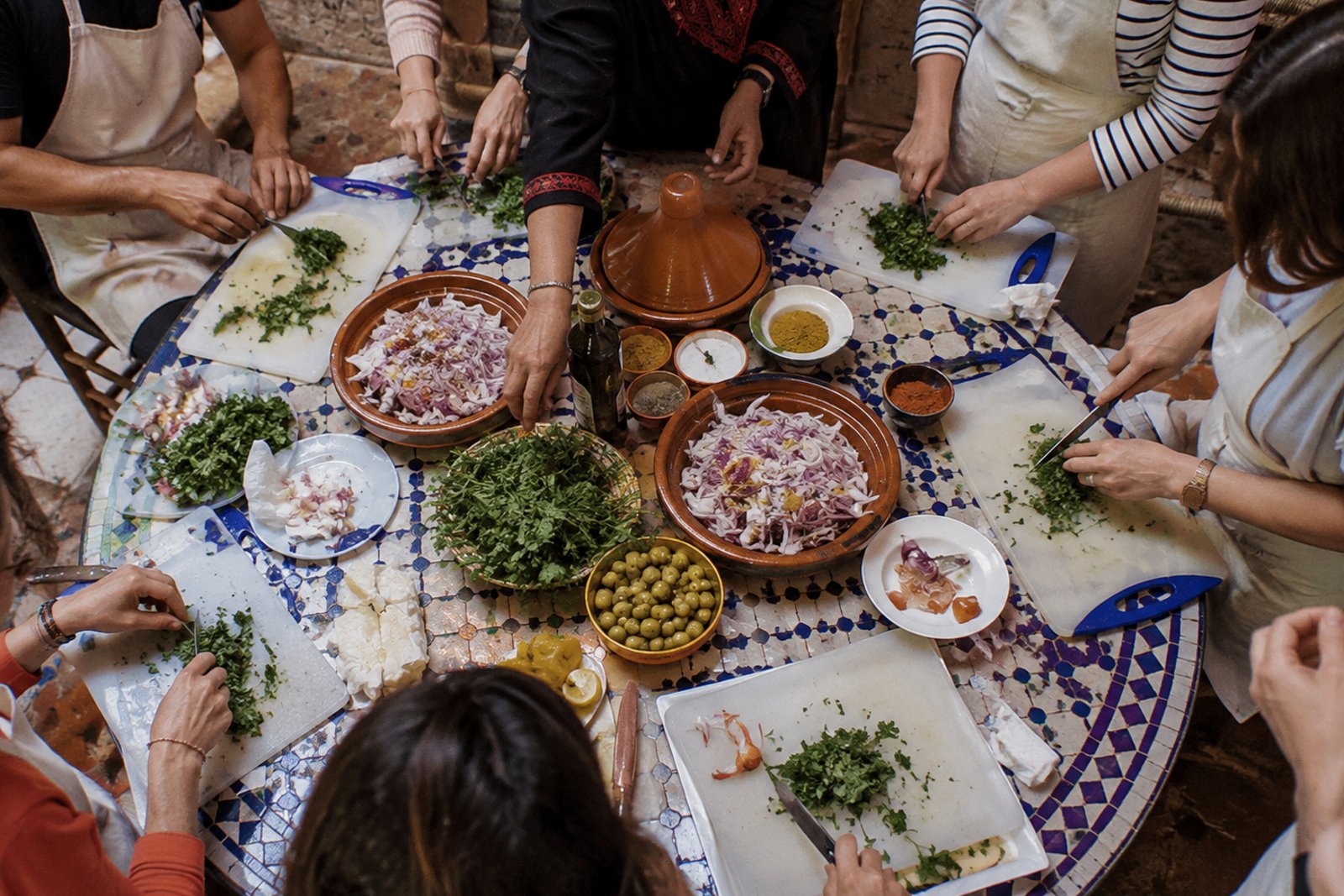
The best cooking classes follow a satisfying arc: a guided visit to a local market to buy fresh ingredients, an explanation of the key spices and techniques, hands-on preparation of a few classic dishes, and then sitting down to eat what you cooked. A class that includes the market trip teaches you as much about Moroccan food culture as about the recipes, and the shared meal at the end is half the pleasure. Look for that full shape rather than a quick demonstration.
The market visit
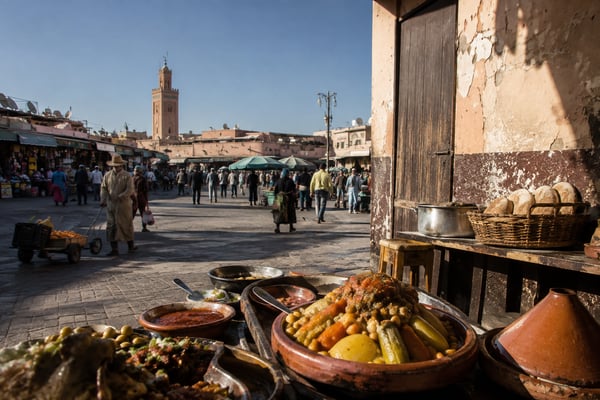
The market portion is where a class earns its keep beyond the recipes: a good instructor walks you through the spice stalls, the produce and the butchers, showing you what to buy and how, so the souk becomes legible rather than bewildering. For many travellers this is the moment Moroccan food finally makes sense, and it doubles as a gentle, guided introduction to shopping in a market you will otherwise navigate alone. It is worth choosing a class that includes it.
What you'll cook
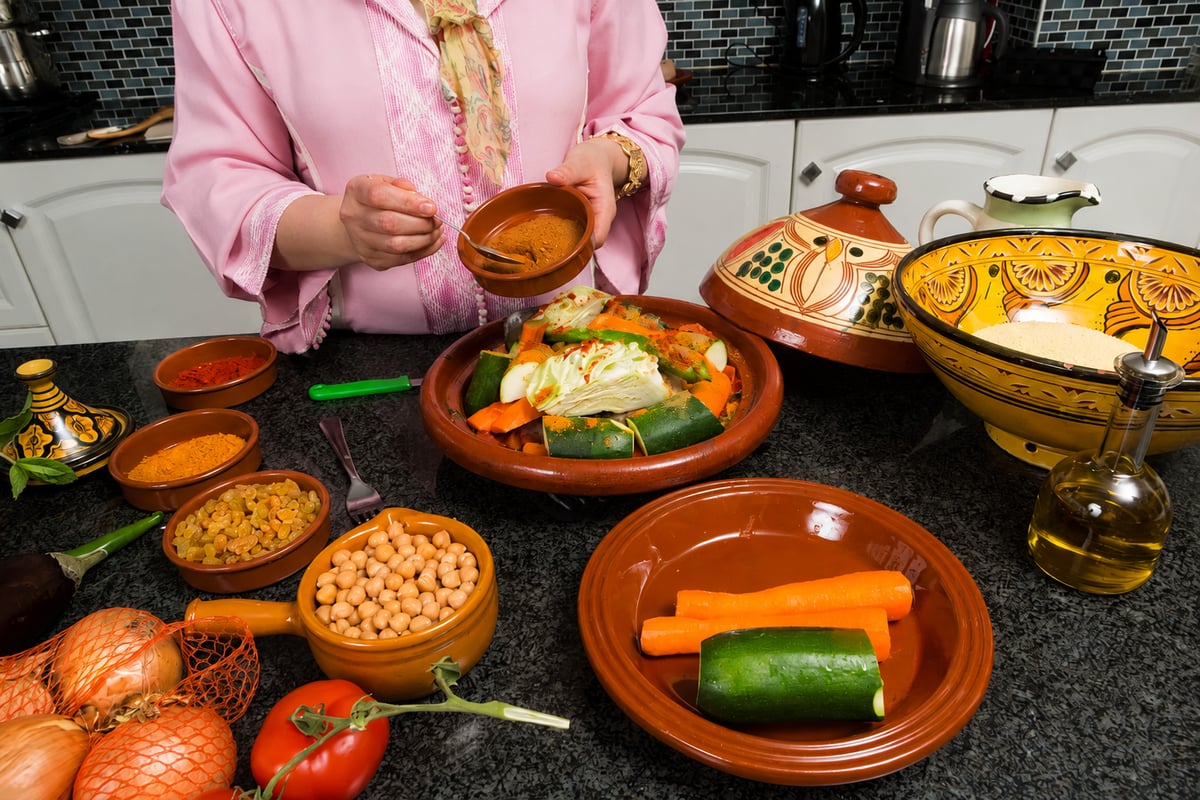
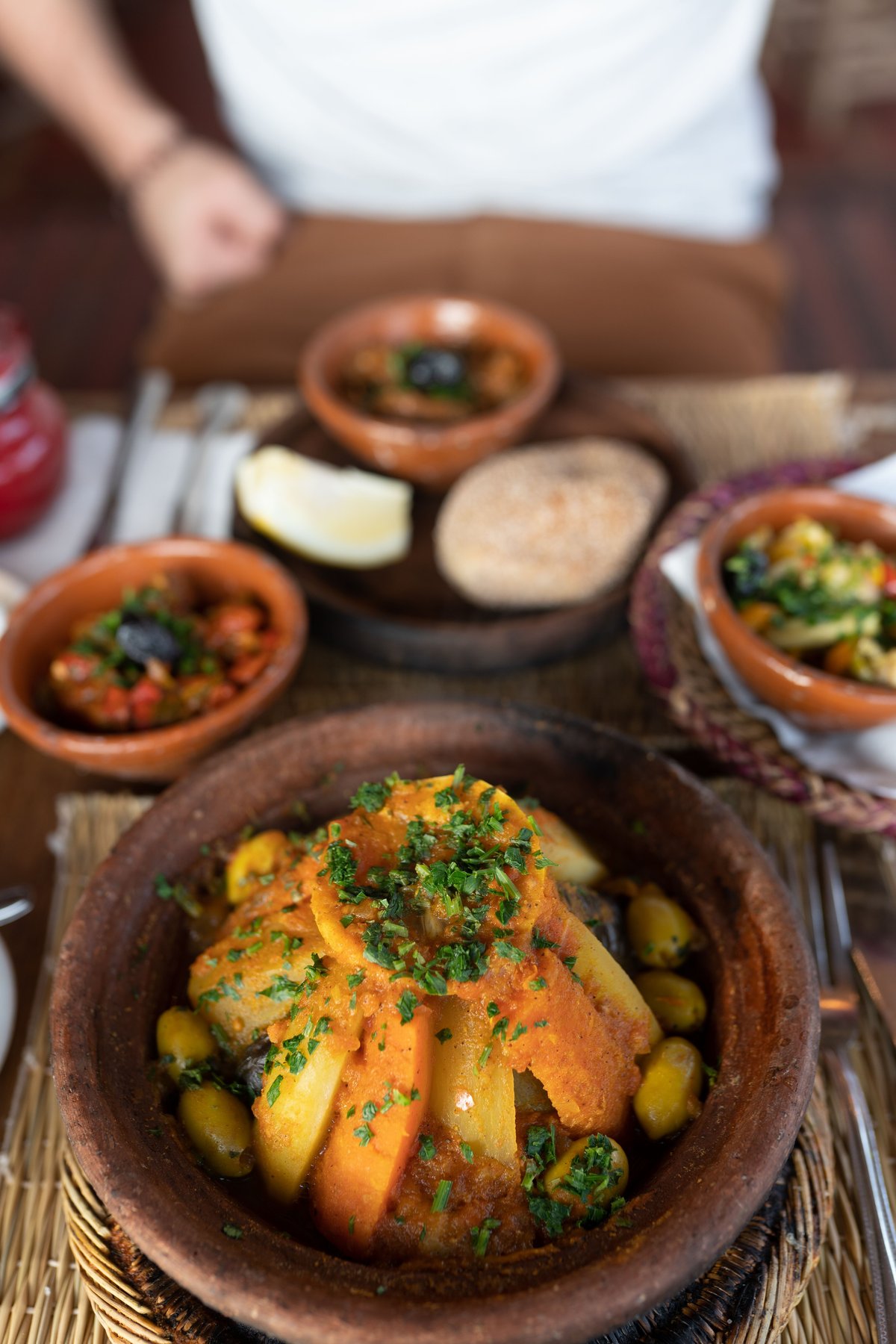
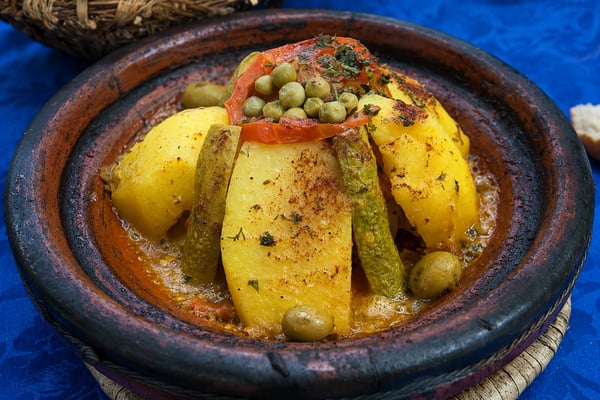
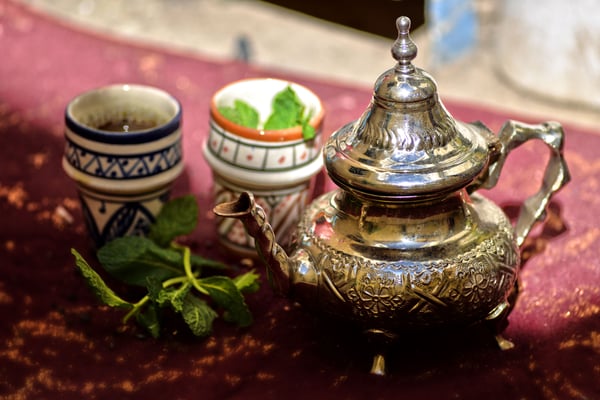
Most classes teach the staples a first-timer wants to take home: a tagine or two, couscous, Moroccan salads, and often bread or pastries, with mint tea throughout. The dishes are chosen to be reproducible in a home kitchen, and a good instructor sends you off with the recipes and the confidence to make them again. It is the rare souvenir that keeps giving long after the trip, and it travels home in your hands rather than your luggage.
How to choose one
Pick a class by its format and reviews: confirm it includes the market visit and a full hands-on session rather than a watch-and-taste demonstration, check the group size (smaller is more hands-on), and read recent reviews for the quality of the instructor. Riads and hotels often run or recommend well-regarded classes, and booking through your accommodation is an easy, reliable route. Marrakech and Fez both have excellent options.
Classes for families and dietary needs
Cooking classes adapt well to families and to dietary requirements, which makes them a flexible booking: children often enjoy the hands-on element, and vegetarian or other needs are easily accommodated since Moroccan cuisine is rich in vegetable dishes. Mentioning any requirements when you book lets the instructor plan the market trip and menu around them. It is one of the few activities that works for a whole family at once, across ages.
What to expect to pay
A group cooking class is inexpensive for what it delivers — a market trip, hands-on tuition and a full meal — while a private class costs more and buys a tailored menu and pace. Either way the value is high relative to a comparable restaurant meal, since you leave with a skill as well as a full stomach. Booking through a well-reviewed operator or your riad is the simplest way to be sure of quality.
Why it's worth the time
On a packed itinerary a cooking class can feel like a luxury to cut, but it is often the experience travellers remember most warmly: it slows the trip down, teaches a genuine skill, and gives you a direct, hands-on connection to the culture through its food. For the price of a nice dinner, you get a half-day of learning and a meal you made yourself. Few bookings on a Morocco trip return as much for the money.
A cooking class is one of the discretionary experiences that shape the texture of a trip alongside the sights and the desert, and how those choices balance against your days and budget is worked out in the complete Morocco trip guide.
Yes — one of the best-value experiences for a first-timer. A half-day of learning, a market visit and a meal you cooked, for the price of a nice dinner.
What does a good class include?
A guided market visit, an explanation of spices and techniques, hands-on cooking of a few classics, and sitting down to eat what you made.
What will I cook?
Usually a tagine, couscous, Moroccan salads and often bread or pastries, with mint tea — staples chosen to reproduce at home.
How do I choose one?
Confirm it includes the market visit and full hands-on cooking, check the group size, and read recent reviews. Riads often recommend good ones.
Where are the best classes?
Marrakech and Fez both have excellent options, easily booked through your riad or hotel.