What Things Cost in the Souks: A First-Timer's Price Sheet
Souk prices have no tags, and the first number is always a starting point. How the opening-price economy works, what a fair landing looks like, and how to bargain without stress.
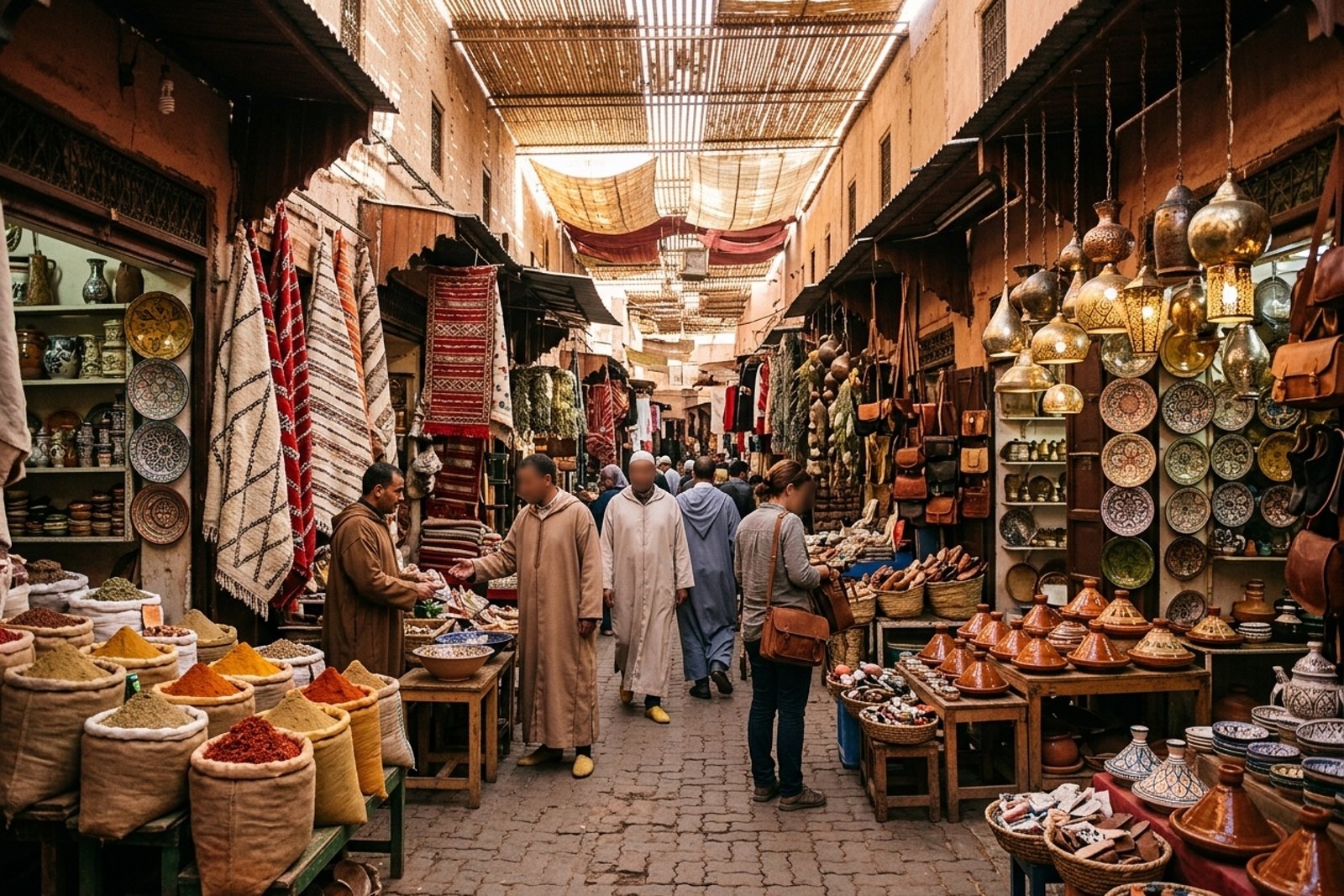
The Moroccan souk runs on an opening-price economy, where the first number you hear is a starting position rather than a price, and this catches out shoppers used to tags and fixed retail. There is no single "real" price for most souk goods — there is the range a fair deal lands in, and the calm process of getting there. Understanding that the opening number is theatre, not information, is the whole foundation of shopping well.
Why nothing has a price tag
Most souk goods carry no marked price because the price is meant to be negotiated, and the opening figure quoted to a visitor is deliberately high — often a multiple of what the item will actually sell for. This is not an attempt to cheat so much as the expected first move in a familiar dance. The vendor expects you to counter, and a shopper who simply pays the first number both overpays and, oddly, disappoints the ritual.
The tourist opening versus the local one
The first price offered to an obvious tourist starts higher than the one a local would hear, which is normal across markets like this rather than a personal slight. Your job is not to reach the local price exactly but to move the number down to a range you are genuinely happy to pay. Anchoring your own expectation before you start — from a fixed-price shop or a quick browse — is what makes that possible.
How to find the fair range
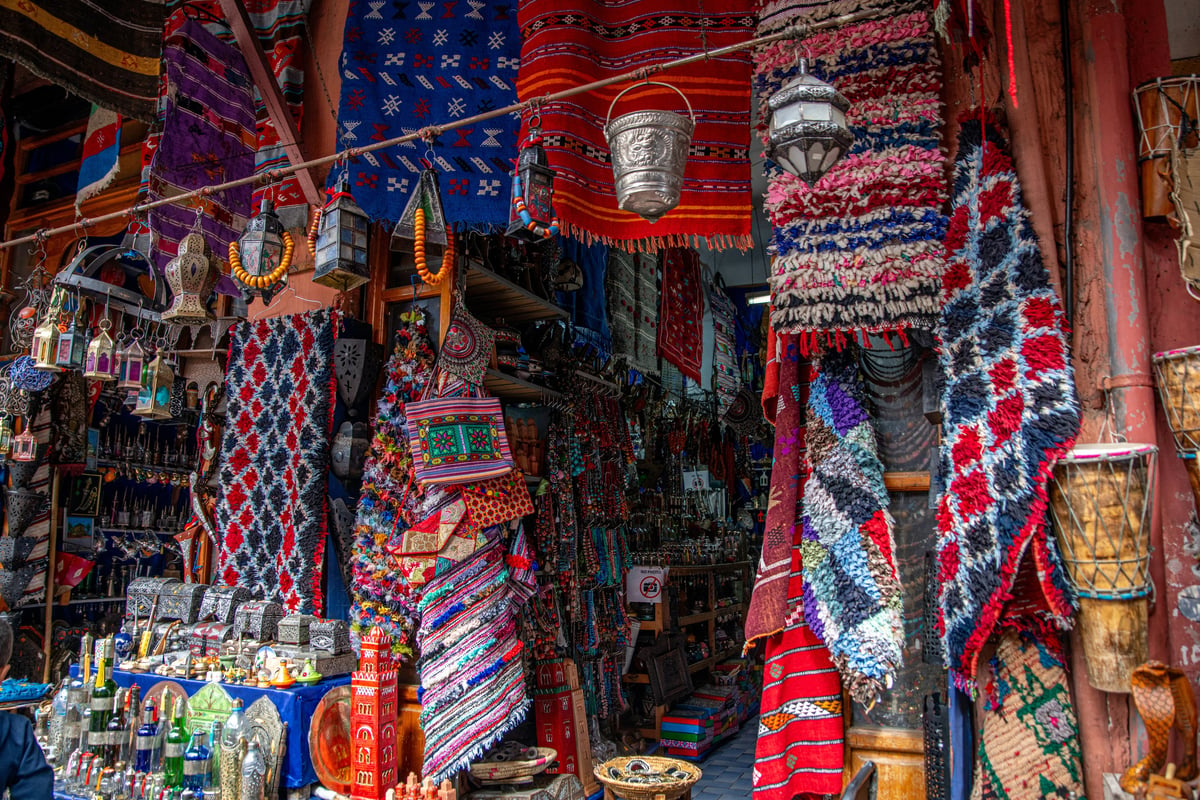
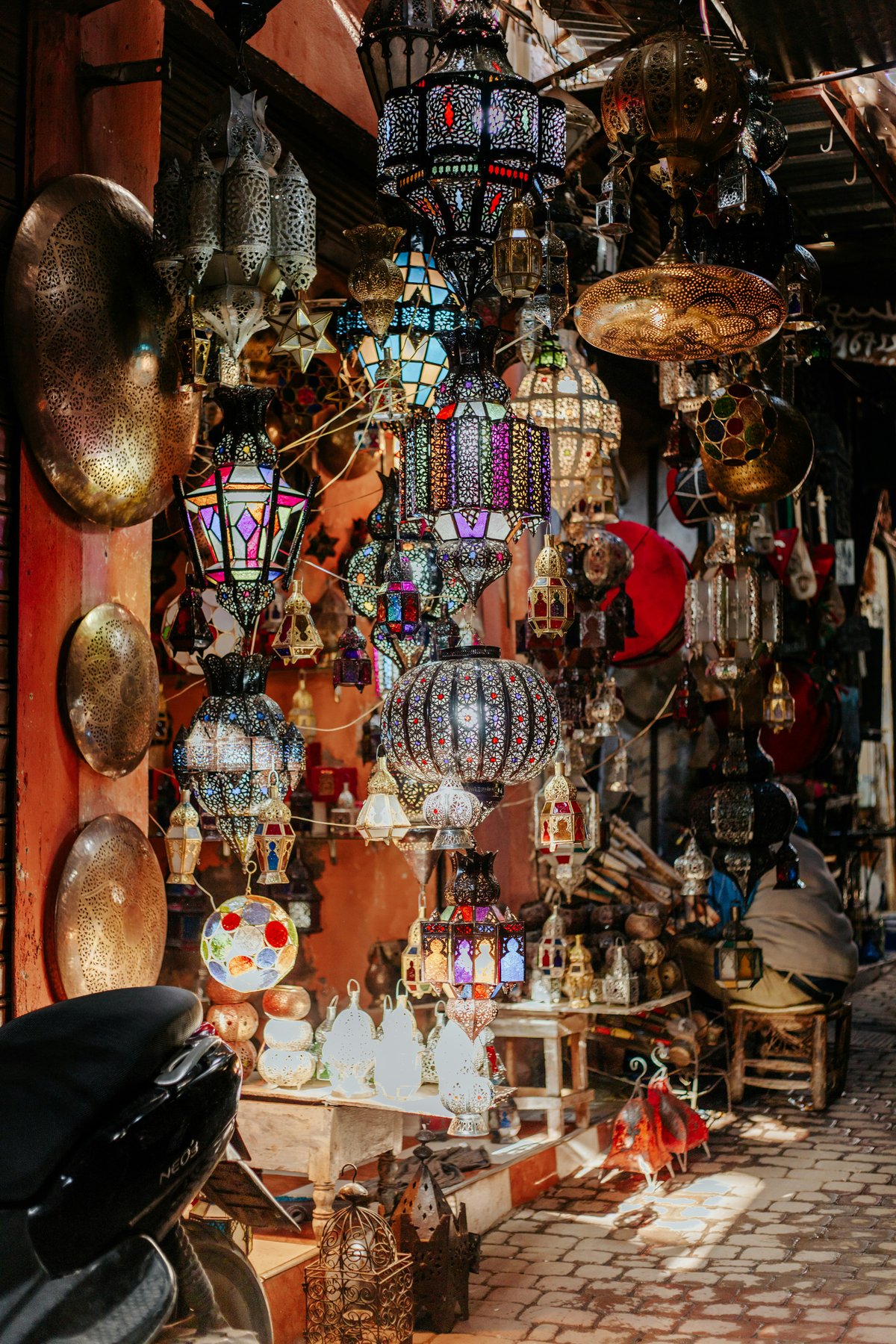
Because there are no tags, the fastest way to learn a fair price is to browse several stalls selling the same thing before buying anything, and to visit a fixed-price artisan cooperative such as an Ensemble Artisanal to benchmark quality and cost. Once you have seen the same lamp or scarf at three stalls, the opening numbers stop being intimidating and start being comparable. That browsing is the research that replaces a price tag.
The mechanics of a fair deal
A relaxed negotiation follows a shape: show genuine but unhurried interest, let the vendor name a number, counter well below it without insulting the work, and move in steps toward a middle both of you accept. Walking slowly toward the door often produces the final drop. Keep it warm and good-humoured throughout — this is a social exchange as much as a commercial one, and pressure or rudeness works against you. Our haggling guide covers the technique in depth.
Only bargain on what you'll buy
Begin negotiating only on something you would genuinely purchase at the right number, because naming a price and then walking away is the one move read as bad faith. If you are just looking, say so warmly and browse freely without engaging on price. A serious counter-offer is understood as a commitment to buy if the number is met, so make it only when you mean it.
What a fair landing feels like
Because there is no tag to check against, the honest measure of a good souk price is simpler than a number: you are content to pay it and the vendor is content to take it, both without resentment. Chasing the theoretical local price to the last dirham usually costs more in stress and goodwill than it saves. Aim for a figure that feels fair to you after you have browsed enough to know the range, and let the last few dirham go.
Small purchases are not worth a battle
For inexpensive items — a scarf, a small ceramic, a bag of spices — the gap between the tourist opening and a hard-won price is often trivial in absolute terms, and grinding it down sours a pleasant exchange. Save real negotiating energy for the larger buys, a rug or a leather jacket, where the amounts justify it. Reading which purchase deserves the effort is part of the skill.
Where prices are actually fixed
Not everything in Morocco is negotiable, and knowing where the opening-price economy stops saves confusion: supermarkets, modern shops, government artisan cooperatives, cafes and restaurants with menus, and metered taxis all have set prices you simply pay. Trying to haggle in these places marks you as much as overpaying in the souk does. The skill is reading which economy you are standing in.
The souk's opening price is the clearest expression of a pattern that runs through the whole trip: the first number is a position, and knowing the real range beforehand is what defends you. How that habit connects taxis, guides and shopping into one skill is worked out in the complete Morocco trip guide.
For what a day costs overall, our cost breakdown puts it in context.
Souk prices in Morocco: FAQ
Why is there no price tag?
Because the price is meant to be negotiated. The first number quoted is an opening position, often a multiple of the real selling price.
How do I know what's fair?
Browse several stalls for the same item first, and check a fixed-price artisan cooperative to benchmark quality and cost.
Am I being cheated with a high first price?
Not really — it's the expected first move. The tourist opening starts high; your job is to counter down to a range you're happy with.
Can I haggle everywhere?
No. Supermarkets, modern shops, cooperatives, restaurants with menus and metered taxis have fixed prices you simply pay.
Is it rude to bargain?
The opposite — it's expected. Keep it warm and unhurried, and only counter on something you'd actually buy.