A first-timer's guide to Fez — navigating the world's largest car-free medieval city, the tanneries, where to stay, and why hiring a guide the first day is worth it.
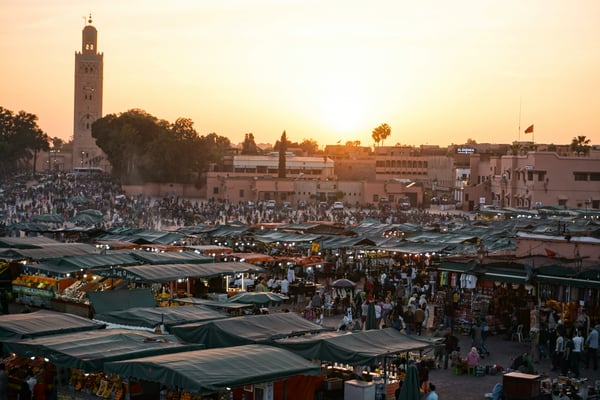
If Marrakech is Morocco's showman, Fez is its scholar — older, deeper, and more traditional. Home to the world's largest car-free urban area, Fez is a living medieval city that many travelers end up loving even more than Marrakech. It's also the most bewildering to navigate, so a little preparation goes a long way.
Getting to Fez
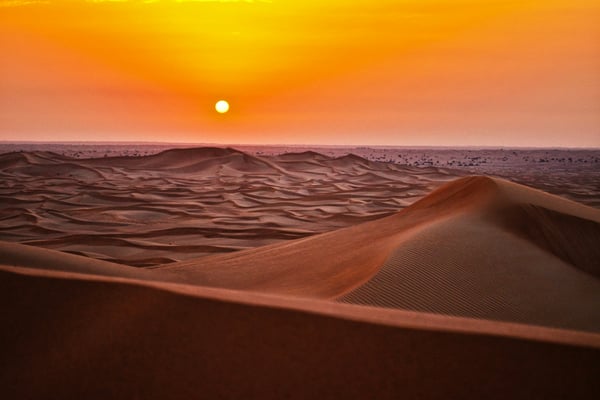
Fez is well connected: comfortable ONCF trains run from Casablanca, Rabat, and Marrakech, or you can fly into Fez–Saïss (FEZ), useful if you're running the classic loop in reverse. Fez pairs naturally with Chefchaouen, about four hours north by bus. On a typical first-timer loop, many travelers arrive in Fez after the desert and leave from here or continue north. Our flights guide covers open-jaw routing.
The medina: embrace the maze
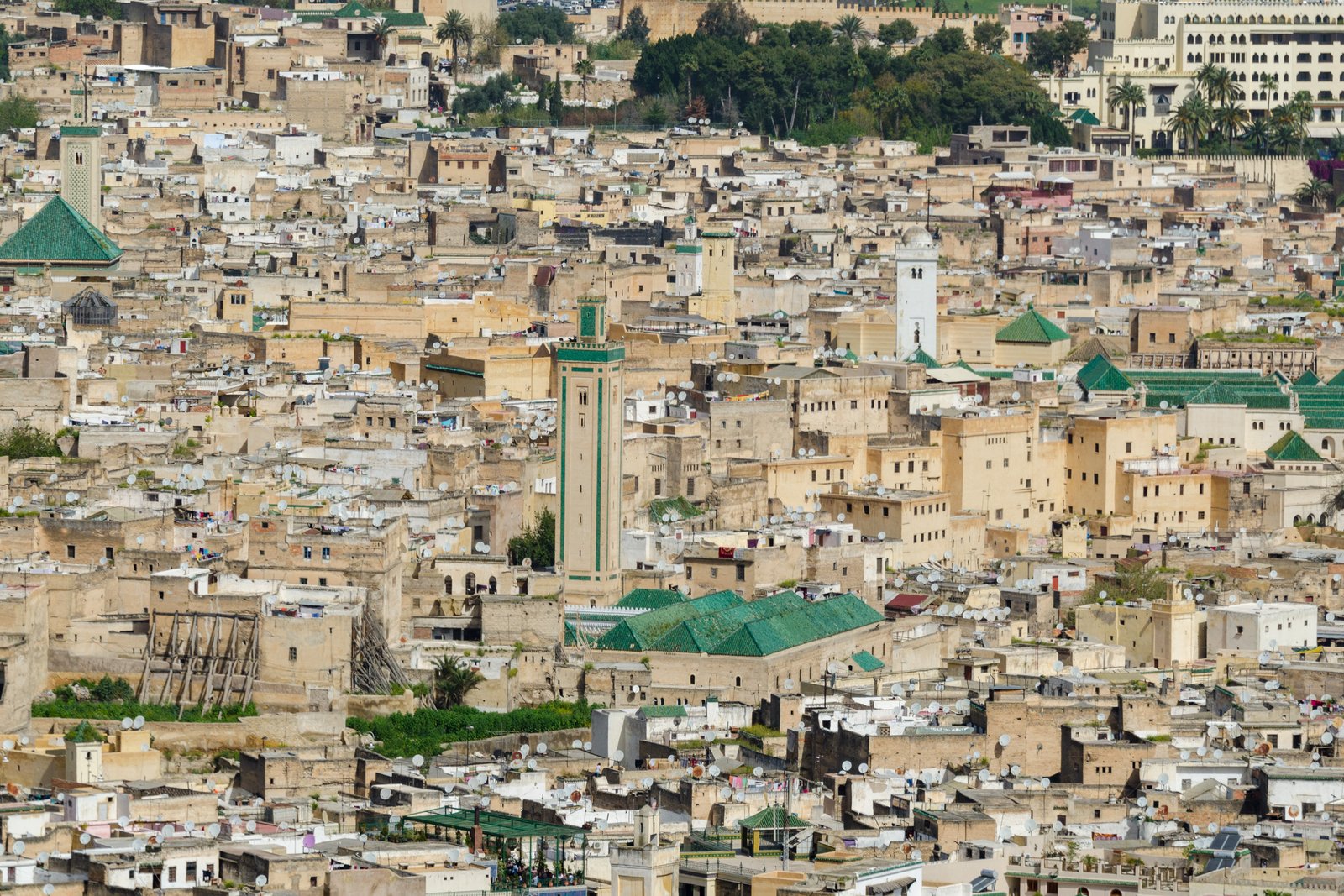
Fès el-Bali, the old medina, is the main event — a warren of thousands of narrow lanes with no cars, where donkeys still haul goods and it's genuinely easy to lose all sense of direction. This is not a flaw; it's the experience. That said, hiring a licensed local guide for your first morning is money exceptionally well spent: they orient you, get you past the faux-guide hustle, and open doors you'd walk right past. After that you can explore on your own with an offline map and a relaxed attitude toward getting lost.
What to see in Fez
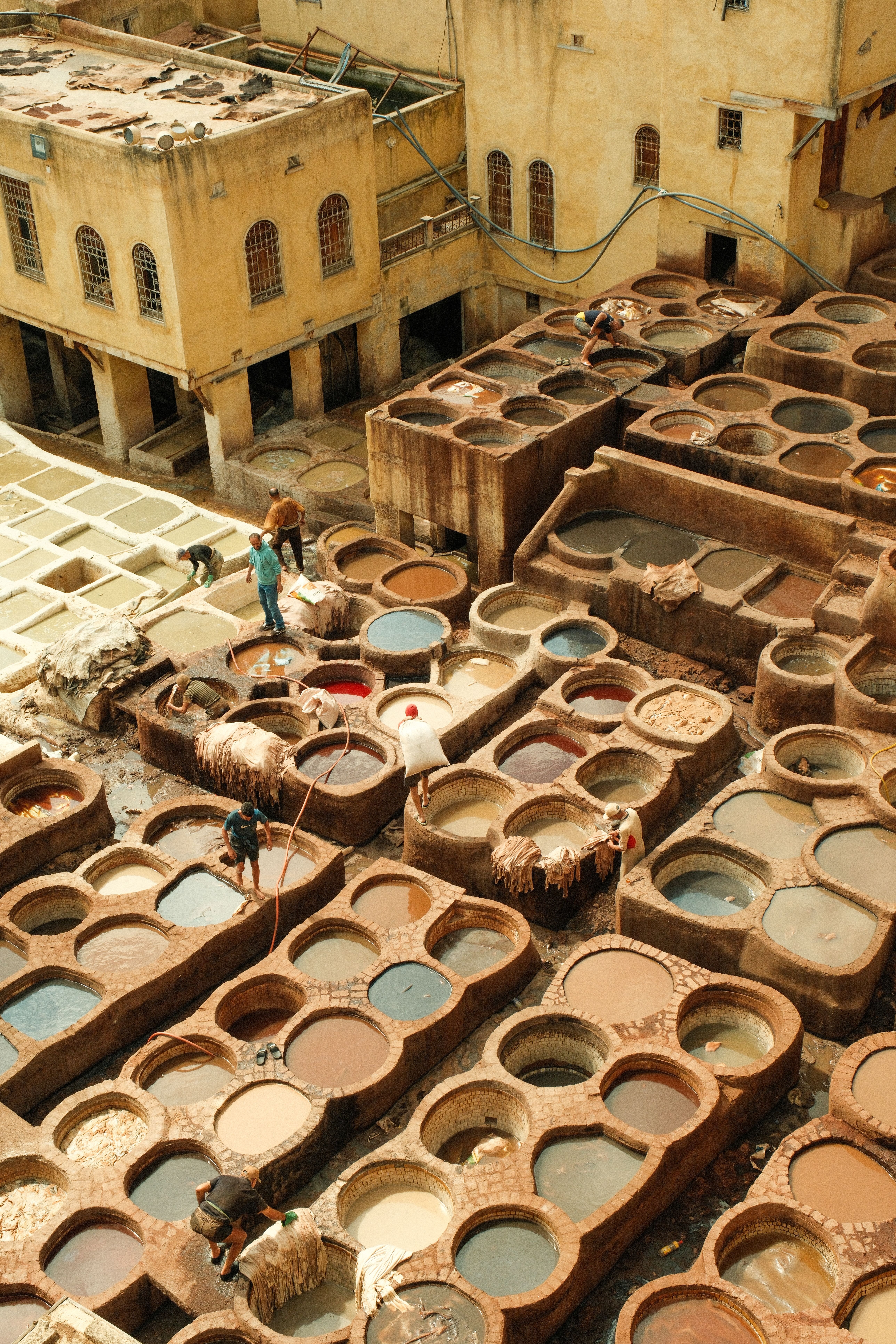
The Chouara Tannery
Fez's iconic image — centuries-old stone dye pits worked by hand, best viewed from the terraces of the surrounding leather shops (you'll be handed a sprig of mint for the smell). Expect a sales pitch upstairs; enjoy the view, buy if you like, no pressure to.
The madrasas
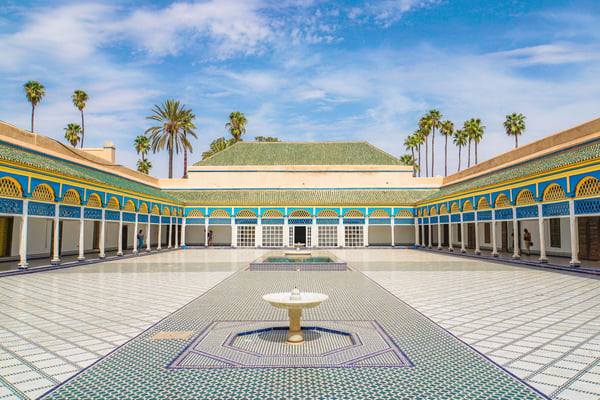
The Bou Inania and Al-Attarine madrasas are jewels of Marinid craftsmanship — intricate zellij tile, carved cedar, and stucco. Small but breathtaking.
Al-Qarawiyyin
Founded in 859, considered one of the oldest continuously operating universities in the world. Non-Muslims can't enter the mosque but can glimpse the courtyard.
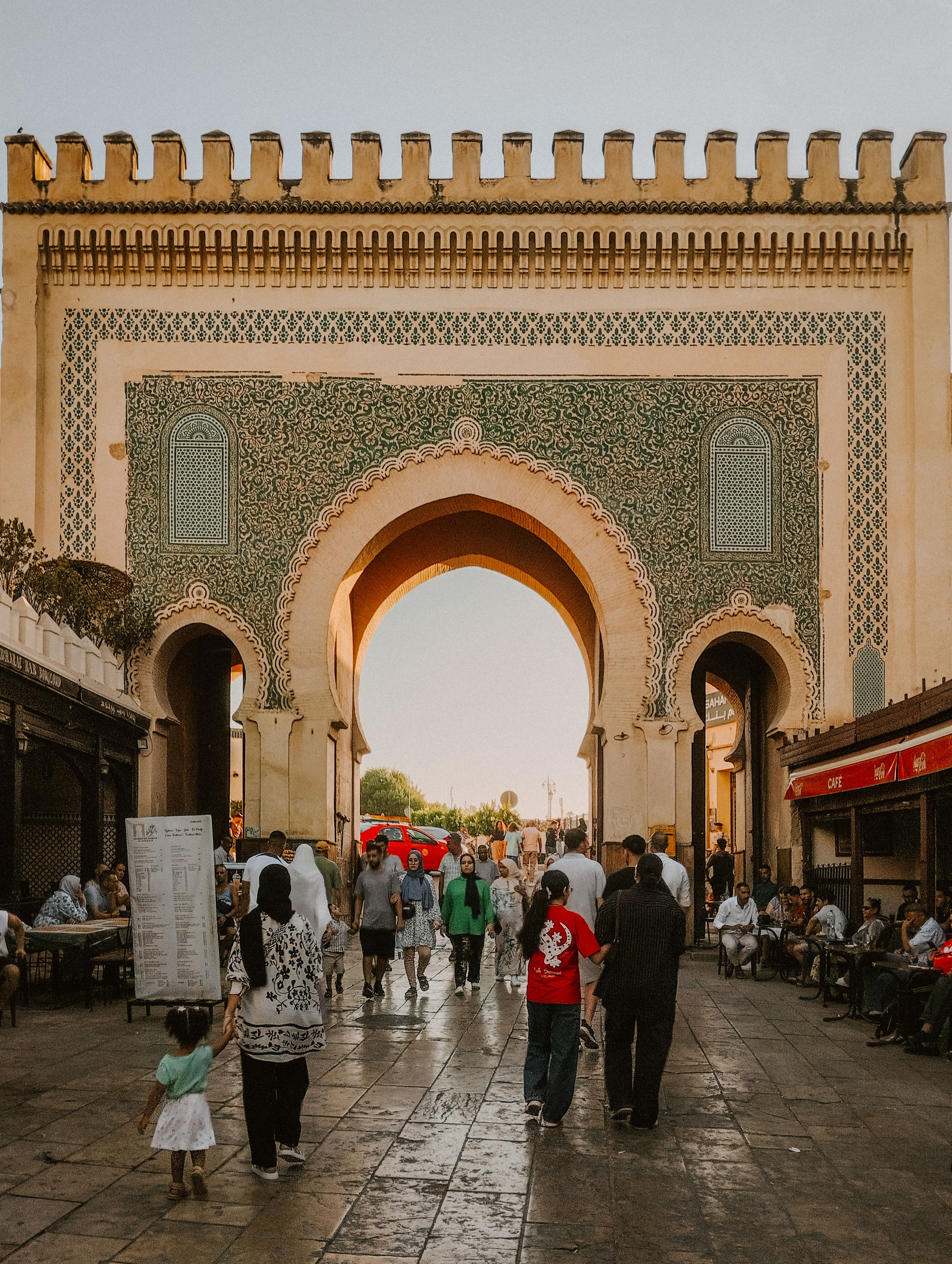
Bab Bou Jeloud
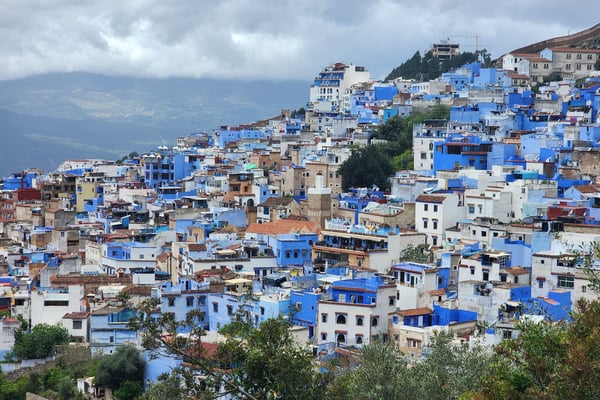
The grand tiled Blue Gate that marks the western entrance to the medina — a classic first stop and orientation point.
Where to stay
Stay in a riad inside Fès el-Bali for the full immersion — restored courtyard houses tucked into the medina, with staff who'll help you navigate. If you prefer modern comfort and easier access, the Ville Nouvelle (Fès el-Jdid and beyond) has conventional hotels. Most first-timers choose the medina riad for atmosphere.
Day trips from Fez
Two stand out. Meknes and the Roman ruins of Volubilis make a rewarding full day — an imperial city plus remarkably intact mosaics, an easy trip from Fez. And Chefchaouen, the blue city, is a few hours north; while it's often an overnight rather than a day trip, some visit from Fez. See our Chefchaouen guide.
Eating in Fez
Fez is considered the culinary capital of Morocco, and its signature dish is pastilla (bastilla) — a remarkable sweet-and-savory pie of poultry, almonds, and cinnamon wrapped in flaky pastry and dusted with sugar. Beyond that, the city's riads and restaurants serve some of the country's finest traditional cooking: slow-cooked tagines, harira soup, and elaborate multi-course meals in restored palaces. Because the medina is a maze, having your riad recommend and even reserve a dinner spot saves you wandering hungry. Street food and hole-in-the-wall spots near Bab Bou Jeloud are cheap and good for lunch. See our guide to Moroccan dishes.
Etiquette in a traditional city
Fez is more conservative and less touristy than Marrakech, so a little cultural awareness goes further here. Dress modestly — cover shoulders and knees — especially away from the main tourist lanes. Ask before photographing people, particularly in the residential heart of the medina where daily life goes on around you. Non-Muslims can't enter the mosques, so admire them from doorways and courtyards. And accept that the medina is a living, working city, not a museum — donkeys have right of way, workshops spill into the lanes, and that authenticity is exactly what makes Fez special. Our etiquette guide covers the basics.
Getting around Fez
Inside Fès el-Bali there is no getting around except on foot — no cars, and the lanes are too narrow and steep for anything but walking (and the occasional donkey). Wear sturdy, comfortable shoes; the medina is hilly and the ground uneven. For travel between the medina and the Ville Nouvelle or the train station, petit taxis are cheap and plentiful — agree the fare or ask for the meter. Because addresses are meaningless in the maze, note the nearest gate (bab) to your riad and let staff guide you in on arrival. An offline map helps, but don't rely on GPS to be precise between the tall medina walls.
How long to stay
Two nights (one full day and a bit) is the sweet spot for a first visit — enough to do a guided morning, explore the tanneries and madrasas, and wander at leisure. Fez is quieter and more conservative than Marrakech, and less relentlessly touristy, which many find a welcome contrast. Fit it into your route with our 10-day itinerary. A common first-timer pattern is to arrive in Fez from the desert, spend two nights, then continue north to Chefchaouen or fly out — Fez makes a natural, satisfying end to the classic loop, sending you home with the memory of Morocco at its most timeless. Fez's place in a first-timer loop is set out in the complete Morocco trip guide.
Fez FAQ
Do you need a guide in Fez?
Not required, but highly recommended for your first morning — the medina is a genuine labyrinth, and a good guide orients you and fends off faux guides. After that you can explore solo.
How many days do you need in Fez?
Two nights is ideal — a guided morning plus free time for the tanneries, madrasas, and medina wandering.
Is Fez better than Marrakech?
Different, not better. Fez is older, more traditional, and less touristy; Marrakech is livelier and more set up for visitors. Many first-timers do both and love the contrast.
Can you visit the tanneries in Fez?
Yes — view the Chouara tannery from the terraces of surrounding leather shops. Expect a sales pitch, but there's no obligation to buy.