The Classic 10-Day Morocco Itinerary for First-Timers
The balanced 10-day Morocco route: Marrakech, the Atlas Mountains, a Sahara desert night, Fez, and the blue city of Chefchaouen — with a map and day-by-day plan.
Ten days is the sweet spot for a first trip to Morocco: enough to see the headline places without sprinting, enough to spend a night in the Sahara without the whole trip becoming a road trip. This is the classic first-timer loop — Marrakech, the Atlas, the desert, Fez, and the blue city of Chefchaouen — arranged so each place feels distinct and the travel days make sense.
Days 1–3: Marrakech
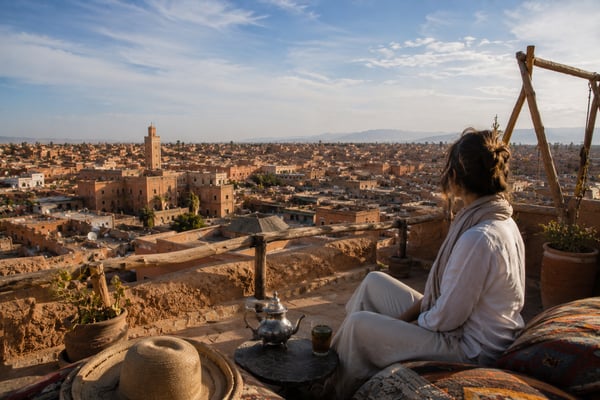
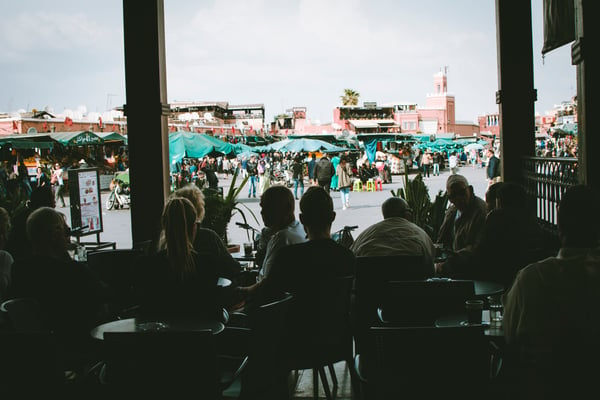
Start in Marrakech, the sensory heart of Morocco. Give yourself a day to settle into a riad and ease into the medina without a plan — get pleasantly lost, then find your bearings. On your full days, hit the highlights: the Bahia Palace, the cobalt-blue Majorelle Garden, the Koutoubia minaret, and the endless souks. Save an evening for Jemaa el-Fnaa, the famous square that transforms at dusk into a swirl of food stalls and performers. Use one day for an Atlas Mountains day trip — the Ourika Valley or Imlil are an easy 1–1.5 hours out, with Berber villages and waterfalls. Full details in our Marrakech guide.
Days 4–5: The Sahara
Days 4 and 5 are the Sahara crossing, and it is a proper journey rather than a day trip — most first-timers do it as a guided multi-day tour with a driver, which handles the long distances and the overnight stops. The route runs south over the High Atlas, through the Dades Valley, and into the dunes at Merzouga.
Day 4: the road south
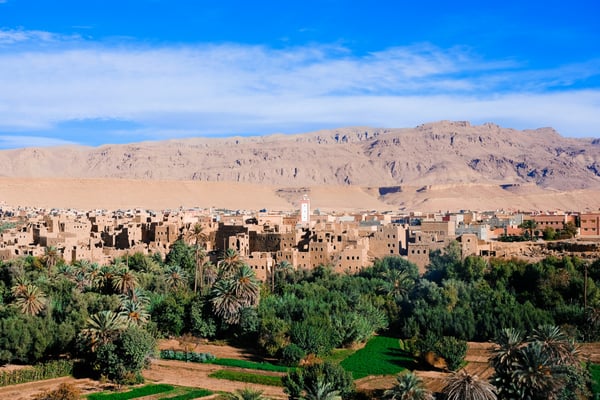
Cross the High Atlas by the dramatic Tizi n'Tichka pass, stopping at Aït Benhaddou — the UNESCO earthen kasbah you've seen in countless films — then continue through the Dades Valley for an overnight along the way.
Day 5: into the dunes
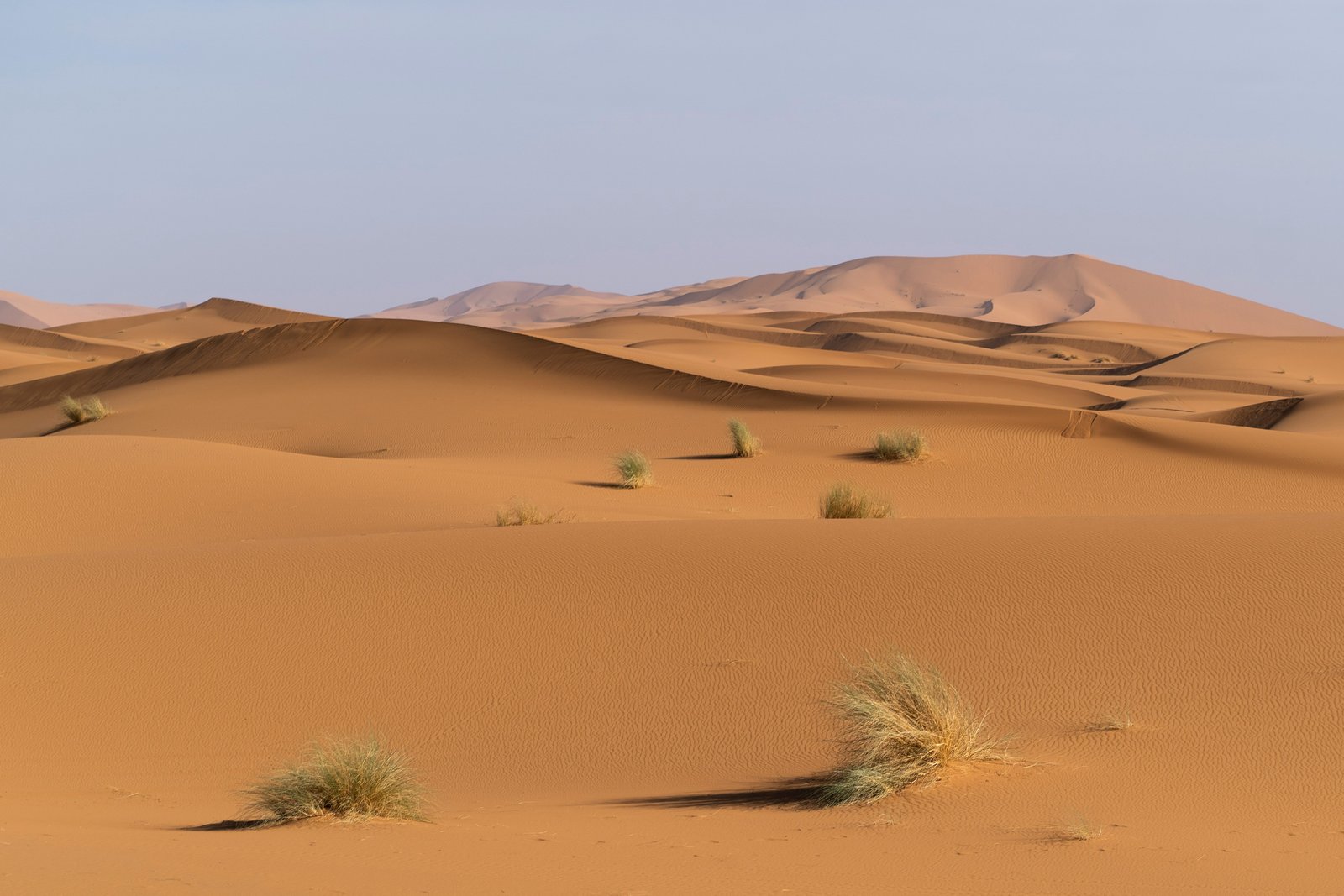
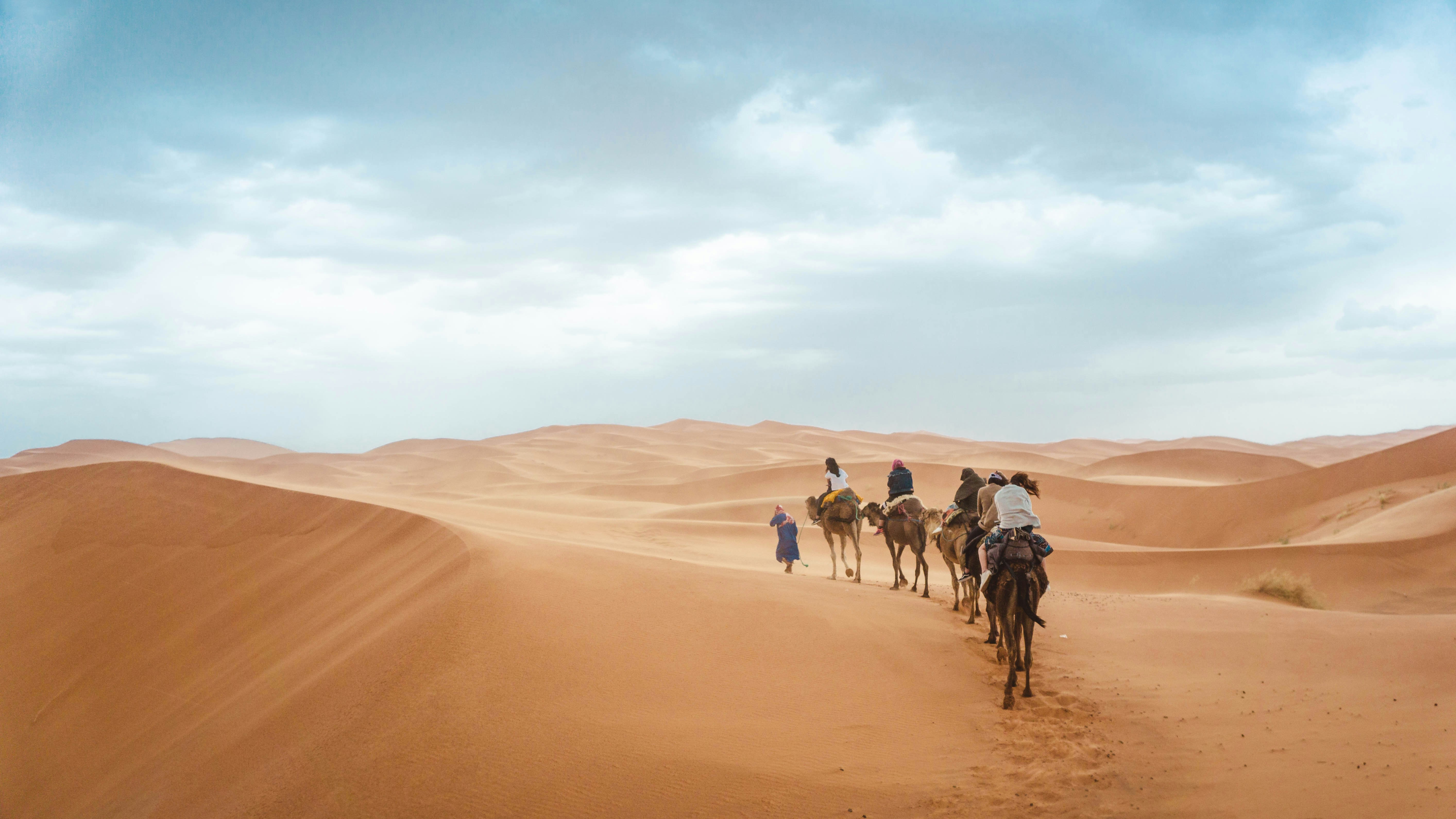
Through the Todra Gorge and on to Merzouga at the edge of Erg Chebbi, the tall golden dunes that are the postcard Sahara. Late afternoon, ride a camel into the dunes to a desert camp for dinner, stargazing, and a night under more stars than you've ever seen. Wake for sunrise over the sand. Our Sahara guide covers what to pack and expect.
Days 6–7: Fez
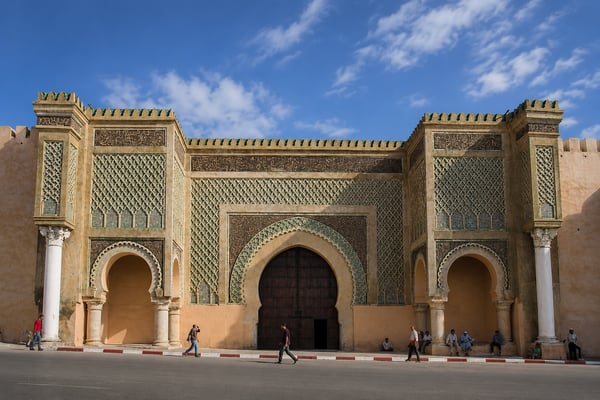
From the desert, transfer to Fez (a long but scenic drive). Fez is home to the world's largest car-free medieval city — Fès el-Bali — a genuine labyrinth where hiring a local guide for your first morning is money well spent. See the famous Chouara tanneries from a surrounding terrace, the intricate madrasas, and the ancient Qarawiyyin. Fez is more traditional and less touristy than Marrakech, and many travelers find it their favorite. Base yourself in a medina riad for the atmosphere.
Days 8–9: Chefchaouen
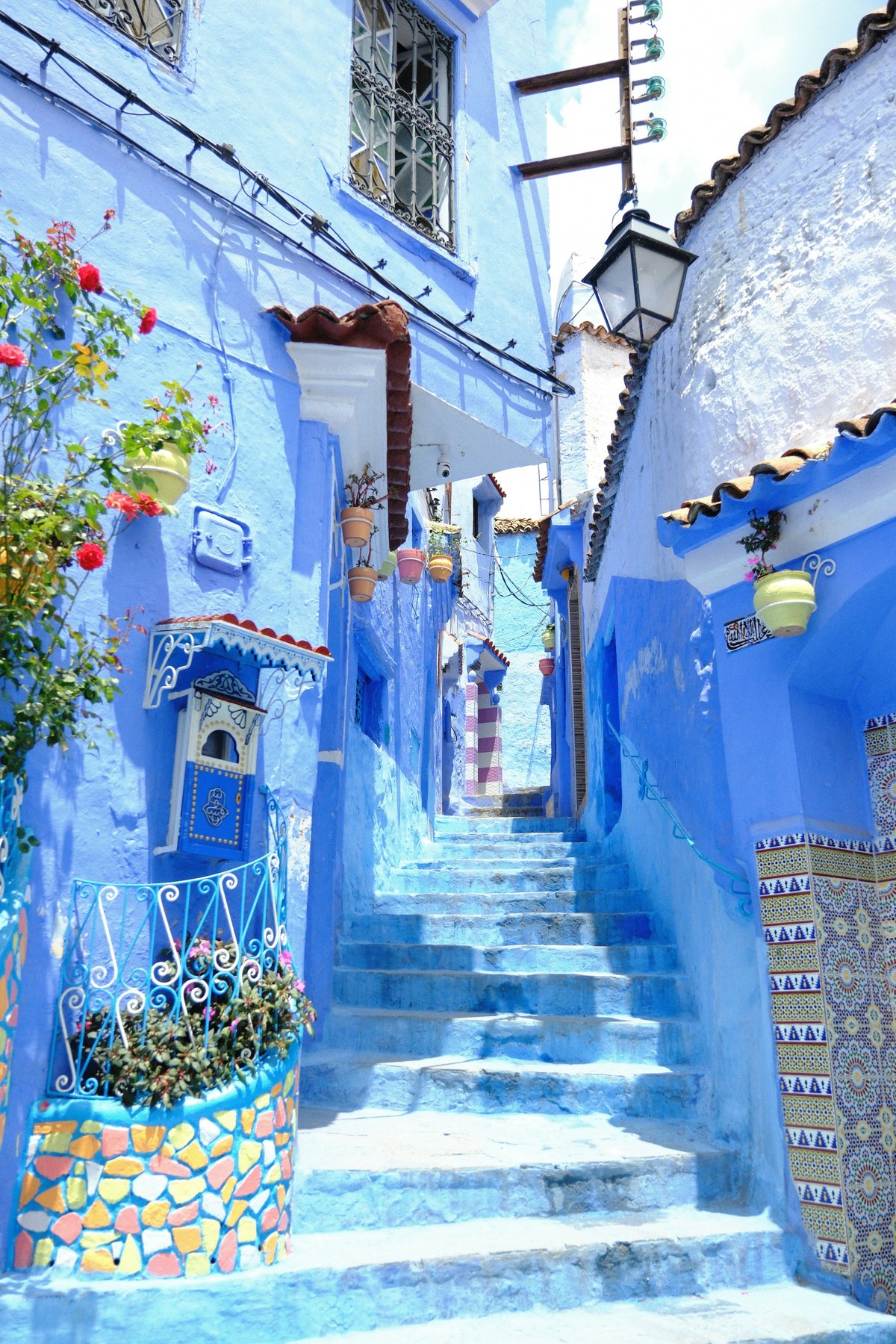
Head north to Chefchaouen, the blue-washed mountain town, by bus or private transfer (there's no train). It's small, relaxed, and endlessly photogenic — a gentle change of pace after the intensity of the big cities. Wander the blue lanes, climb to the Spanish Mosque viewpoint for sunset over the rooftops, and if you want a hike, the Akchour waterfalls in the surrounding Rif Mountains make a good day out. This is the trip's exhale.
Day 10: Home
Make your way back toward Casablanca or Fez for your departure. If you built your flights as an open-jaw (into Marrakech, out of Casablanca or Fez), you avoid backtracking entirely — worth arranging when you book, as our flights guide explains.
Ways to customize this route
The 10-day loop is a template, not a rulebook, and a few swaps tailor it to your taste. If you'd rather have coast than blue city, drop Chefchaouen and add Essaouira as an overnight or a long day trip from Marrakech — a windswept, laid-back Atlantic town that's an easy change of pace. If you love mountains, trade a desert night for an extra day trekking or staying in the Atlas around Imlil. If cities tire you quickly, shorten Fez to one full day and add a slower stretch in Chefchaouen or the mountains. And if you're traveling with kids, build in more downtime — riad pools are a lifesaver in the afternoon heat, and the camel ride and desert camp are usually a hit. The bones of the route (Marrakech, desert, Fez) stay; the edges flex to you.
What each day actually feels like
Set expectations for the rhythm. The Marrakech days are intense and sensory — busy, hot, occasionally overwhelming in the best way — so you'll want your riad as a retreat. The desert days involve real driving, broken up by spectacular stops; the payoff of the dune night is worth every hour in the car. Fez is a slower burn: less flashy than Marrakech, deeper the more you look. Chefchaouen is the exhale — small, gentle, and photogenic. Understanding this arc helps you pace yourself: front-load energy for the cities and the desert, and let the northern leg be your wind-down.
Packing and pacing notes
A few practical things for this specific route. Pack layers — the desert swings from hot afternoons to genuinely cold nights, and the Atlas can be cool. Bring a scarf (useful for sun, dust, and modesty at religious sites), comfortable walking shoes for endless medina cobbles, and a small daypack. Keep some cash on you at all times, since much of this route is cash-only once you leave the hotels. And resist the urge to add a sixth destination; the strength of this itinerary is that it breathes. For the money side, our cost guide breaks down what the whole thing runs.
Why the order works
There's logic to the sequence beyond just geography. Starting in Marrakech eases you in through the most tourist-ready city, where riads, guides, and English are easiest. Doing the desert mid-trip means you've acclimated before the long drives, and you return to civilization in Fez rather than backtracking. Ending in Chefchaouen's calm sends you home relaxed rather than frazzled from a big-city finale. And the whole thing traces a rough line south then north, so an open-jaw flight (into Marrakech, out near Fez or Casablanca) means you never repeat a leg. Reverse it if your flights demand — the route works both directions — but this order gives the smoothest emotional and logistical arc for a first trip.
Tips for this route
Before the specifics, three things that quietly make or break the 10 days: get an eSIM so you land connected and can navigate from minute one; carry a stash of small dirham notes for the constant small payments this route involves; and book the desert tour and your riads well ahead, since the best small riads sell out in peak season and a good desert operator is worth securing early. With those handled, the rest of the trip runs on rails.
A few things that make the 10 days flow: consider a mix of guided and independent — a driver for the desert leg, independent time in the cities. Book riads early, especially in peak spring and fall. Pack layers: the desert is hot by day and cold at night, and the Atlas can be cool. And don't over-schedule the cities; the medinas reward wandering more than checklist-chasing. If you have only a week, our 7-day itinerary trims this down; with two weeks, the 14-day version adds the coast. The reasoning behind this order, and what breaks when you change it, is in the complete Morocco trip guide.
10-day Morocco itinerary FAQ
Is 10 days enough for Morocco?
Yes — 10 days is the ideal first-timer length. It covers Marrakech, the Atlas, a Sahara night, Fez, and Chefchaouen at a comfortable pace.
Should I book a tour or do this independently?
Most first-timers do a hybrid: a guided multi-day tour for the desert leg (it handles the long drives) and independent time in the cities.
Which direction should I travel the loop?
Either works. Starting in Marrakech and ending near Fez or Casablanca lets you fly open-jaw and avoid backtracking.
How much does a 10-day Morocco trip cost?
A mid-range trip runs roughly $1,000–1,600 per person on the ground plus flights. See our full cost breakdown for budget and luxury ranges.