Beyond the sensory rush of the souks and Jemaa el-Fnaa, Marrakech holds a cluster of ticketed monuments — palaces, tombs and a madrasa — that reward a calm half-day of proper sightseeing. They sit close together in the southern medina, so a single walking loop covers most of them. Here is what each one is, which are unmissable, and how to string them into one unhurried morning.
Bahia Palace
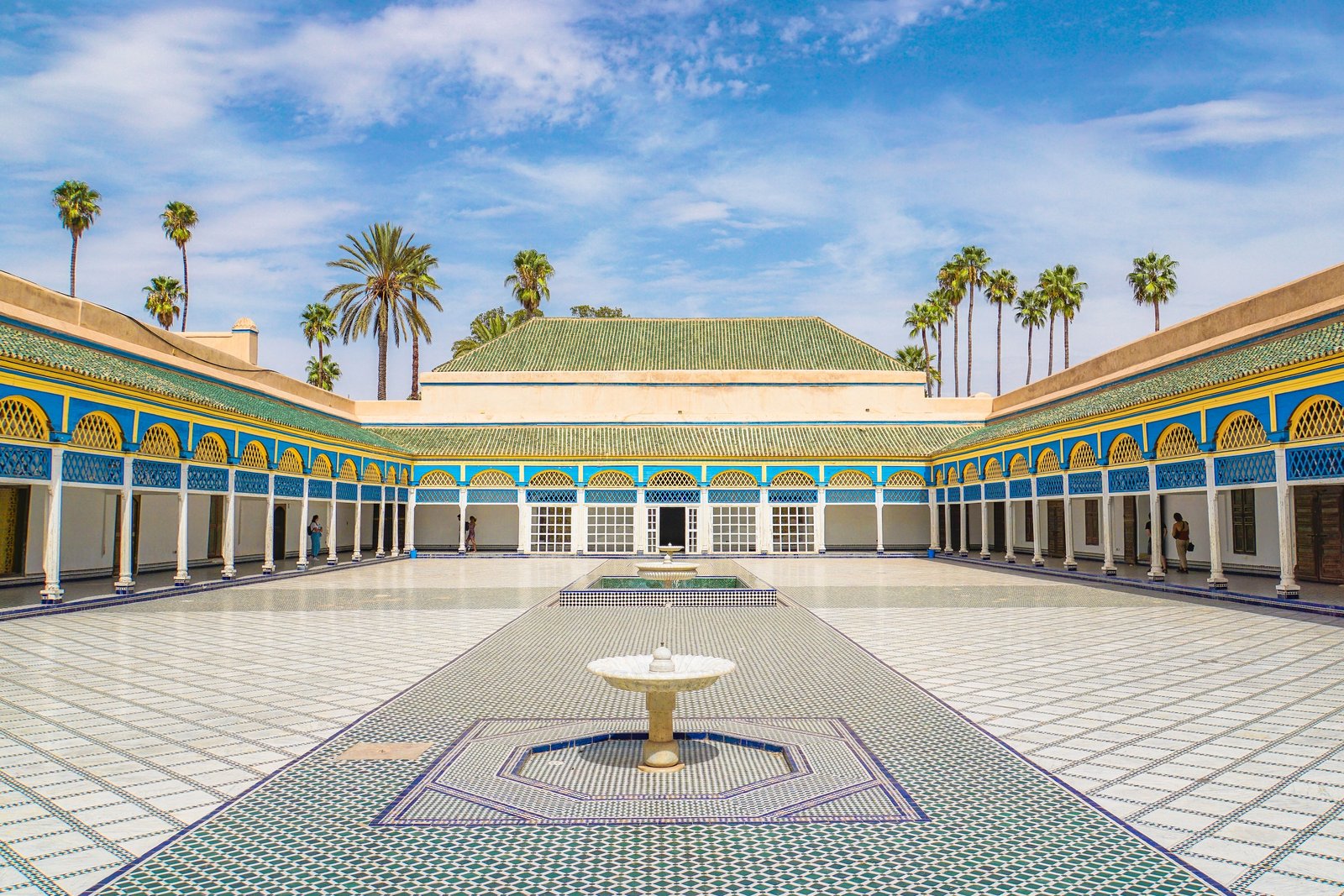
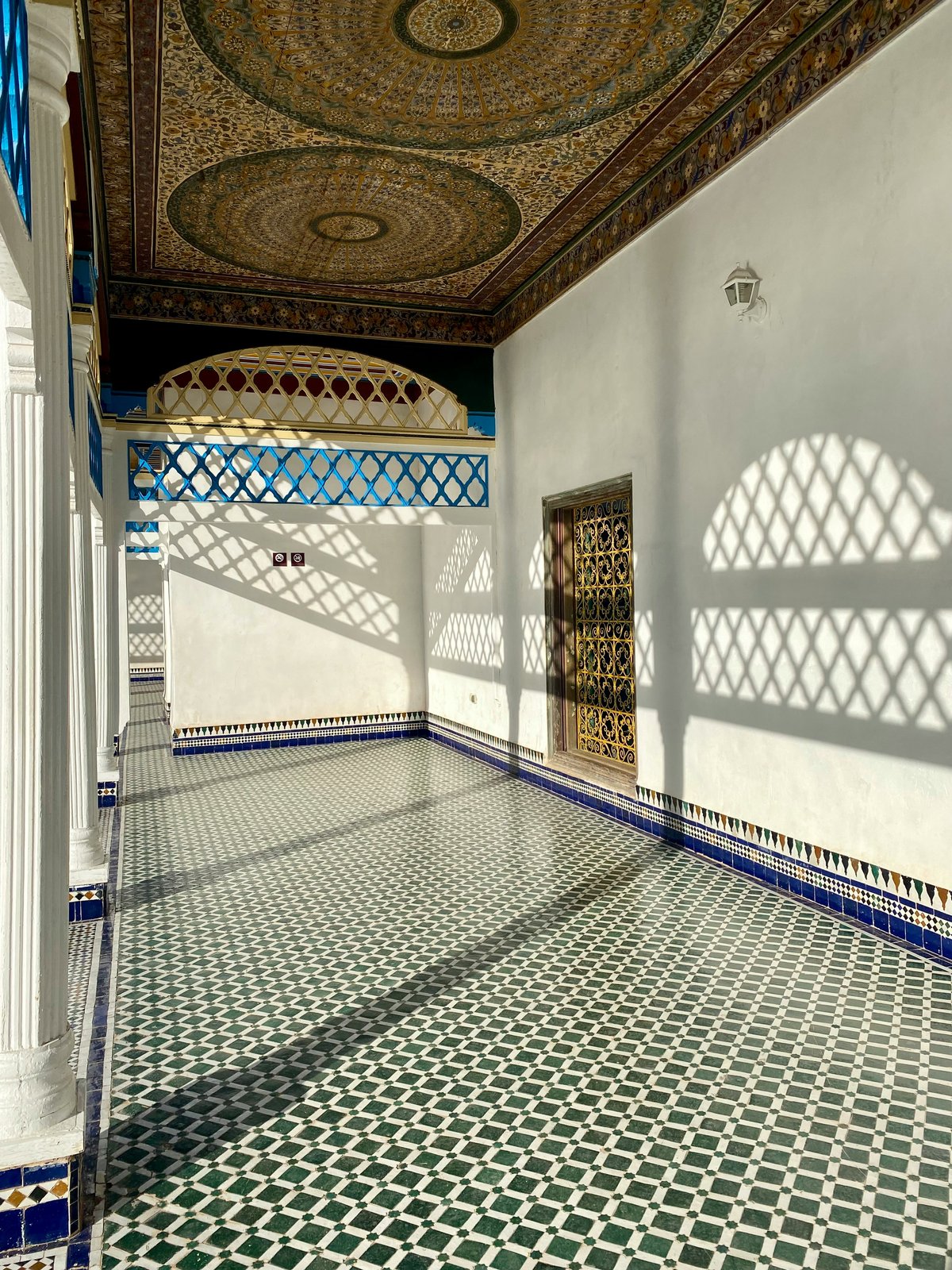
Marrakech's monuments reward slow looking rather than a quick tick, since their glory is in the detail — the carving, the tile, the play of light in a courtyard — rather than in scale. Budget more time per site than the map suggests. The Bahia Palace is the standout: a 19th-century palace of courtyards, painted cedar ceilings and intricate tilework, designed to be the greatest of its time, and it remains the most rewarding single monument in the city. Give it a proper hour to wander the rooms and gardens rather than rushing through. It is the one most first-timers remember, and the best place to see Moroccan craftsmanship at palace scale.
The Saadian Tombs
The Saadian Tombs are a 16th-century royal necropolis, sealed and forgotten for centuries before their rediscovery, and their central chamber holds some of the finest zellij tile and carved stucco in Marrakech. The site is small and can bottleneck at the famous main mausoleum, so arrive early to see it without a queue. It is compact but genuinely beautiful, and pairs naturally with the nearby Kasbah quarter.
Ben Youssef Madrasa
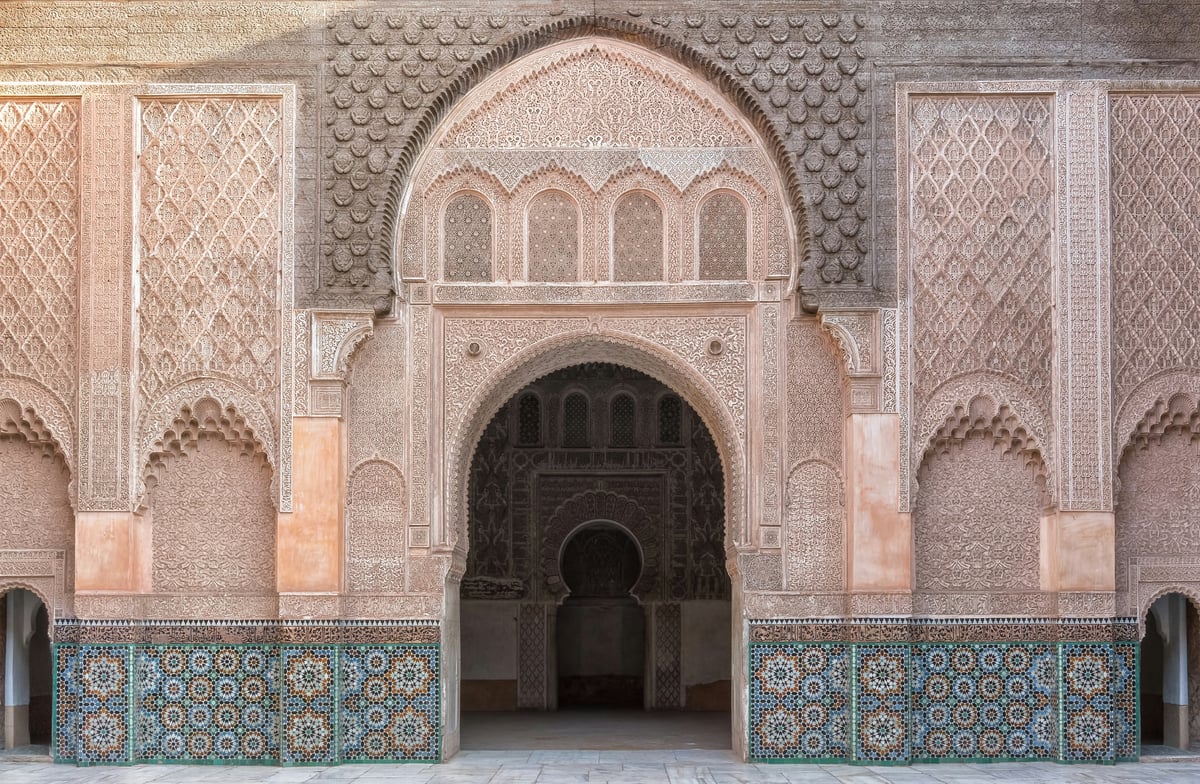
The Ben Youssef Madrasa, a former Islamic college and one of the largest in North Africa, is for many visitors the architectural highlight of the city: a serene central courtyard surrounded by extraordinarily detailed carving, tile and cedar. Recently restored, it is open to all visitors, unlike the mosques, and it is worth timing for early or late light when the courtyard is quietest. Do not skip it for the more famous palace.
Koutoubia Mosque
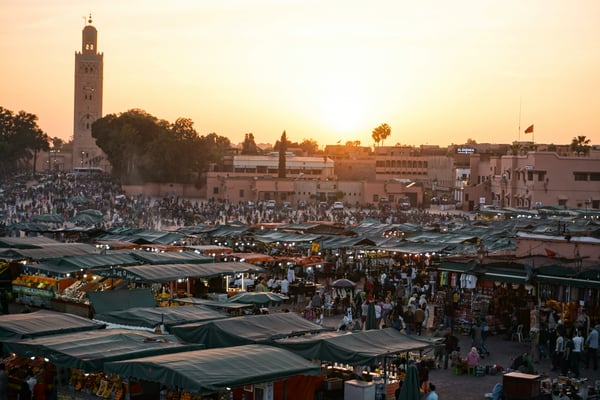
The Koutoubia Mosque anchors the skyline with its great 12th-century minaret, the model for towers in Seville and Rabat, though as a working mosque its interior is closed to non-Muslims. You admire it from outside and from the surrounding gardens, which are pleasant and free. It works best as a landmark to orient by and photograph rather than a stop in itself, and its gardens make a calm pause between the square and the palaces.
El Badi Palace, the ruin
Near the Bahia sits a very different monument: El Badi Palace, once a lavish 16th-century showpiece, now a vast, atmospheric ruin of roofless walls, sunken gardens and nesting storks. Where the Bahia shows Moroccan craftsmanship intact, El Badi shows its grand scale stripped back to bare structure, and the contrast between the two, visited back to back, is genuinely striking. Climb the terraces for a wide view over the medina rooftops.
Tickets, dress and timing
The monuments each charge a small separate entry, payable at the gate, and none requires advance booking except at peak periods. Dress modestly, as you would anywhere in Morocco, and carry small notes for the tickets and any guardian's tip. Mornings are cooler and quieter across all of them, so the earlier you start the loop, the more comfortable and crowd-free the whole cluster feels.
Stringing them together
The efficient plan is a southern-medina loop: start early at the Saadian Tombs before the crowds, walk to the nearby Bahia Palace for a longer visit, pass the Koutoubia and its gardens, and fit Ben Youssef — slightly north — either side depending on your route. Half a day covers the cluster comfortably, and doing it in the morning leaves the hot afternoon for a shaded cafe or the souks. Buy tickets at each site; they are inexpensive.
Fitting the monuments into a Marrakech visit alongside the souks, the square and a day trip is a small sequencing exercise that the wider trip repeats at every scale. How the city's pieces fit the loop is worked out in the complete Morocco trip guide.