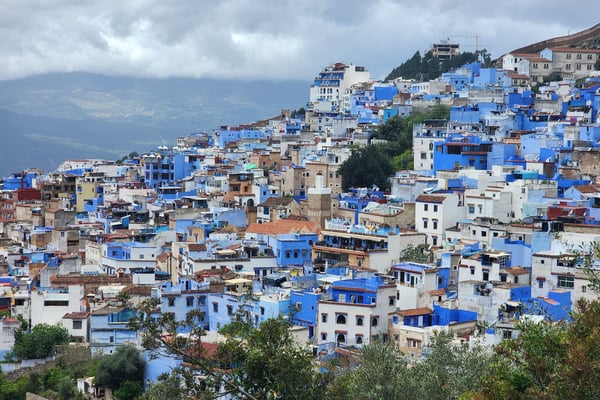
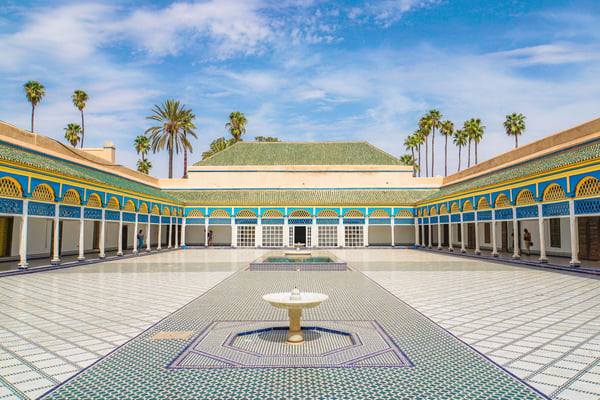
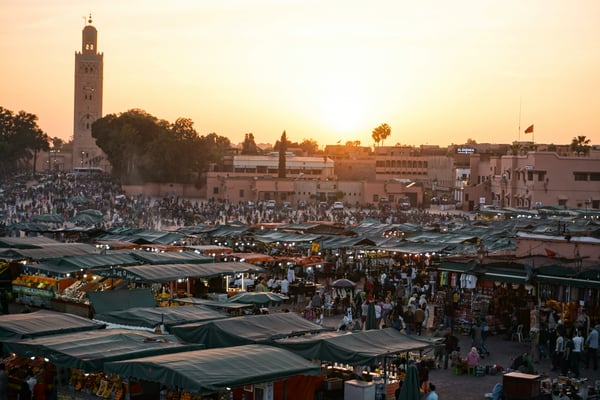
Tucked into the Rif Mountains of northern Morocco, Chefchaouen — the famous "Blue City" — is unlike anywhere else in the country. Its medina is washed in every shade of blue, from powder to cobalt, spilling down the hillside in a photographer's dream. Small, relaxed, and refreshingly low-hassle, it's the gentle counterpoint to the intensity of Marrakech and Fez.
How to get to Chefchaouen
Chefchaouen has no airport or train station, so you'll arrive by road. The reliable options are a CTM or Supratours bus, or a grand taxi, from Fez (about four hours) or Tangier (about two hours). It's most often visited as part of a northern leg — either after Fez heading north, or on the way to or from Tangier. Because it's a bit off the main loop, factor the travel time in; plenty of first-timers skip it on a short trip and prioritize it on a longer one. Our detailed transport guide covers the routes.
What to see and do
Wander the blue medina
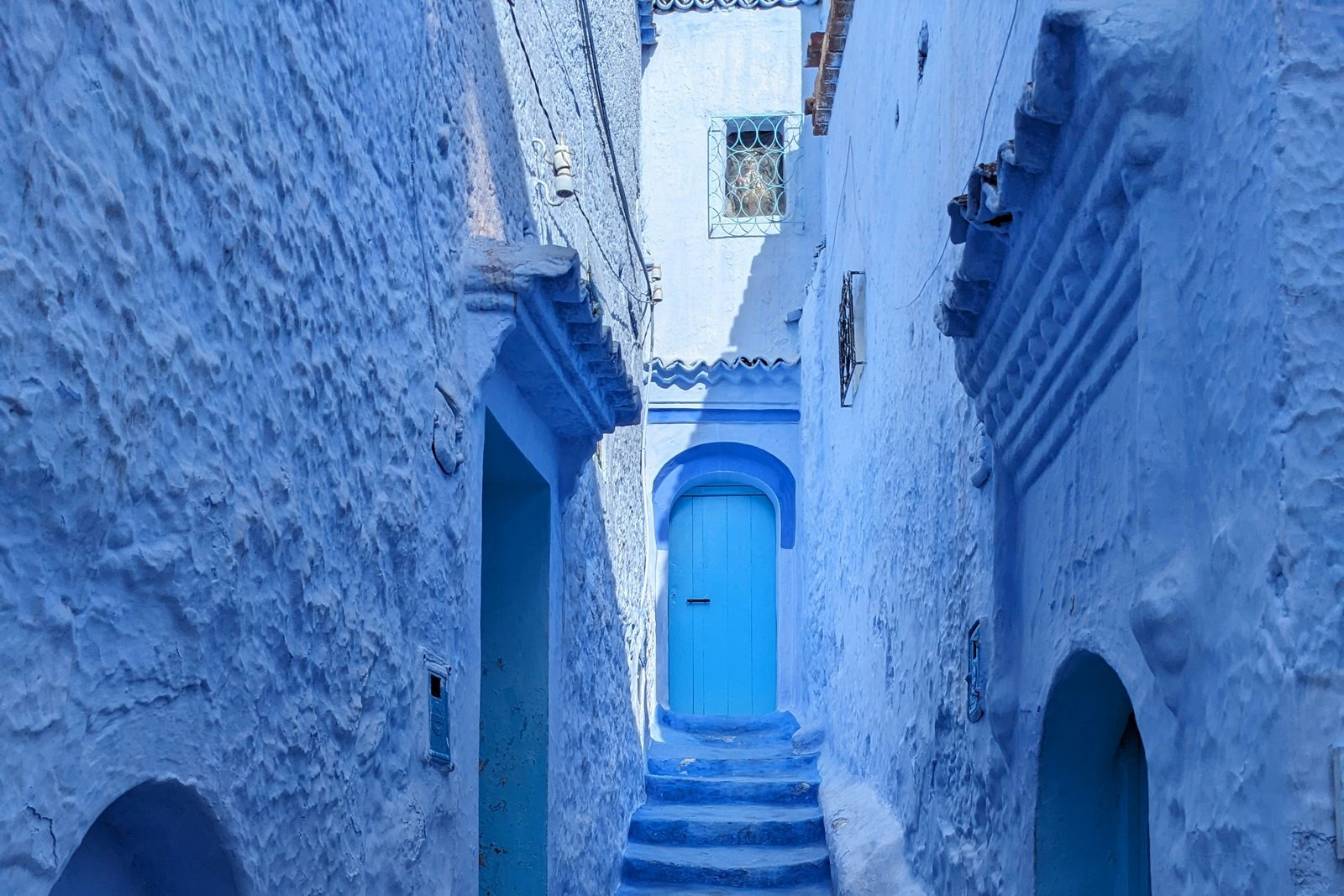
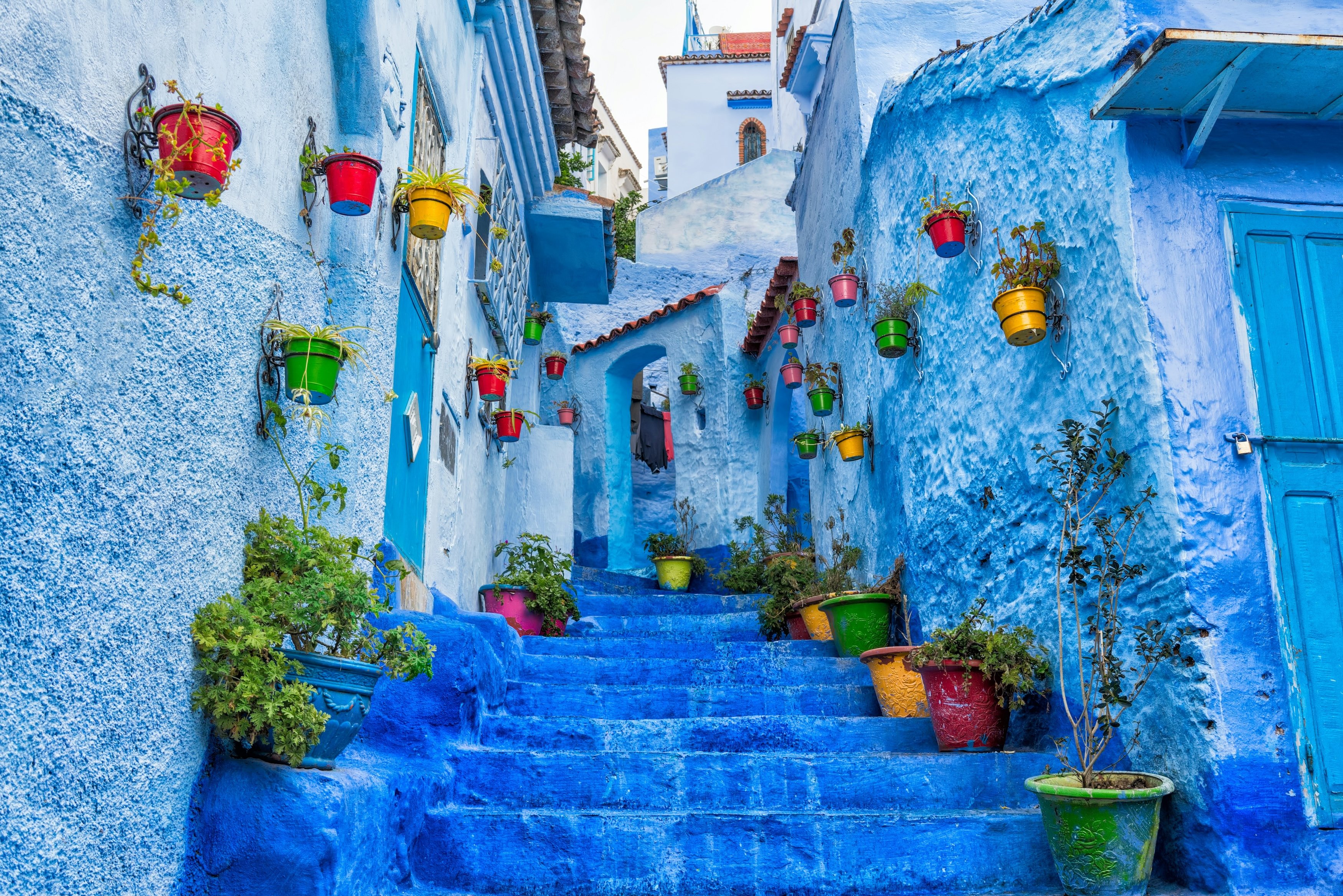
The main activity is simply strolling the blue-washed lanes, and it's wonderful. Every corner, staircase, and doorway is a different shade, often framed with potted plants and hanging rugs. Mornings are quietest and best for photos before the day-trippers arrive.
Plaza Uta el-Hammam and the Kasbah
The lively central square, ringed with cafes, anchored by a red-walled kasbah with a small museum and garden you can climb for views.
The Spanish Mosque viewpoint
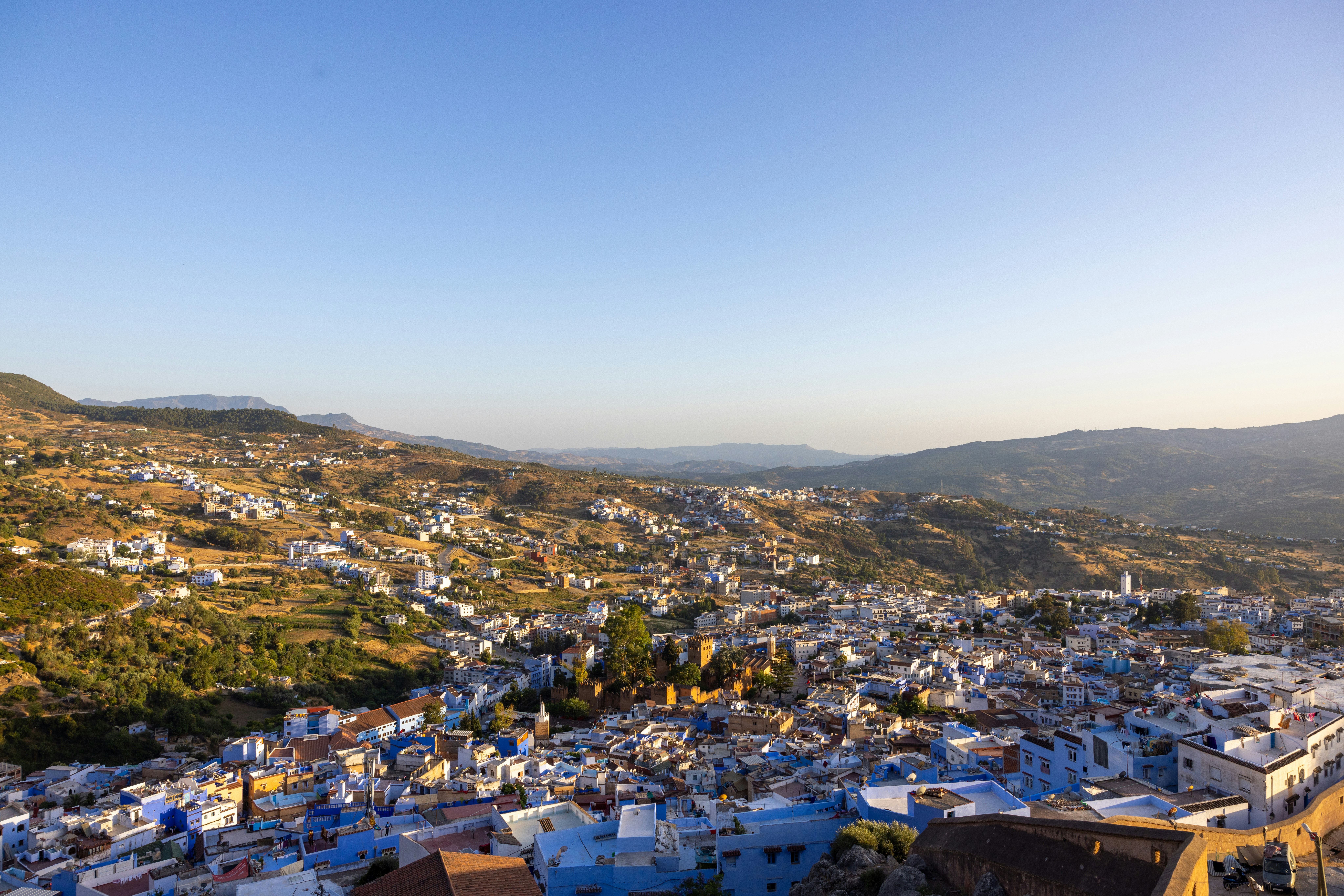
A short uphill walk from the medina leads to this hilltop mosque, the spot for sunset views over the whole blue town — don't miss it.
Ras el-Maa waterfall
At the medina's edge, this little cascade is where locals gather and do laundry; a pleasant, shaded place to pause.
Eating in Chefchaouen
The food scene is relaxed and affordable, with a northern, mountain character. Goat cheese is a local specialty — the region is known for it — and you'll find it in salads and on breakfast spreads. The main square, Plaza Uta el-Hammam, is ringed with cafes perfect for a leisurely tagine while people-watching, and rooftop terraces offer meals with a view over the blue rooftops. Prices are lower than in Marrakech or Fez, and the pace is unhurried. As a mountain town it also has a mellow cafe culture; lingering over mint tea and watching the light change on the blue walls is very much the local rhythm.
Where to stay
Small guesthouses and riads inside the blue medina are the charming choice — many with rooftop terraces overlooking the town. Staying in the medina lets you enjoy the lanes in the quiet early morning and evening after the day crowds thin. Options are simpler and more affordable than in the big cities, in keeping with the town's laid-back feel.
A day hike in the Rif
If you have an extra day and like the outdoors, the surrounding Rif Mountains offer good hiking. The most popular is the trek to the Akchour waterfalls and the "God's Bridge" rock arch — a rewarding day out in nature, easily arranged from town. It's a nice way to see a different side of the region beyond the blue streets.
Is Chefchaouen touristy?
Chefchaouen has become famous largely thanks to social media, and midday can bring day-trippers and photographers to the most Instagrammed corners. But it remains far more laid-back than the big cities, with noticeably less hustle — vendors are gentler, and the overall vibe is calm. The trick is timing: the medina is magical and near-empty in the early morning and evening, so staying overnight (rather than day-tripping) lets you enjoy the blue lanes at their most peaceful, bookended around the busier middle of the day. That contrast is exactly why an overnight beats a rushed visit.
How long to stay
One night (a full afternoon and the next morning) is enough for most to soak up Chefchaouen's charm — arrive in time for a sunset at the Spanish Mosque, wander the lanes at golden hour and again early the next day before crowds build. Add a second night if you want to hike the Rif or simply linger in the relaxed pace. It slots naturally into a northern extension of the classic loop. Many first-timers pair it with Fez, combining the two on the northern portion of their trip before flying home from Fez or continuing to Tangier. However you fit it in, Chefchaouen offers something the rest of the itinerary doesn't — a slow, blue-tinted breather amid the mountains that many travelers end up remembering as their favorite stop.
Practical tips for your visit
A few things to know before you go. Wear comfortable shoes — the medina is steep and cobbled, climbing the hillside. Bring some cash, as the town is small and card acceptance is limited outside hotels. The best photo light is early morning, before day-trippers arrive and while the blue walls glow softly. Buy your onward bus ticket (especially back to Fez) a day ahead in busy season, since seats are limited. And take it slow — Chefchaouen isn't a checklist destination; its whole appeal is the relaxed, wander-and-linger pace. Bring a light jacket even in warmer months, since the mountain setting means evenings cool down noticeably. Half the pleasure is simply sitting with a mint tea and watching the blue town go about its day.
Chefchaouen FAQ
How do you get to Chefchaouen?
By road only — CTM or Supratours bus, or a grand taxi, from Fez (about 4 hours) or Tangier (about 2 hours). There's no airport or train.
Is Chefchaouen worth visiting?
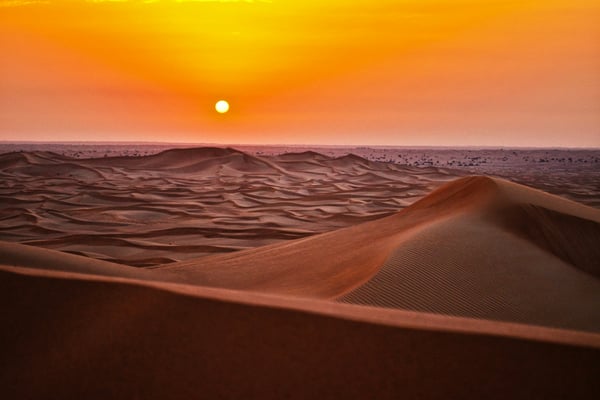
If you have the time, yes — it's uniquely beautiful, relaxed, and low-hassle. On a short trip it's often skipped in favor of the desert and imperial cities.
How long do you need in Chefchaouen?
One night suffices for the blue medina and a sunset viewpoint; a second night lets you hike the surrounding Rif Mountains.
Why is Chefchaouen blue?
Theories vary — from keeping cool and repelling mosquitoes to spiritual symbolism introduced by past communities. Whatever the origin, the whole medina is now famously painted blue.