Tap-to-pay works where cards do, ride-hail apps sidestep the taxi haggle, and WhatsApp runs everything — but cash still rules daily life. What actually works.
Morocco is more digitally connected than first-timers expect, but the picture is uneven: contactless payments work where cards do, ride-hail and messaging apps genuinely smooth the trip, yet cash still rules the daily texture of souks, taxis and small cafes. Knowing which apps earn their place and where they simply do not reach saves you both hassle and the mistake of assuming your phone can replace a pocket of small notes. Here is what actually works.
Tap-to-pay, where cards work
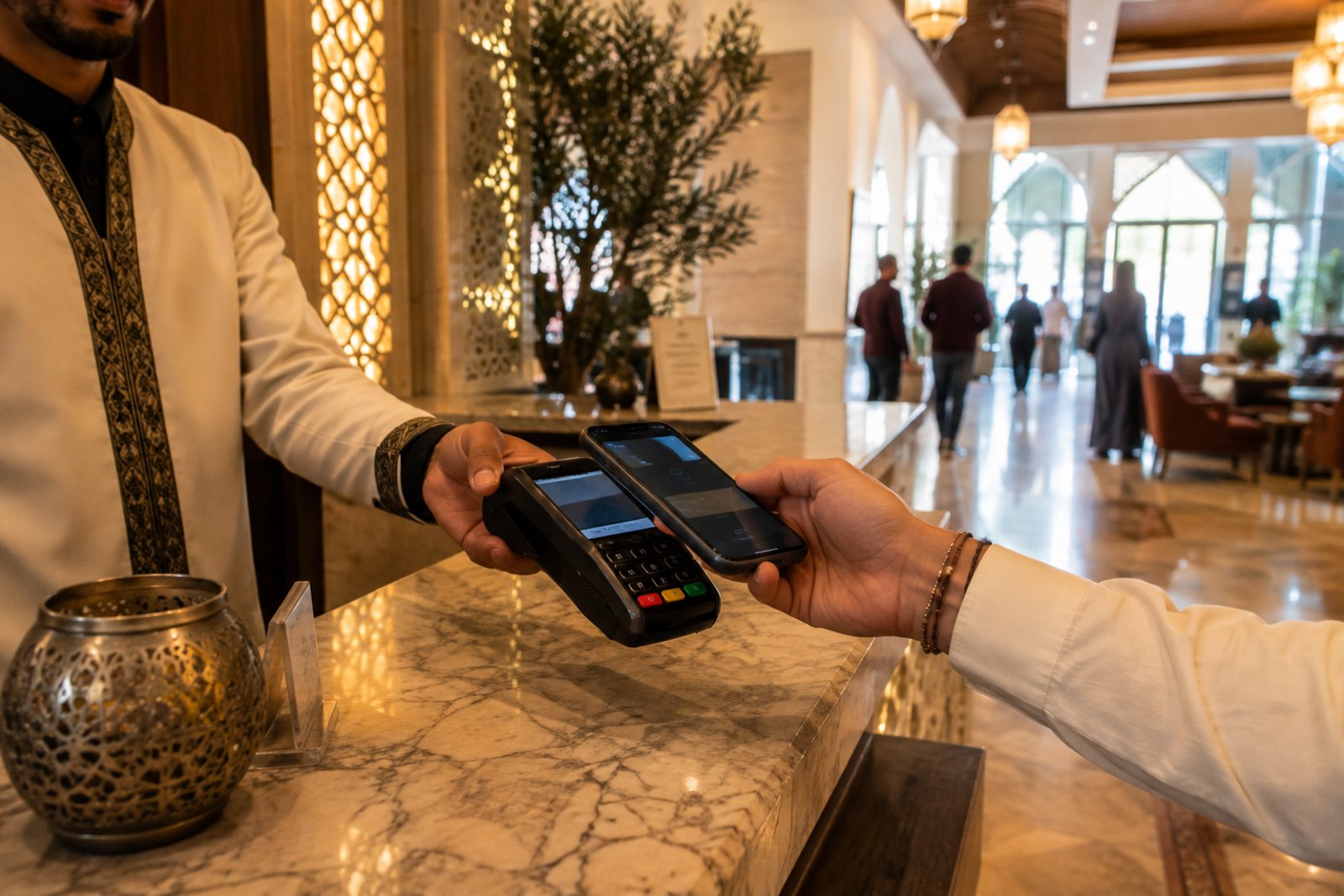
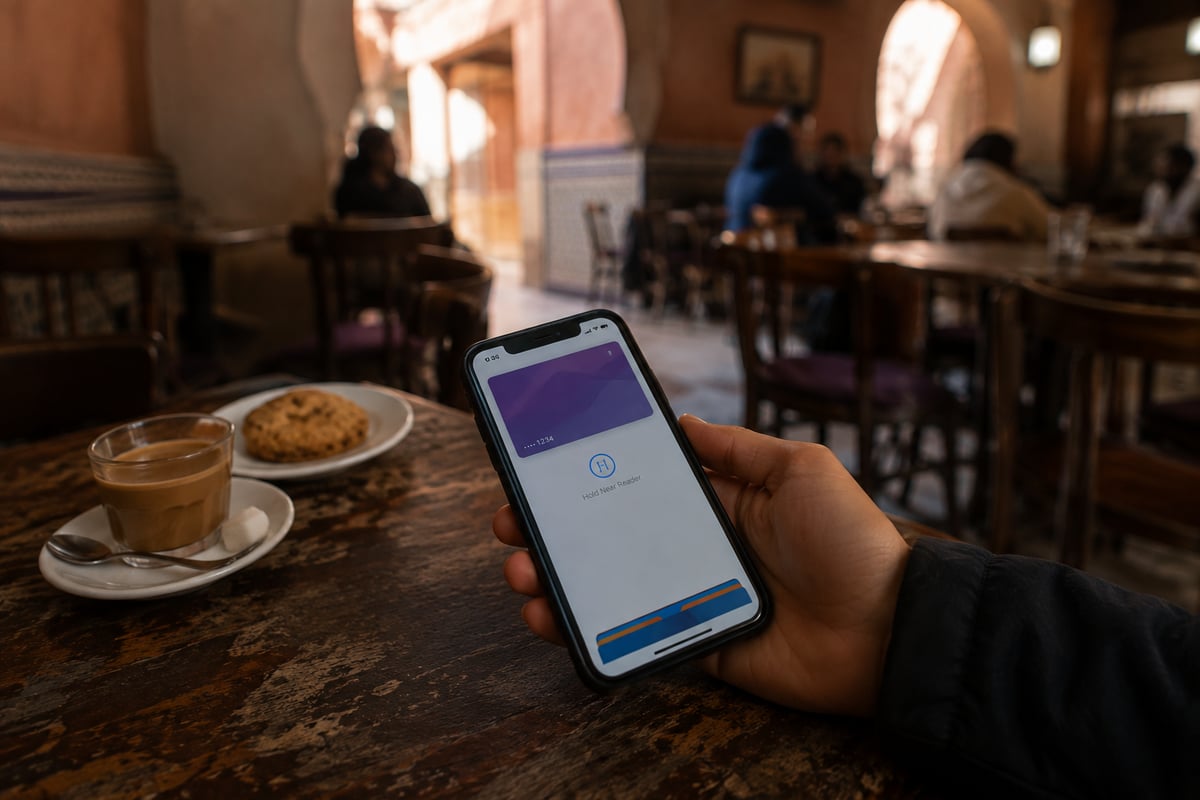
Contactless and mobile wallet payments — Apple Pay, Google Pay — work at the same places physical cards do: hotels, riads, mid-range and upscale restaurants, modern shops and supermarkets. Where a terminal takes cards, it will usually take a tap. The limitation is identical to cards in general: the souk stall, the petit taxi and the small cafe remain cash-only, so mobile payment extends your card's reach but does not replace cash for daily life.
Ride-hail apps
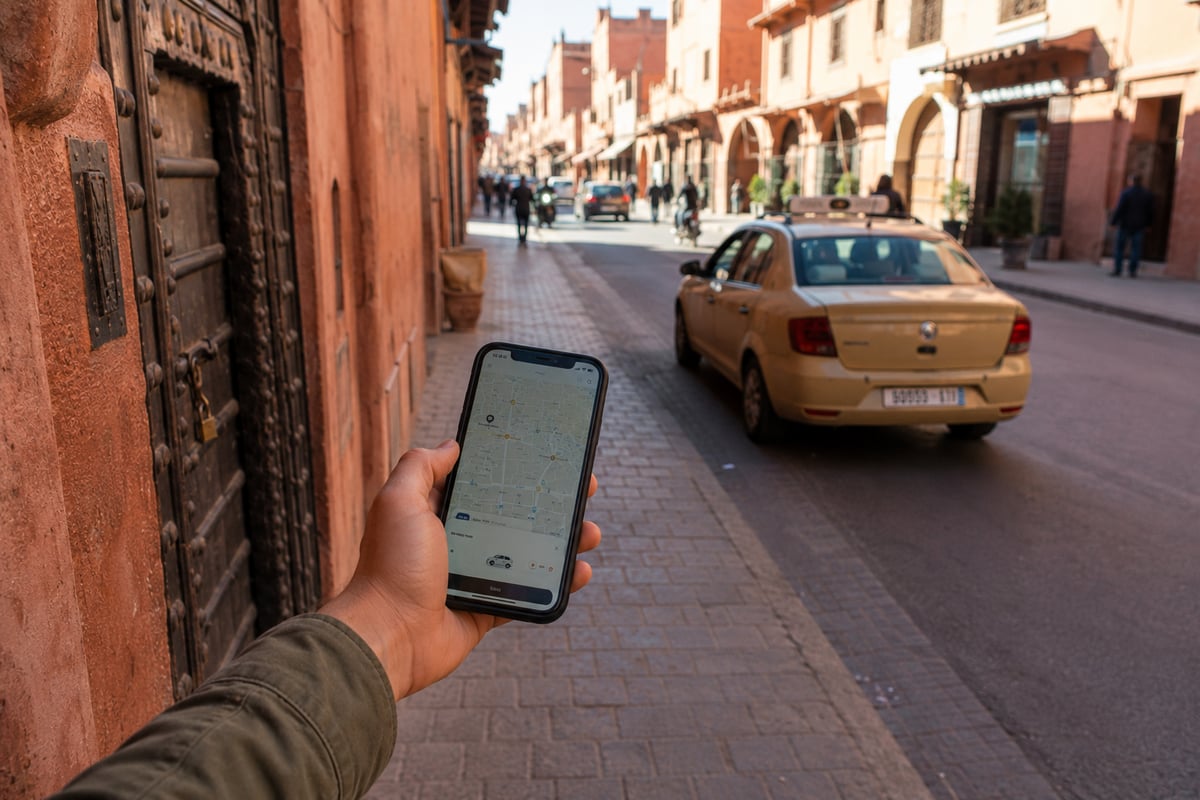
Ride-hail apps are one of the genuinely useful digital tools in Morocco, because they sidestep the taxi meter argument entirely by fixing the fare in the app before you get in. Careem, Heetch and inDrive operate in some of the larger cities, though coverage is uneven and thinner outside the biggest centres. Where they work, they remove the negotiation and are especially valuable late at night, from the airport, or whenever your bearings are shaky.
Keep them as a fallback
Even if you mostly flag taxis on the street, having a ride-hail app installed is worth it as a fallback for the moments a street fare is least predictable. The fare is set, recorded and paid without a conversation, which turns a potentially stressful late-night pickup into a tap. Download and set one up before you travel rather than fumbling with registration when you actually need the ride.
WhatsApp runs everything
The single most important app in Morocco is WhatsApp, which locals and businesses use in place of phone calls and email: riads confirm arrivals on it, drivers send their location, and tour operators arrange everything through it. You will use it within a day of landing whether or not you planned to. Any data plan covers it, and having it set up means the practical business of the trip — confirmations, directions, bookings — flows smoothly.
Maps and staying oriented
Offline maps are essential rather than optional, because the medina lanes defeat GPS in places and rural legs lose signal entirely. Download offline map areas for your cities and any desert or mountain routes before you leave the last reliable signal, so you are never standing lost in a lane with a spinning icon. This is less a payment tool than a sanity tool, and it is the app habit travellers most often wish they had set up sooner.
Setting up before you fly
The apps that help are best installed and set up at home, on your own connection, rather than fumbled with in an arrivals hall: a ride-hail app registered, WhatsApp ready, offline maps downloaded, and your mobile wallet confirmed to work abroad. Ten minutes of preparation before you leave turns your phone into a genuinely useful travel tool the moment you land. Registration screens and verification codes are far easier to handle before you are tired and jet-lagged.
Data is the thing that powers it all
None of these apps helps without data, so an eSIM activated on arrival or a local SIM is the foundation the rest sits on. With data running, the maps, the messaging and the ride-hail all work; without it, you are back to cash and paper. Sorting connectivity first, in the arrivals hall or before, is what makes every other digital convenience on this page actually available when you need it.
What still needs cash
For all the digital convenience, the daily texture of Morocco remains cash: souk stalls, petit taxis, small cafes, tips, parking attendants, rural and desert stops. No app changes that, and a traveller who leans entirely on the phone will be caught out constantly by small, cash-only moments. The right setup is both — apps for rides, messaging, maps and the larger card-friendly payments, and a float of small dirham notes for everything the phone cannot touch.
Mobile payments extend the same card-versus-cash line that runs through the whole trip, and the apps smooth the edges without replacing the pocket of small notes at the centre. How digital and cash divide the trip is worked out in the complete Morocco trip guide.
Where cards work — hotels, riads, mid-range and upscale restaurants, modern shops. Souks, taxis and small cafes stay cash-only.
Are ride-hail apps available?
Careem, Heetch and inDrive operate in some larger cities. They fix the fare in advance, which is great late at night and from the airport, though coverage is uneven.
What app will I actually use most?
WhatsApp — riads, drivers and tour operators run everything through it. You'll be using it within a day of landing.
Do I need offline maps?
Yes. Medina lanes and rural routes defeat GPS or lose signal. Download offline areas before you leave reliable coverage.
Can I go cashless in Morocco?
No. Apps and cards cover rides and larger payments, but souks, taxis, tips and small cafes need cash. Carry both.