No vaccinations are legally required for US travelers entering Morocco from the States, but health authorities recommend several worth discussing with a doctor, and the genuine health risk is not exotic disease but ordinary traveler's diarrhea. A little preparation — a clinic visit, a small medical kit, sensible food and water habits — keeps the vast majority of trips trouble-free. Here is what to consider, ranked by how much it actually matters.
What's required versus recommended
Nothing is required for entry from the US, with one exception: proof of yellow fever vaccination is needed only if you are arriving from a country where yellow fever is endemic, which does not apply to travelers coming directly from North America or Europe. Beyond that, the vaccinations for Morocco are recommendations to weigh with a doctor, not entry conditions. Morocco carries a low-level health notice, and it is a low-risk destination for serious tropical disease.
The recommended vaccines
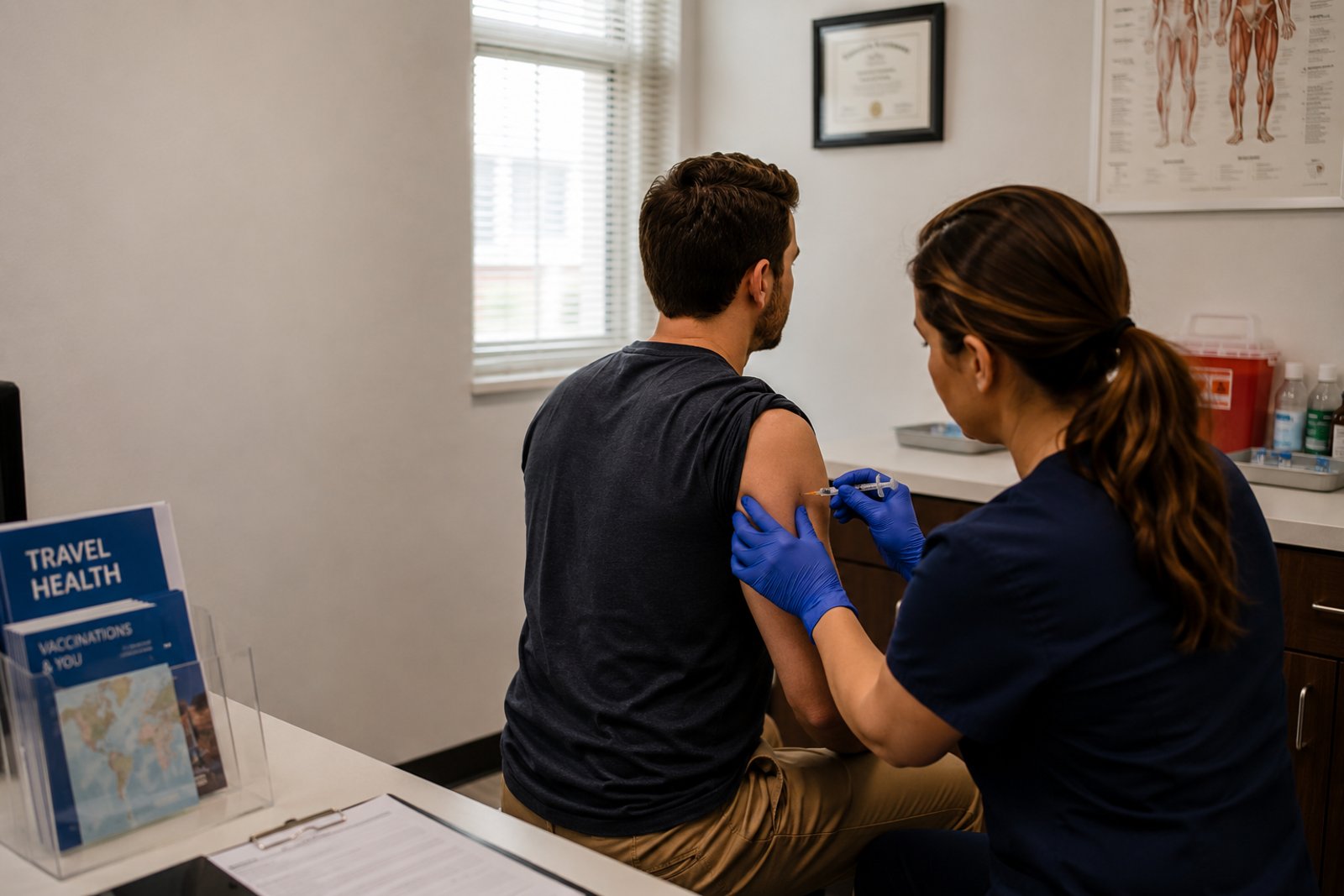
Health authorities commonly recommend that travelers to Morocco be up to date on routine vaccines (MMR, tetanus-diphtheria-pertussis, polio and the like) and consider hepatitis A and typhoid, both spread through contaminated food and water and therefore relevant to almost any trip. Hepatitis B is advised for many travelers, and rabies is suggested mainly for long stays or those likely to be around animals. A travel clinic can tailor this to your itinerary — a short city trip differs from long rural travel.
Book the clinic early
Some vaccines need time to take effect or come in multiple doses, so aim to see a travel clinic several weeks before departure rather than at the last minute. Even inside a tight window, a clinic can often arrange the key protections quickly, so it is worth going even if you have left it late. Bringing your itinerary helps them advise precisely on what your particular trip warrants.
The real risk: traveler's diarrhea
The single most common health problem for visitors is traveler's diarrhea, which affects a large share of travelers to North Africa, usually from unfamiliar microbes in food and water rather than anything sinister. It is typically mild and self-limiting, but it can cost you a day or two. The defence is the familiar one: bottled or filtered water, care with ice and raw foods, eating where turnover is high, and hand hygiene. Plan for it rather than merely hoping to avoid it.
What to pack
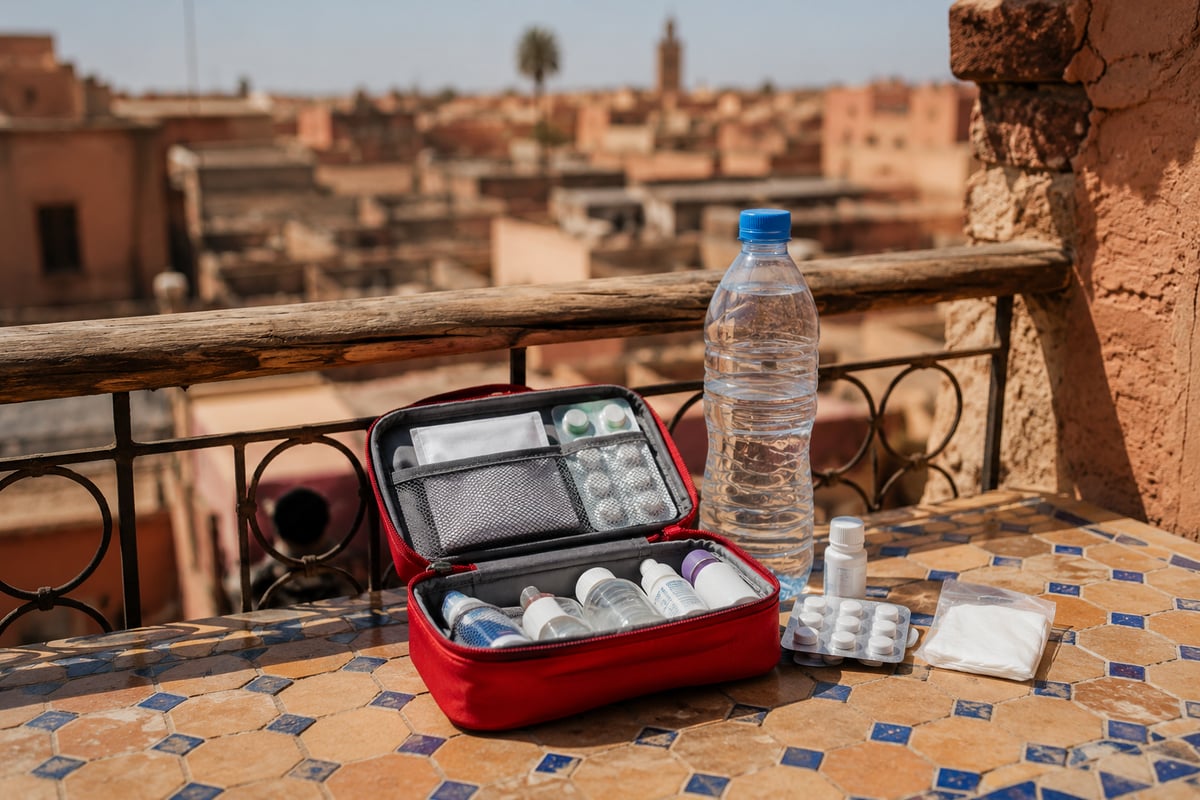
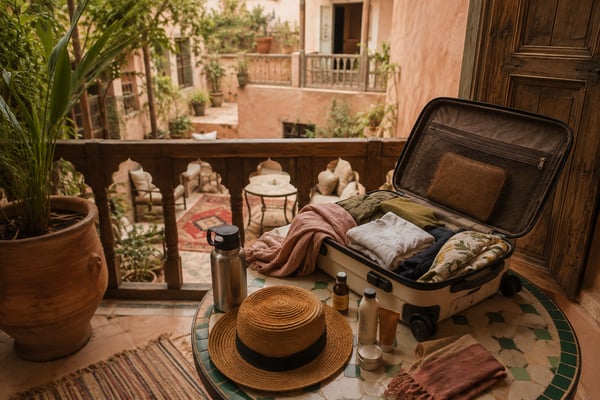
A sensible traveler's kit covers most eventualities: oral rehydration salts, an anti-diarrheal, a doctor-prescribed antibiotic for a moderate-to-severe bout, any personal medications in their original packaging, sun protection and basic first aid. Note that some medications common elsewhere are restricted in Morocco, so carry a prescription for anything unusual. This small kit turns most stomach trouble from a crisis into a manageable inconvenience handled from your own bag.
Medications and the pharmacy
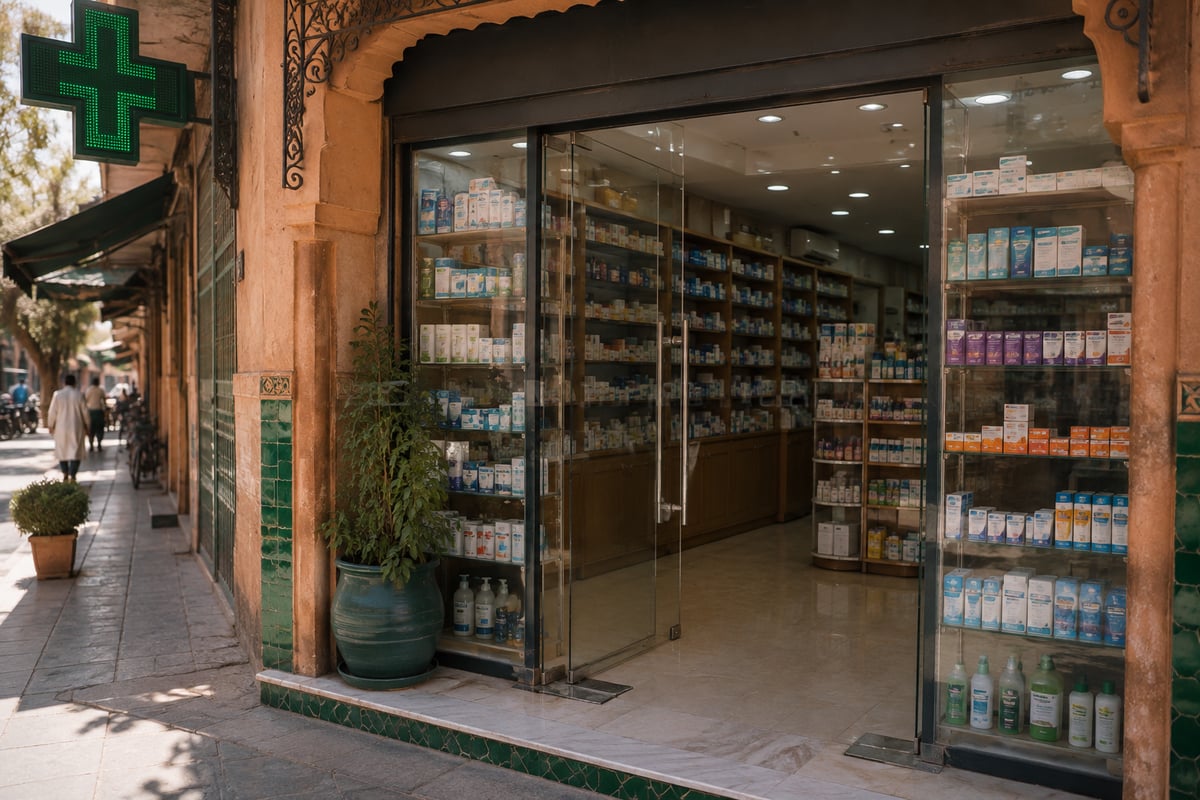
Moroccan pharmacies are genuinely excellent for minor ailments — widespread, well-stocked, and staffed by pharmacists who can advise and dispense many things over the counter — so a lot of small health needs can be handled locally without a doctor. Bring your own prescription medications in their original packaging with a copy of the prescription, since some drugs common at home are restricted or unavailable, and never assume a specific medication will be obtainable locally. For the routine stumbles of travel, though, the corner pharmacy is a reliable first stop.
Other practical health notes
A few extras round out the picture: malaria is not a risk in Morocco, so antimalarial pills are not needed; the heat and sun are a genuine hazard, making hydration and sun protection real health priorities, especially in the desert; and pharmacies are widespread, well-stocked and staffed by knowledgeable pharmacists for minor issues. For anything serious, private clinics in the main cities offer good care. Travel insurance that covers medical treatment is strongly advised regardless.
Staying healthy is part of the practical groundwork that lets the rest of the trip go smoothly, alongside the water, the heat and the insurance. How the health layer fits the whole plan is worked out in the complete Morocco trip guide.
None for US travelers arriving from the States, except yellow fever proof if you're coming from an endemic country. The rest are recommendations.
What vaccines are recommended?
Routine vaccines up to date, plus hepatitis A and typhoid (food and water), often hepatitis B, and rabies for long or animal-exposed trips. Ask a travel clinic.
What's the biggest health risk?
Traveler's diarrhea, common in North Africa — usually mild. Defend with bottled water, care with ice and raw food, and a small medical kit.
Is there malaria in Morocco?
No — malaria isn't a risk, so antimalarial pills aren't needed. The real hazards are stomach upsets, heat and sun.
What should I pack?
Rehydration salts, an anti-diarrheal, a prescribed antibiotic for severe cases, personal meds in original packaging, and sun protection.