Tipping in Morocco is expected but modest, and it runs entirely on small cash. Who to tip, realistic amounts, and why keeping small notes is the whole game.
Tipping in Morocco is genuinely expected but modest, and it is the daily habit that quietly determines whether you always have the right change in your pocket. Nobody is looking for American-sized percentages; what people appreciate is a small, prompt tip in cash for a service done. The whole practice runs on small notes and coins, which is why tipping and the scramble for change are really the same subject.
The general rule
Moroccan tipping is expected but modest across the board: think small amounts, given in cash, at the moment of the service. In restaurants without a service charge, rounding up to roughly ten per cent is generous; for most other services a handful of dirham is right. This is a culture of frequent small gratuities rather than occasional large ones, and getting the scale right is more about frequency than size.
Always cash, always small notes
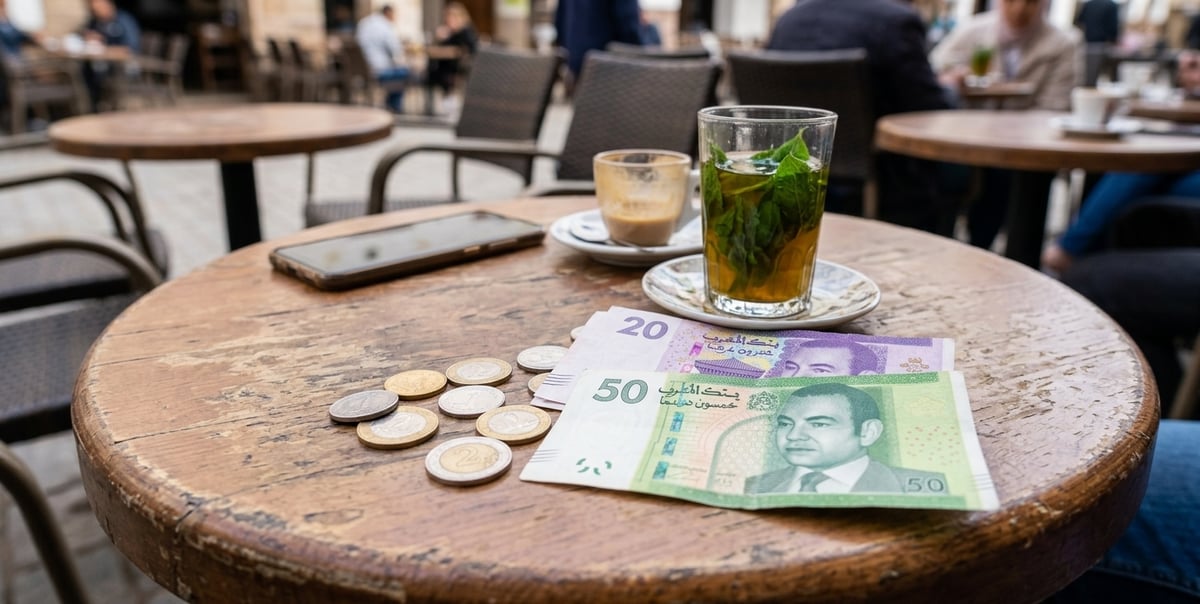
Tips are paid in physical cash, never added to a card payment, so a tip you cannot make change for is a tip you cannot give. This is the practical reason the guides on this site keep pushing you to break large notes and hold a float of small ones. A pocket of five, ten and twenty dirham notes is the infrastructure that makes every situation below easy.
Restaurants and cafes
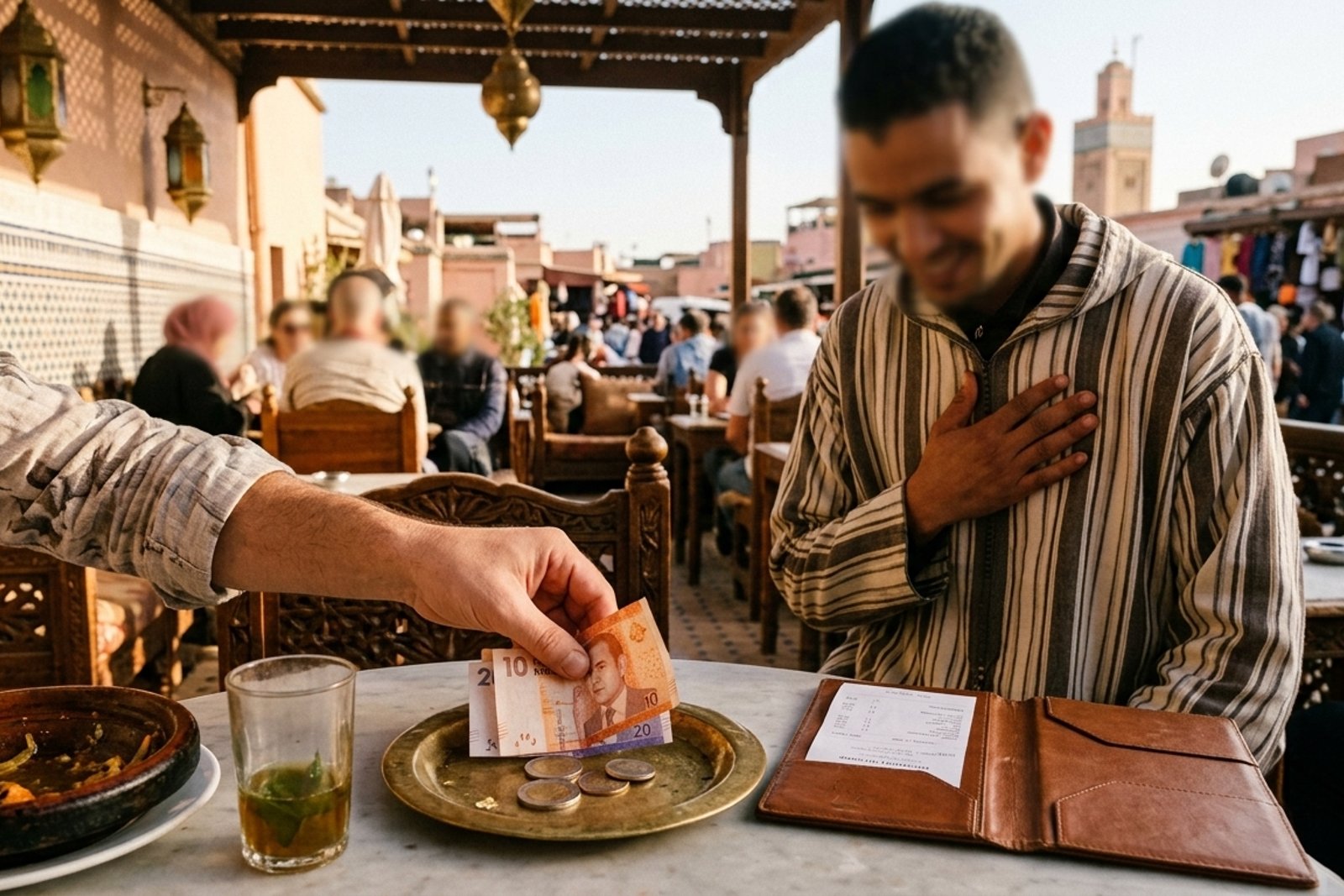
In a sit-down restaurant with no service charge, rounding the bill up by around ten per cent is a warm tip and more than acceptable. At a casual cafe, leaving the coins from your change, or a few dirham, is normal. Check the bill first: some tourist-facing places already add a service charge, in which case an extra tip is optional rather than expected.
Guides, drivers, and porters
For guides, porters and hammam staff, the site's working range is 5 to 20 dirham for a small service, scaling up with time and effort. A local guide who has given you a good half-day in the medina merits more than the porter who carried a bag up two flights, and a multi-day desert driver more again. For taxis, simply rounding the fare up is the norm rather than a set percentage.
Multi-day guides and drivers
On a multi-day tour, a driver or guide who has looked after you for two or three days is tipped at the end, in a lump, and more substantially than any single daily service. There is no fixed figure, but it should feel proportional to the days and the care. Agreeing nothing in advance and giving a genuine tip at the end is the normal, comfortable way this works.
Hammams, hotels, and small services
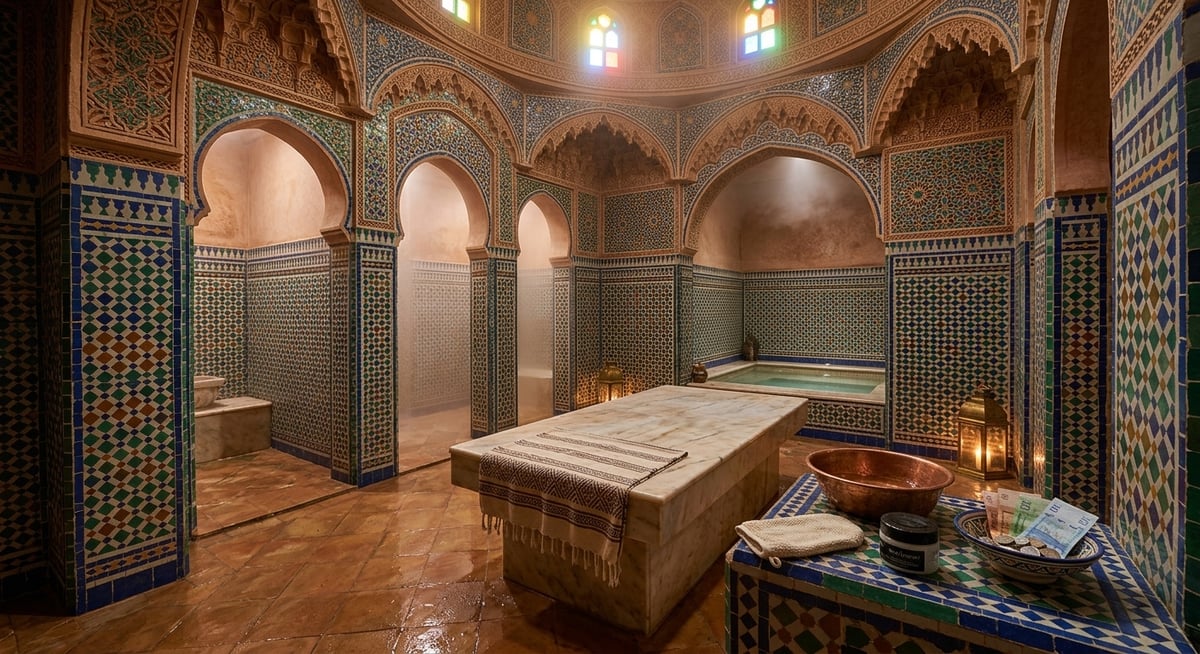
At a public hammam or a spa treatment, a small tip for the attendant is customary. In hotels, a few dirham for the porter and for housekeeping is appreciated though not obligatory. Parking attendants — the men in high-visibility vests who watch cars on the street — expect a couple of dirham, and it is worth having coins ready for them since you will meet them constantly.
A rough mental model for the day
Rather than memorising figures, carry one idea: small and often, in cash, at the moment. A coffee gets loose change, a helpful porter a couple of small notes, a good half-day guide a real handful, a multi-day driver a proper lump at the end. Scaled to time and care, that instinct covers almost every situation you will meet without a table to consult.
Keep a tipping stash separate
Some travellers keep a dedicated pocket of small notes purely for tips, replenished whenever they break a large bill. It removes the awkward moment of digging for change in front of the person you are tipping, and it guarantees you are never caught out at exactly the wrong time. It is a tiny habit that makes the whole practice feel effortless.
When not to tip
Tipping is not universal, and forcing it where it does not belong marks you as a target. You are not obliged to add anything when a service charge already appears on the bill, and shop purchases are simply not tipped. Rounding up a taxi is a tip; adding to a card total is not how it works here.
One demand is not a tip at all. When someone provides an unrequested service and then asks for money, that is a transaction to decline, and handing money over only encourages a repeat. Politely refusing is the right move, not negotiating an amount.
Tipping looks trivial and is really the daily edge of a bigger habit: Morocco runs on small cash, and holding the right notes is what keeps every small transaction smooth. How that habit connects to withdrawals, the change problem and the rest of the trip is set out in the complete Morocco trip guide.
Yes, but modestly. It is a culture of small, frequent cash tips rather than large American-style percentages.
Can I add a tip to my card payment?
No. Tips are paid in cash, which is why keeping small notes and coins on you matters.
How much for a guide or porter?
A small amount for a quick service, scaling up with time and effort. Multi-day guides and drivers are tipped more substantially at the end.
Do I tip taxi drivers?
Rounding the fare up is the norm rather than a set percentage.
When should I not tip?
Not in shops on a purchase, not to a faux guide, and not on top of an existing service charge. A demanded "tip" for an unrequested service is one to decline.