Self-driving Morocco buys freedom and costs nerves. Where a car makes sense, where a driver or the train wins, and the checkpoint, parking and fuel realities.
Renting a car in Morocco buys real freedom for some trips and real stress for others, and the decision comes down to where you are going more than to your confidence behind the wheel. Cities are chaotic and parking is hard, so many first-timers hire a driver or take the train instead; a car earns its keep mainly on flexible routes through the countryside. Here is where each answer applies.
When a car makes sense
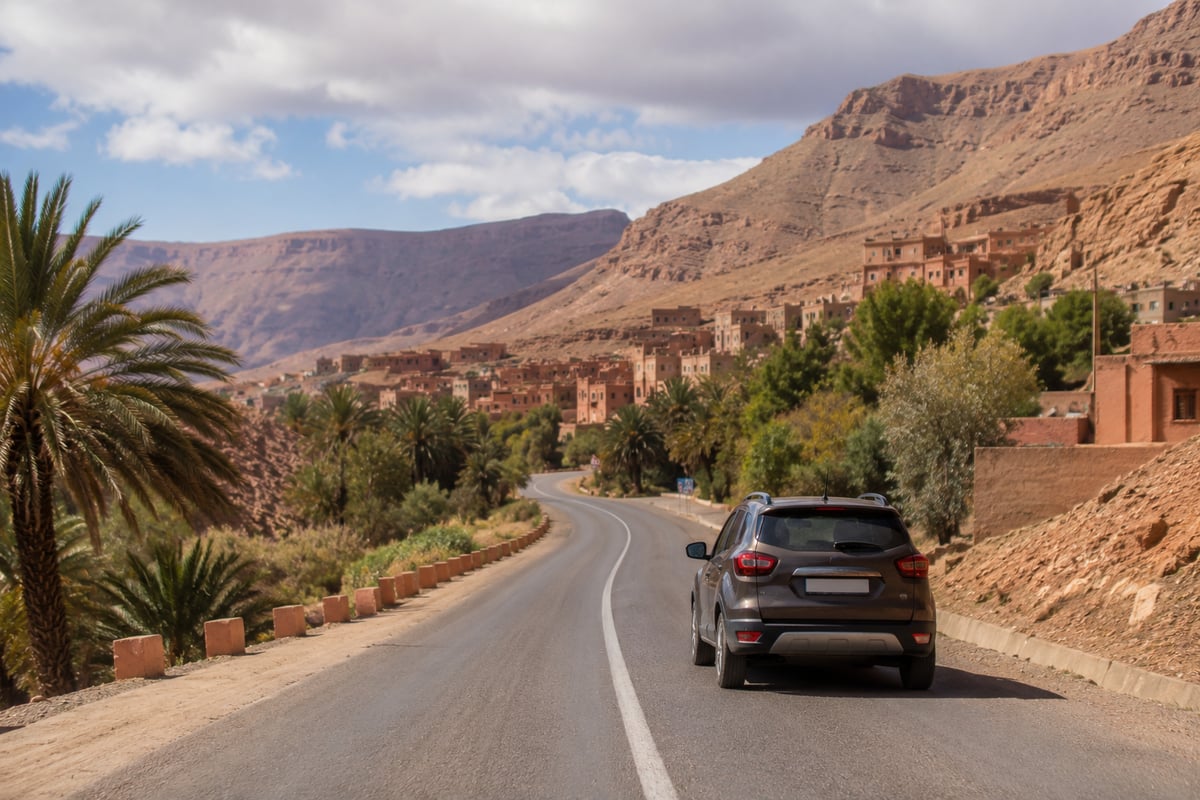
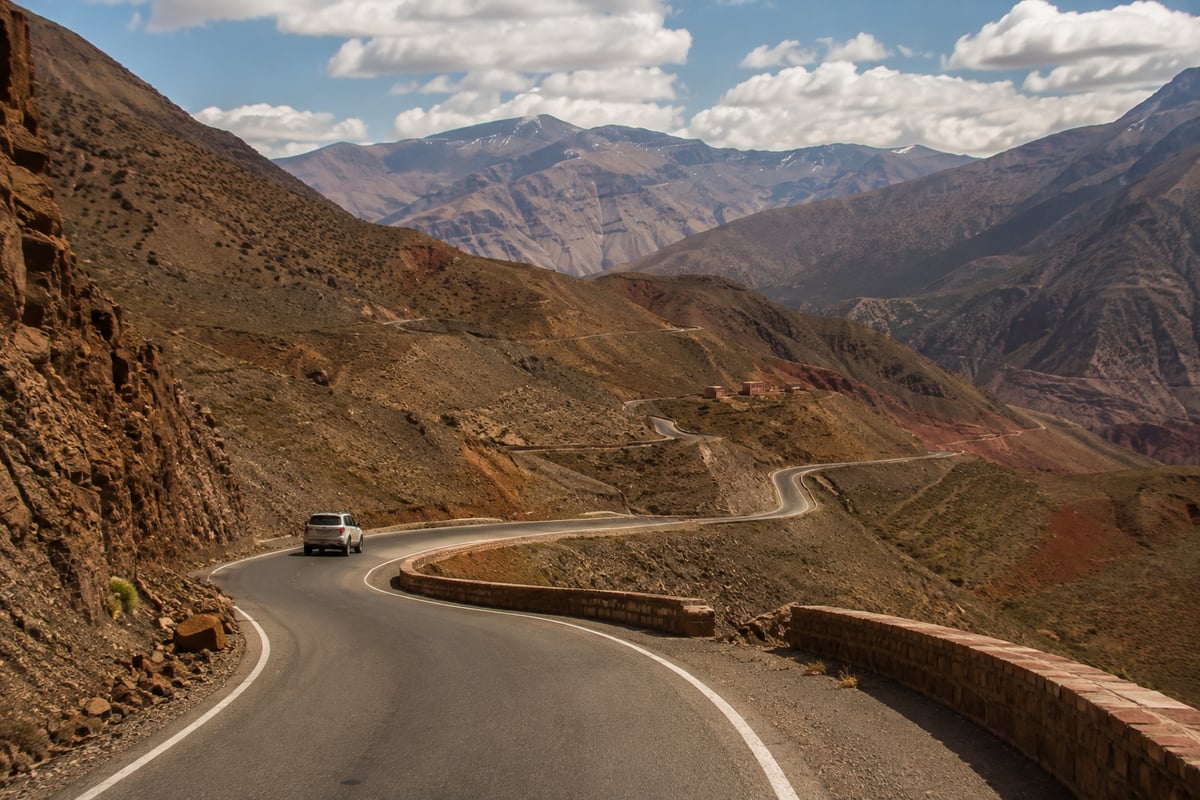
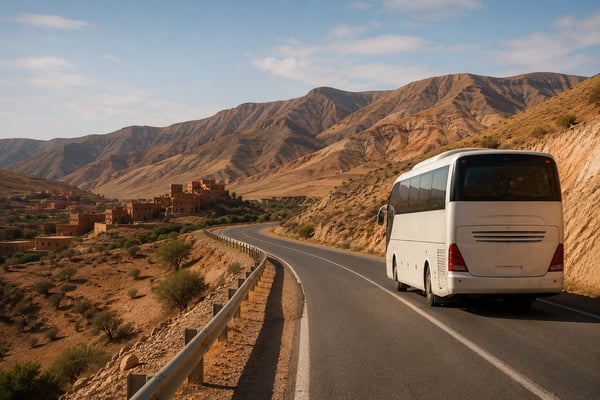
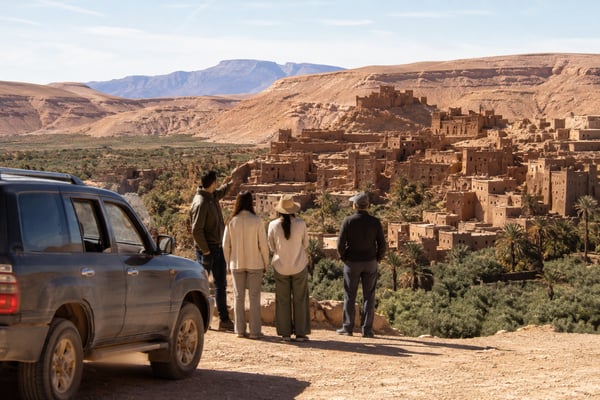
A rental car is genuinely worth it for flexible, scenic routes where public transport is thin: the Atlas Mountains, valleys and gorges, coastal drives, and reaching villages a coach never serves. If your trip is built around wandering the countryside at your own pace and stopping where you like, self-driving unlocks that in a way trains and tours cannot. This is the case the car was made for.
When to skip it
For a classic city-focused loop, a car is more burden than benefit. Morocco drives on the right, US licences are accepted for short stays with an International Driving Permit recommended, but the cities are chaotic, parking is scarce and stressful, and you would leave the car sitting unused while you walk the medinas. On the rail spine — Marrakech, Casablanca, Fez — the train is faster and calmer, and the long desert run is best left to a tour driver.
The driver alternative
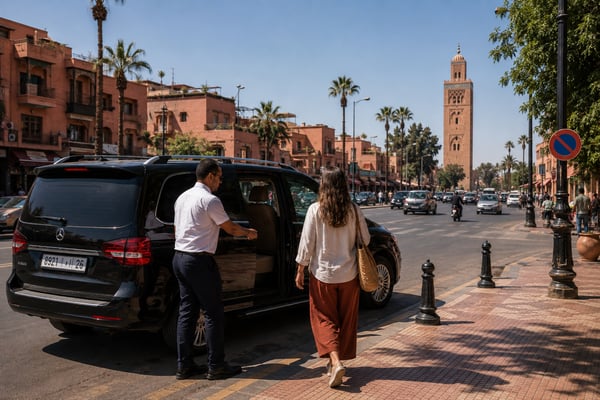
Hiring a car with a driver is the middle path many first-timers choose, and it often costs less than it sounds while removing every downside of self-driving. You get door-to-door flexibility without navigating chaotic traffic, finding parking, or handling checkpoints, and a good driver doubles as an informal guide. For the desert and multi-stop country routes, this is frequently the sweet spot.
Driving realities to know
If you do drive, a few realities shape the experience: toll motorways connect the major cities and are smooth and fast, but secondary roads vary and mountain routes are slow and winding. Police checkpoints are common and routine — have your documents ready, be polite, and they pass without issue. Livestock, pedestrians and unlit vehicles make night driving genuinely risky, so plan to arrive before dark.
Parking, fuel and the extras
In towns, use guarded parking and tip the attendant a few dirham rather than leaving a car on the street. Fuel stations are plentiful on main routes and sparse in remote areas, so fill up before long empty stretches. When renting, check the insurance excess, inspect the car for existing damage before you drive off, and photograph it — the same sensible habits you would use anywhere, slightly more important here.
What renting actually costs
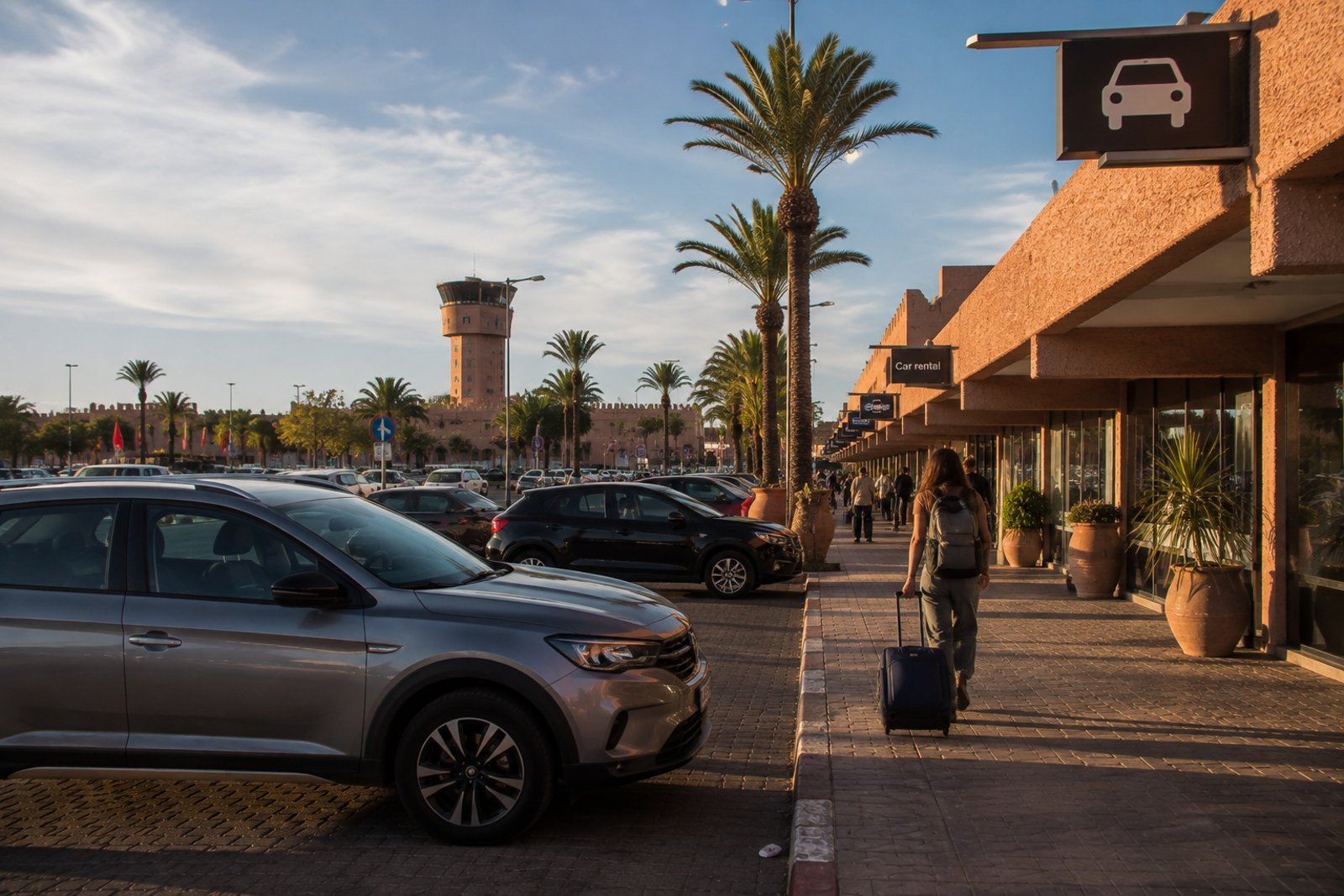
Beyond the daily rate, a Moroccan rental carries the usual extras worth budgeting for: insurance and the excess you are liable for, fuel, tolls on the motorways, and guarded parking in towns. The headline price is rarely the real one, so read what the insurance covers and what excess you would owe on damage before you sign. A cheap rate with a huge excess and thin cover is not the bargain it appears.
The one-way and cross-border catches
Dropping a car in a different city than you collected it usually carries a one-way fee, and taking a Moroccan rental across a border is generally not allowed at all — points to confirm before you plan a route around them. If your itinerary is genuinely one-way, price the fee into the comparison against train-plus-driver, which sometimes wins outright once the extras are counted.
The honest recommendation
For most first trips, the answer is not to self-drive: take the train between the imperial cities, use a tour or driver for the desert, and consider a rental only if a specific leg — the Atlas, the coast — genuinely calls for one. Save the car for the part of the trip where freedom of movement is the whole point, and let easier modes carry the rest.
Whether a leg goes by car, train, coach or driver is one strand of the sequencing that decides how a whole trip flows and where you can base — a call worked out in the complete Morocco trip guide. Our transport overview covers every mode together, and the Atlas Mountains guide covers the drive a car is actually for.
Renting a car in Morocco: FAQ
Should I rent a car for a first trip?
Usually not. Take the train between cities and a tour or driver for the desert. Rent only for a specific scenic leg like the Atlas or the coast.
Can I drive on my US license?
Yes, for short stays, with an International Driving Permit recommended alongside it. Morocco drives on the right.
Is hiring a driver better?
Often, yes — it costs less than expected and removes traffic, parking and checkpoints while adding an informal guide. A sweet spot for the desert and country routes.
Are police checkpoints a problem?
No. They are common and routine. Have documents ready, be polite, and they pass without issue.
Is night driving safe?
Not really — livestock, pedestrians and unlit vehicles make it risky. Plan to arrive before dark.