The entry stamp matters more than travelers expect. Why to check it, the six-month passport rule, blank pages, and what a missing stamp means on the way out.
The Moroccan entry stamp is a small thing that occasionally becomes a large one, and a few seconds of attention at passport control saves the rare but real hassle it can cause. Alongside it sit the passport-validity and blank-page rules that decide whether you board your flight at all. None of this is complicated, but all of it is worth getting right before you travel, because the fixes are trivial in advance and awkward after. Here is what to know.
Why the entry stamp matters
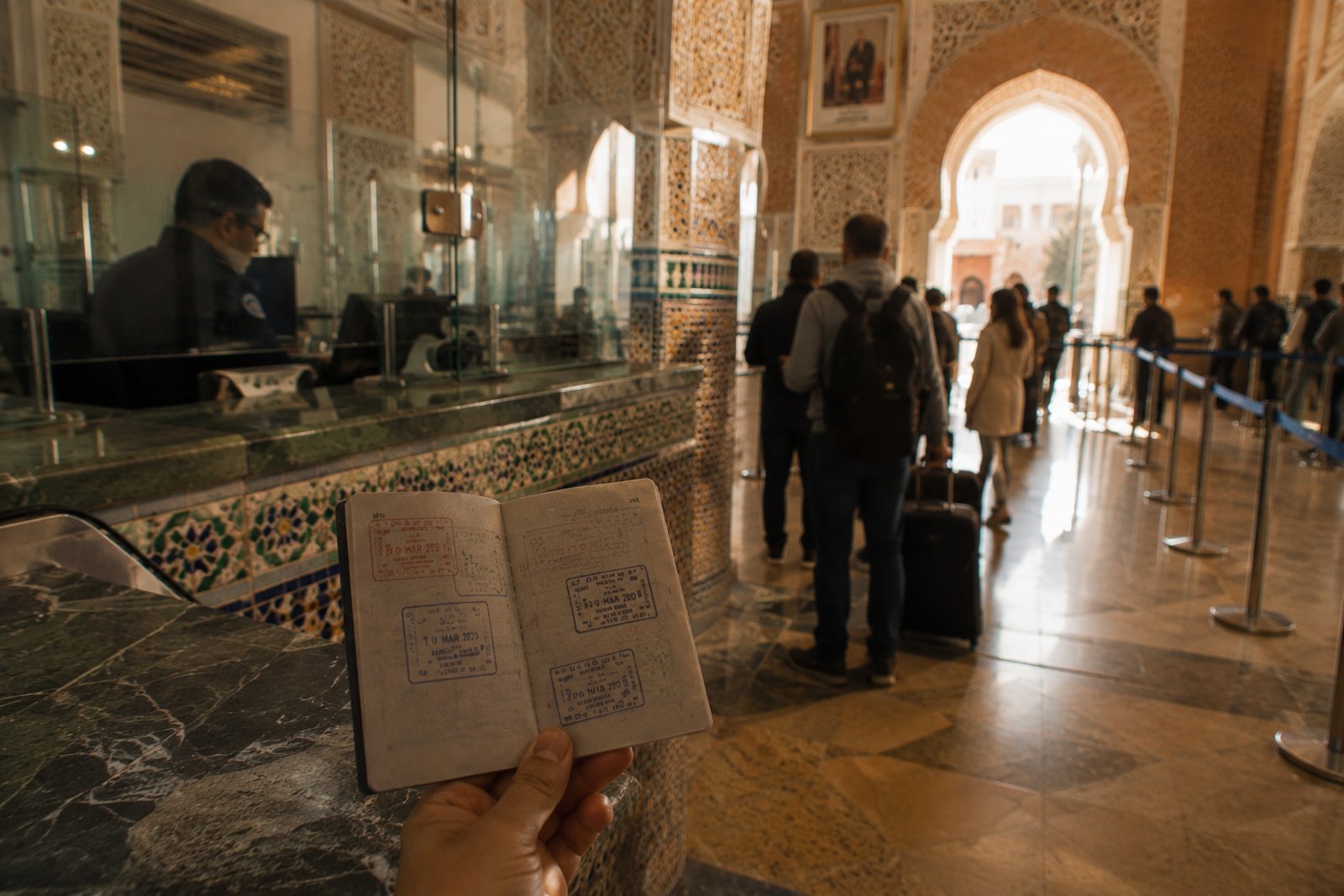
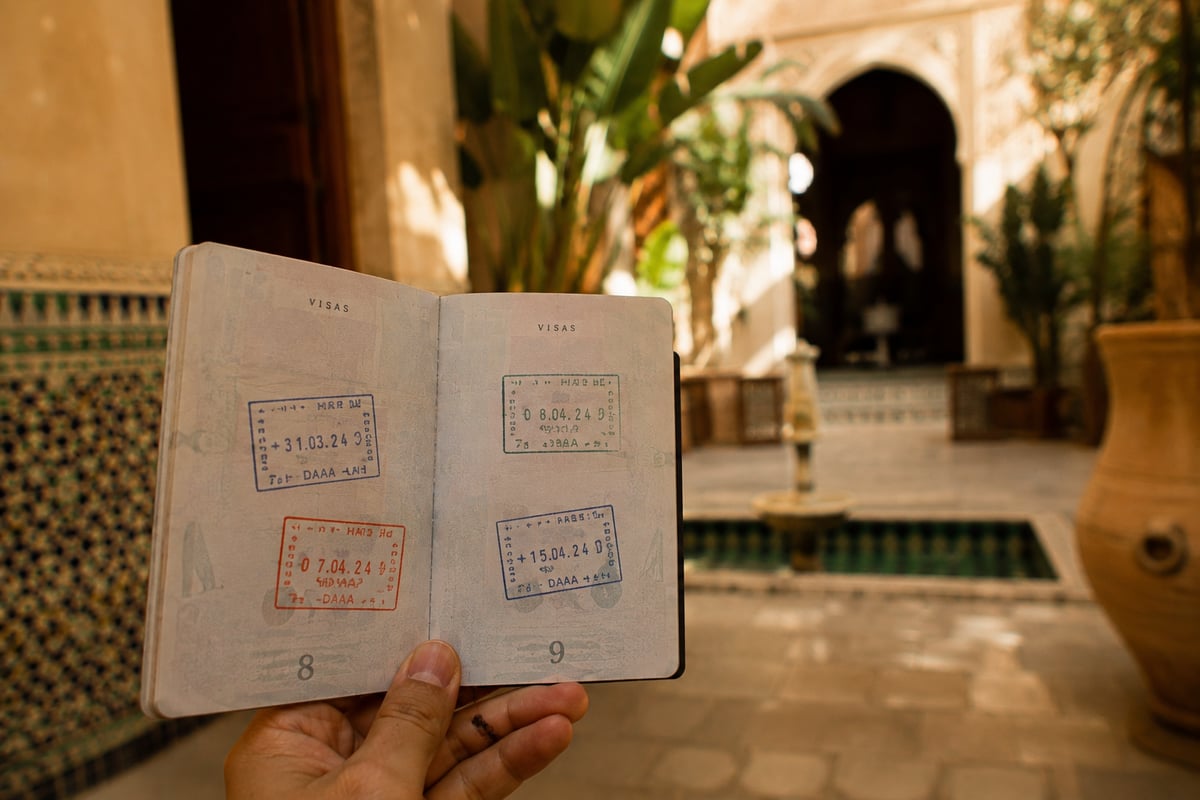
When you arrive, an immigration officer stamps your passport, and that stamp is your proof of legal entry and the date your 90-day stay began — it is what an officer checks when you leave. On busy arrival days a rushed official occasionally forgets to stamp, or stamps illegibly, and a missing entry stamp can turn your departure into a question: when and where did you actually enter Morocco? Catching it at the moment costs nothing.
Check it before you walk away
Take ten seconds at the counter to confirm your passport has a clear, legible entry stamp before you leave the booth. If it is missing or smudged, ask the officer to correct it there and then, while you are still in front of them. This is routine and no officer will mind; the alternative is explaining the gap on the way out, potentially to someone less inclined to be helpful. The habit is trivial and the payoff is real.
The six-month passport rule
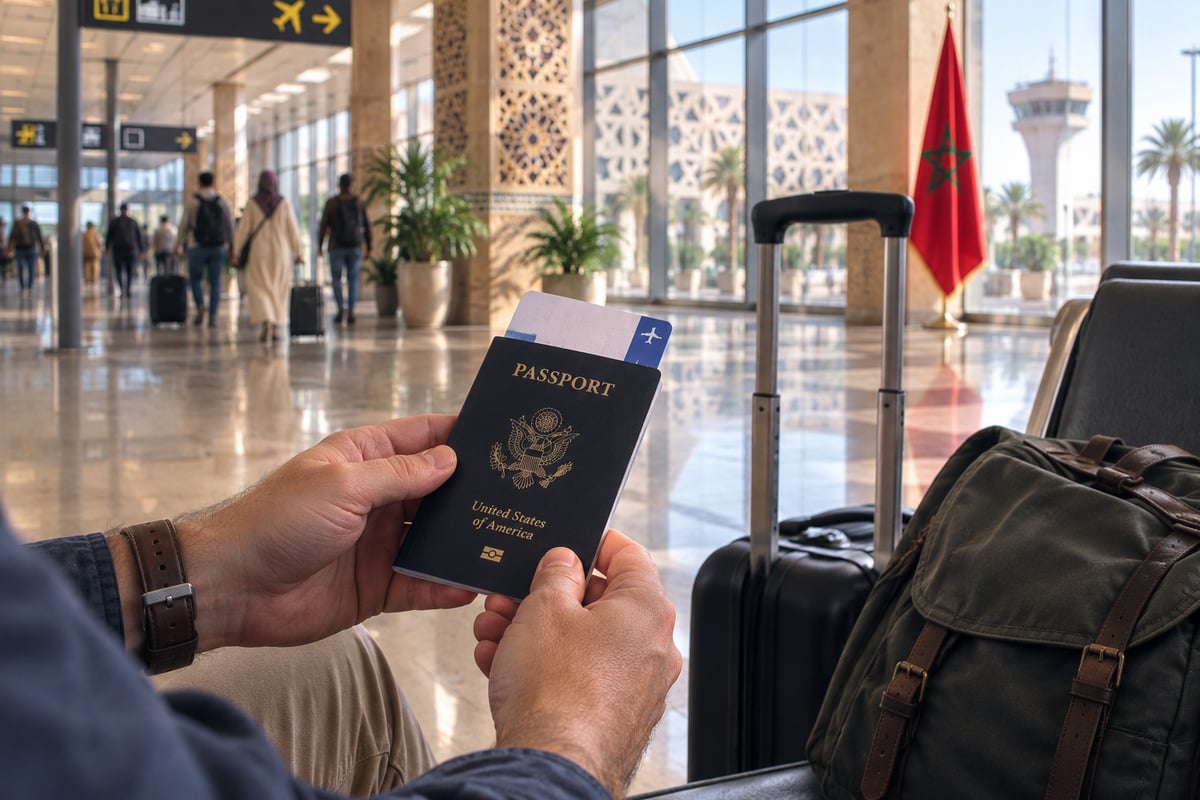
Passport validity is where travellers most often come unstuck, and the sources genuinely differ: Morocco's official requirement is more lenient, but many airlines enforce a six-month rule and will deny boarding if your passport expires within six months of your travel dates. The safe standard, therefore, is a passport valid at least six months beyond your arrival. Check the expiry date the moment you start planning, because renewing takes time you may not have close to departure.
Blank pages
You also need at least one blank page in your passport for the entry stamp, and it is worth having a spare beyond that if your passport is filling up. Travellers near the end of a well-used passport sometimes arrive with no room for the stamp, which creates an unnecessary problem at the border. If your passport is close to full, add pages or renew before you go rather than gambling on the officer finding space.
Overstaying and the exit check
Your entry stamp starts the clock on a 90-day permitted stay, and overstaying it can mean fines or complications on departure, so note your entry date and keep within the window. For the standard trip of a week or two this is a non-issue, but travellers combining Morocco with a longer regional journey should track the date. If circumstances force a longer stay, address it with the authorities before the 90 days elapse rather than at the airport.
Photocopies and backups
Before you travel, photograph or scan the photo page of your passport and store it somewhere accessible offline on your phone and in your email, so a lost or stolen passport is a recoverable problem rather than a stranded one. Carrying a paper photocopy separately from the passport itself is the old-fashioned version and still works. Should the worst happen, a copy speeds up the replacement process at your embassy considerably.
Carrying it day to day
You rarely need the physical passport once you are in the country, so many travellers leave it in the riad safe and carry a photo or photocopy for daily use, reducing the chance of losing the real thing in a crowded souk. Some hotels ask to see it at check-in and note the details, which is normal. Keeping the original secure and a copy on you is the sensible balance between having ID and protecting the document.
Dual nationals, a quick note
If you hold both US and Moroccan nationality, the rules differ and it is worth checking with a Moroccan consulate before you travel, since dual nationals are generally treated as Moroccan citizens on entry and may face different documentation expectations. This does not affect single-nationality US travellers at all, but for dual nationals a short conversation with the consulate in advance heads off any surprise at the border.
The stamp and the passport rules are the fine print of the same arrival sequence the whole trip opens with — get them right and the border is a formality. How arrival, entry and the first hours fit together is worked out in the complete Morocco trip guide.