Arriving at Casablanca Airport: Your First Two Hours
Most US flights land at Casablanca, and the train station under the terminal is the key. Immigration, the ATM, and getting straight to Marrakech or Fez.
Casablanca's Mohammed V airport is where most flights from the US touch down, and for the classic first-timer loop it is usually a gateway rather than a destination — the goal is to move smoothly through it and on to Marrakech or Fez. The single fact that makes that easy is the train station directly beneath the terminal. Here is how the first two hours run, in order.
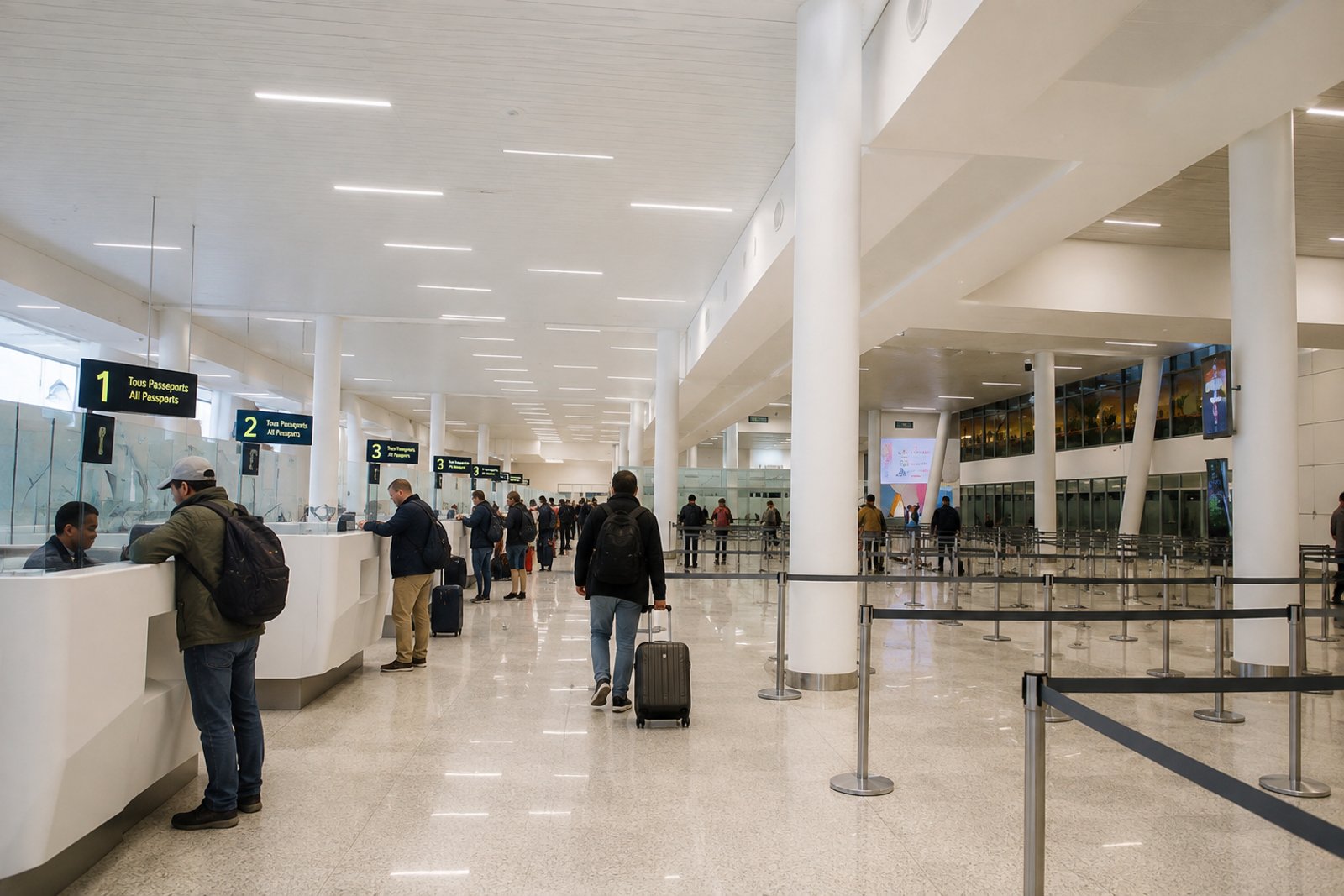
Through immigration
US citizens need no advance visa, so passport control is a stamp rather than an application: have your passport valid for the required period and know the address of your first night's accommodation, which the form may ask for. Lines vary with how many flights have landed together, so build a little patience into the plan. Check that your entry stamp is clear before you walk away, since a missing stamp becomes a question on the way out.
Cash before anything else
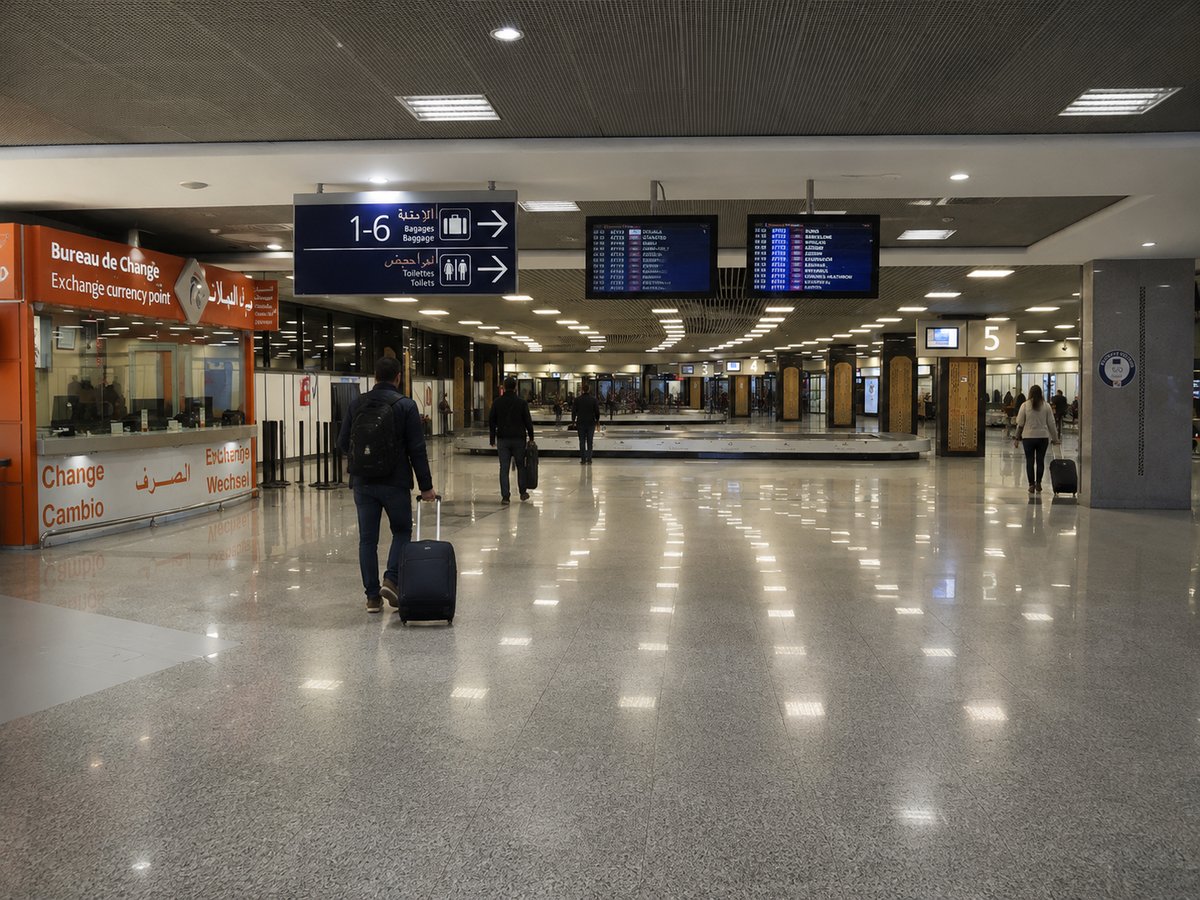
Because you cannot buy dirham before arriving, the airport ATM is the first real stop after immigration, and there are bank machines in the arrivals area. Withdraw enough for the first day or two, decline the "pay in dollars" conversion prompt in favour of dirham, and skip the exchange counter unless your card fails. With cash in hand and your phone connected, the rest of the arrival is simple logistics.
Connect and confirm
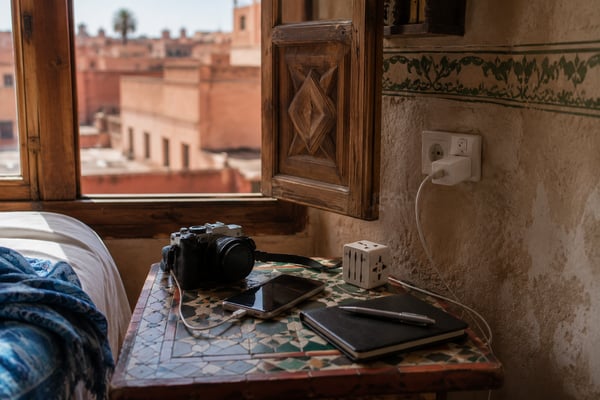
If you have not already, this is the moment to switch on your eSIM or buy a local SIM, then message your onward accommodation so they know you have landed. A connected phone with a map and your booking details turns the next steps from guesswork into a short checklist. It is the small piece of preparation that removes most first-hour friction.
The train under the terminal
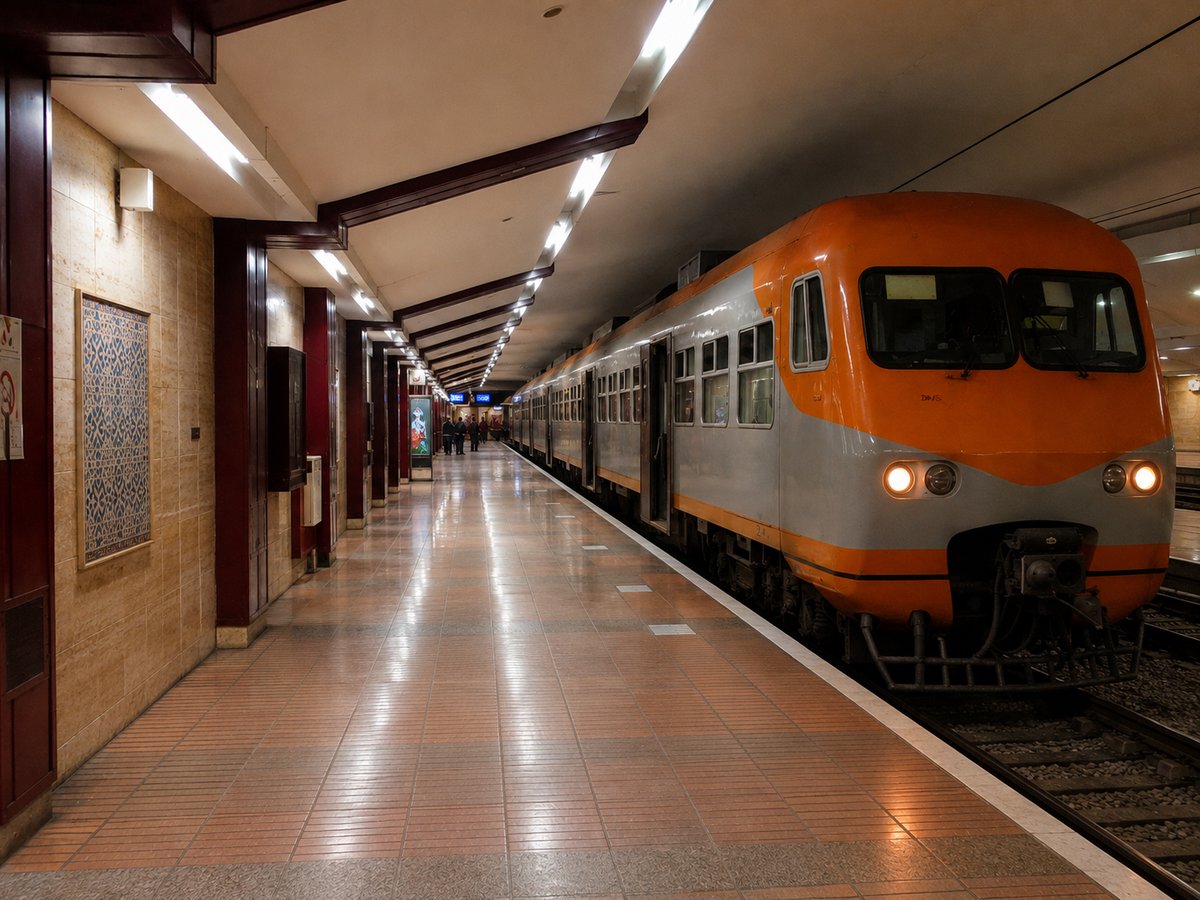
The key to Casablanca airport is the ONCF train station directly beneath it, from which trains run to Casa Voyageurs — the main station — and onward across the network. This is why Casablanca works as an entry point even when the city is not your destination: you can land and be on a train toward Marrakech or Fez without setting foot in Casablanca proper. Check the departure board and buy your ticket at the counter or machine.
Onward to Marrakech or Fez
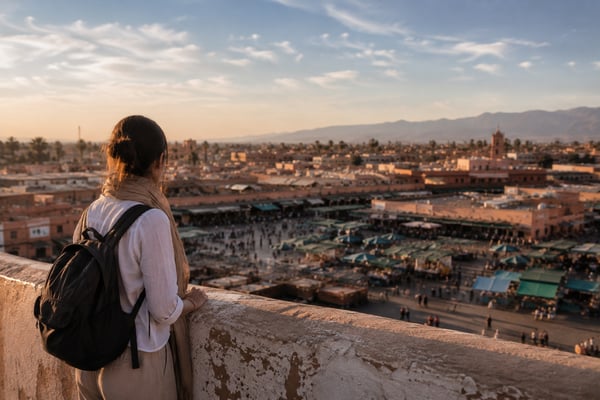
For Marrakech, you typically take the airport train to Casa Voyageurs and change to a Marrakech service; for Fez, a similar connection heads north and east. First class buys a reserved seat for a small premium, worth it with luggage after a long flight. The whole move — land, cash, train — can be done in well under two hours when flights and schedules cooperate.
If you're staying in Casablanca first
Some travellers spend a first night in Casablanca to break the journey or see the Hassan II Mosque, and that is a reasonable soft landing after a transatlantic flight. A petit taxi or the train reaches the city centre, and a night's rest before the onward leg suits anyone badly jet-lagged. For the classic loop, though, most push straight on while the momentum of arrival carries them.
Timing your connection
How much buffer to leave depends on your energy and your onward booking: trains from the airport station run regularly, so a missed connection rarely costs more than the wait for the next, but after a transatlantic flight a little slack is kindness to yourself. If you have booked a specific onward train, allow time for immigration lines and the walk down to the platform. If you have not, buying on arrival is straightforward outside peak crush.
Late-night landings
Flights from the US often land in the evening, and a late arrival changes the calculus: onward trains thin out at night, so an airport-area hotel or a first night in Casablanca can beat arriving in Marrakech in the small hours. Weigh the momentum of pushing on against the comfort of a bed nearby. Neither is wrong; it depends on the hour and how you travel tired.
The calm-arrival checklist
The whole first two hours reduce to a short sequence: clear immigration, withdraw dirham and decline the dollar conversion, connect your phone and message your accommodation, then take the train beneath the terminal onward. Done in that order, nothing catches you out, and you reach your real first destination with cash, a working phone, and a seat booked rather than a scramble at the rank.
The arrival hour is where the trip's habits are set: cash before you commit to any fare, the conversion prompt declined, the onward leg planned. How arrival, money and the first move fit together is worked out in the complete Morocco trip guide.