Faux Guides in Morocco: How the Unofficial Guide Economy Works
The man who says your street is closed isn't lost or lying for fun — he's paid by where he takes you. Understand who pays him and the whole thing makes sense.
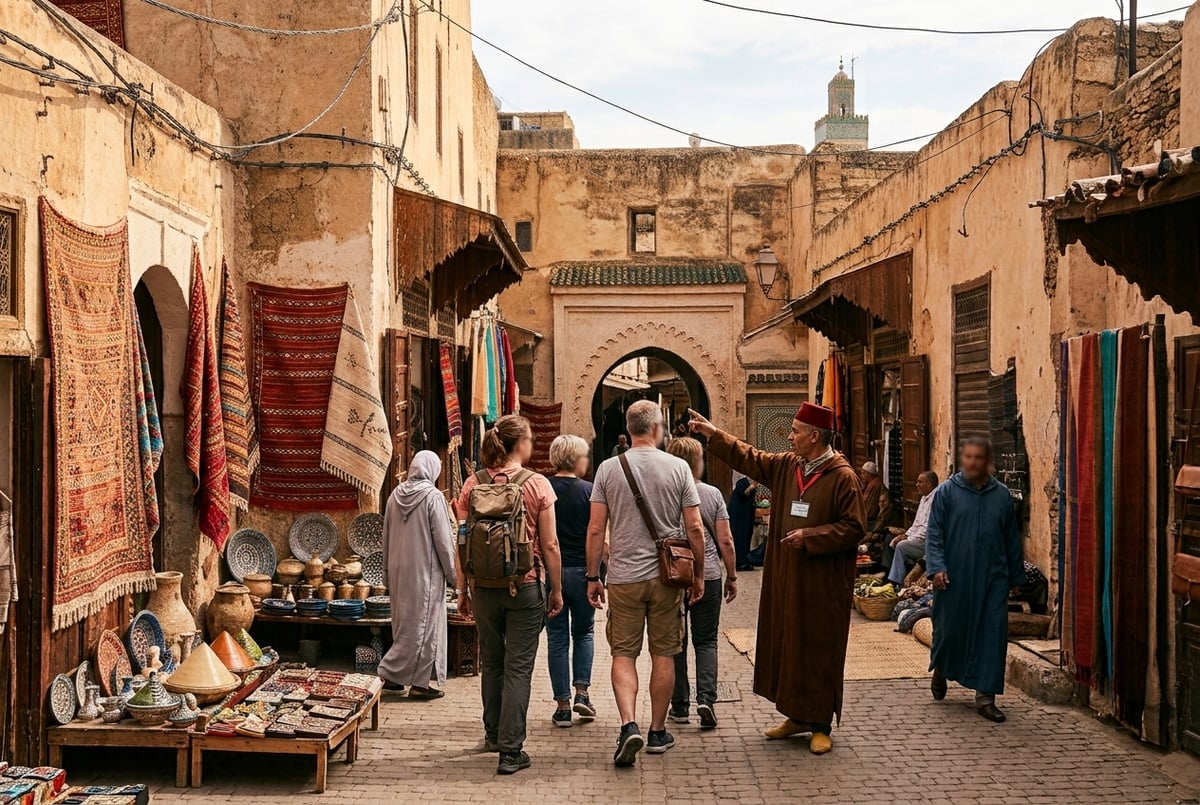
A faux guide is an unofficial, unlicensed guide who attaches himself to visitors in Moroccan medinas, and the single fact that explains all of his behaviour is that you are not the one paying him. His income comes from the shops, workshops and cooperatives he steers you into, each of which pays him a share of whatever you spend. Once you see who actually pays, every part of the encounter stops being mysterious.
Who is really paying him
The faux guide works on commission, which is the whole engine of the interaction: a carpet shop, a tannery viewpoint, an argan cooperative or a craft workshop pays him a cut of your purchase, so his goal is never really to guide you but to deliver you somewhere that pays. The tour feels free because you are the product being delivered, not the customer being served. That is not a cynical read; it is simply how the arrangement is structured.
Why "free" is the tell
When a stranger offers to show you around for nothing, the offer is genuine and the payment is real — it just arrives from the other end, priced into whatever you buy at the stop he chooses. Understanding this reframes the friendliness, the local knowledge and the gentle steering as exactly what they are: a sales funnel with a human face, ending at a counter.
The opening lines
Faux guides work from a small script, and recognising it defuses it. "This street is closed." "The tannery is shut, come this way." "The square is that direction, I'll show you." "You look lost, my friend." Each line manufactures a small problem only the speaker can solve, and the solution always leads toward somewhere he is paid to take you. None of the premises is usually true.
How to decline without a scene
The effective response is a firm, friendly refusal delivered while you keep walking, repeated once if needed and never accompanied by an explanation. Stopping to argue, apologise or justify yourself extends the encounter and reads as an opening. A brief "no thank you" and unbroken stride ends the great majority of approaches within seconds, and nobody is offended by it.
What not to do
Do not accept a "quick look" at a shop to be polite, do not let someone lead you "just to the gate", and never agree to an unofficial guide's services on the promise that you will "pay what you want" — that number is negotiated upward at the end, with you already deep in the medina. Politeness is the lever the whole system runs on, so spend it on a smile, not on compliance.
Where it happens most
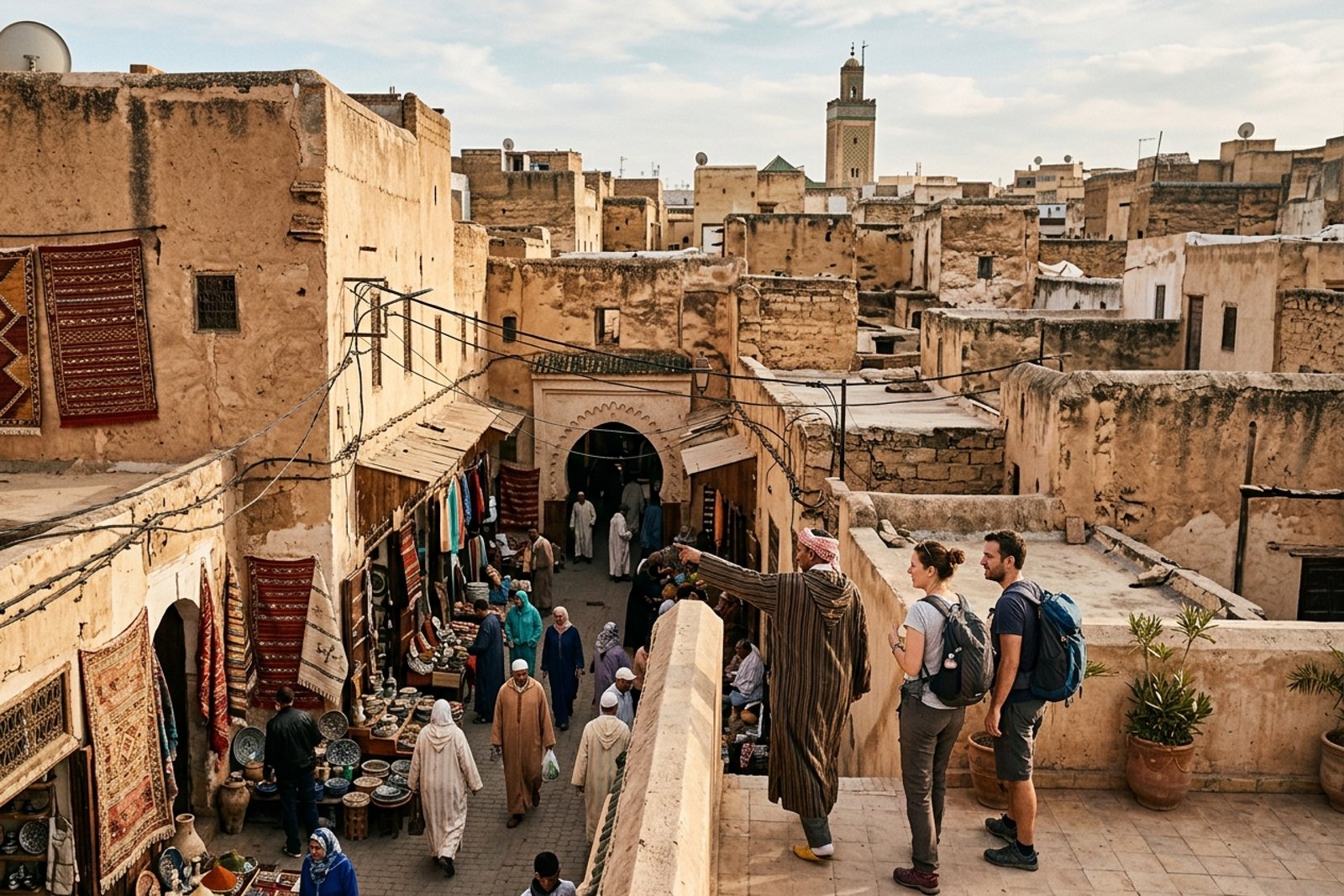
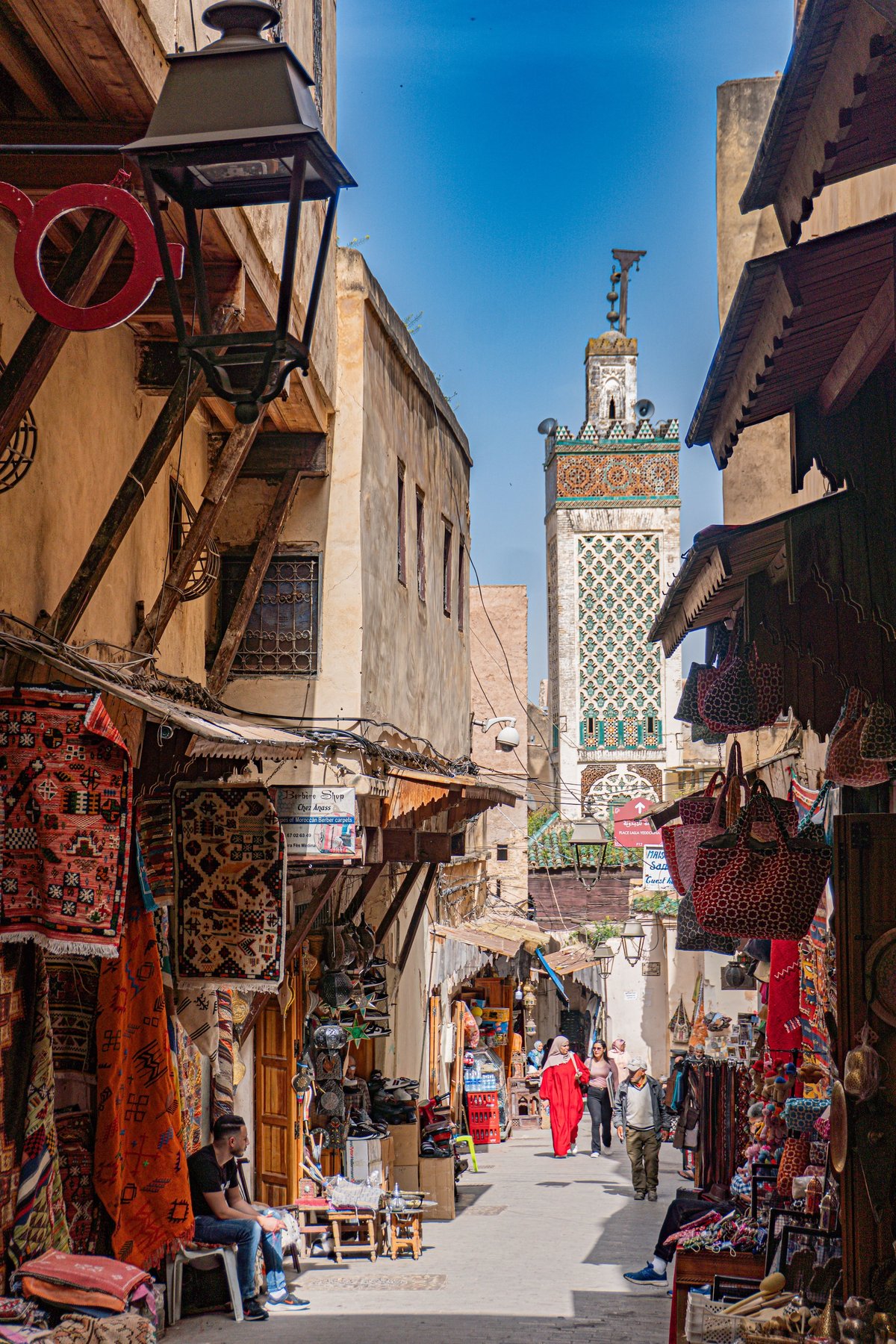
The Fez medina and the Marrakech souks are the prime territory, because both are genuine mazes where a visitor's uncertainty is visible and useful. Around famous sights — the Chouara tannery in Fez especially — the "it's closed, follow me" line is almost a fixture. The busier and more labyrinthine the area, the more the approach thrives, which is exactly why it clusters where first-timers feel least sure of themselves.
The friendship variant
A softer version skips the "closed street" and opens with warmth: a young man practices his English, asks where you are from, walks alongside as a new friend, and only later reveals a brother's shop or expects payment for his time. The friendliness is often genuine and the commission is still real; the two coexist comfortably. Enjoy a brief chat if you like, but keep walking toward your own destination rather than his.
Children and small "helpers"
Children sometimes offer to lead you to a landmark for a coin, and this is a gentler, lower-stakes version of the same economy. A small tip for genuine help is fine if you accept it knowingly; the thing to avoid is being led somewhere you did not ask to go and then presented with a demand. Decide before you follow, not after you arrive.
When a guide is genuinely worth it
None of this means avoid guides — it means avoid the unpaid-by-you kind. A licensed official guide, hired openly at a fixed rate, is one of the best purchases on a first trip, particularly for a first day in the Fez medina. The distinction is not guided versus unguided; it is who employs the person walking beside you, and whether you chose them or they chose you.
The faux guide is the most visible instance of a structure that runs through the whole trip: a cost you cannot see, paid by you to someone through a person you never think to suspect. Where else that shape appears, and how it should change your decisions, is worked out in the complete Morocco trip guide.